Material World is a weekly roundup of innovations and ideas within the materials sector reshaping the materials sector. It covers the latest developments in how fashion is designed, engineered, and scaled—from emerging biomaterials and next-generation leathers to engineered fibers and sustainable alternatives.
Caravel Bio

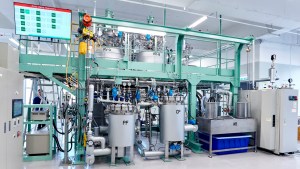
Caravel Bio is taking aim at the cost problem that has long dogged carbon capture.
Related Stories
The Portland-based company is participating in Shell’s GameChanger program and receiving funding to evaluate whether its biocatalyst development technology can help lower the cost of capturing carbon dioxide. Since joining the program in July 2025, Caravel said it has increased enzyme stability in industrially relevant conditions 12-fold.
“While others have tried teaching enzymes to swim, we’re building the enzymes a boat and training them to sail,” said Trevor Nicks, PhD, founder and chief executive officer of Caravel. “Our proprietary technology enables enzymes to do more than they could on their own.”
Traditional carbon capture has struggled economically to scale, even with years of development and public support. Caravel said the biggest barrier is energy intensity, especially in amine-based systems that require significant heat to release captured CO2.
The company’s platform is intended to support the use of potassium bicarbonate, which could reduce energy requirements and lower overall capture costs.
Gaia Biomaterials
Gaia Biomaterials has received final European patent approval for a PLA-free film extrusion material developed for biodegradable and compostable applications. The material is already being used in products including produce bags, waste bags and medical aprons, according to the Sweden-based bioplastic compounds company.
“We are very pleased with the final confirmation for this patent,” said Peter Stenström, CEO of Gaia. “I know the effort that has gone into it; it reflects the people in our R&D department and the work they are capable of.”
Rather than relying on polylactic acid (PLA), Gaia’s formulation uses a blend of biodegradable polymers and minerals intended to deliver compostable performance without relying on one of the most widely used bioplastic feedstocks. Gaia said several additional applications are currently under development or evaluation.
“Having the patent finally confirmed in Europe, we know that our new R&D platform and patent strategy is working,” said Konrad Rosén, R&D director at Gaia. “We can now continue our efforts into developing the next generation of leading biodegradable and compostable bioplastics.”
Packaging companies are still trying to solve for compostable films that can hold up in large-scale production. In many cases, the challenge is less about biodegradability claims and more about whether the material can run efficiently on existing equipment.
Södra
Södra is expanding fiber development efforts.
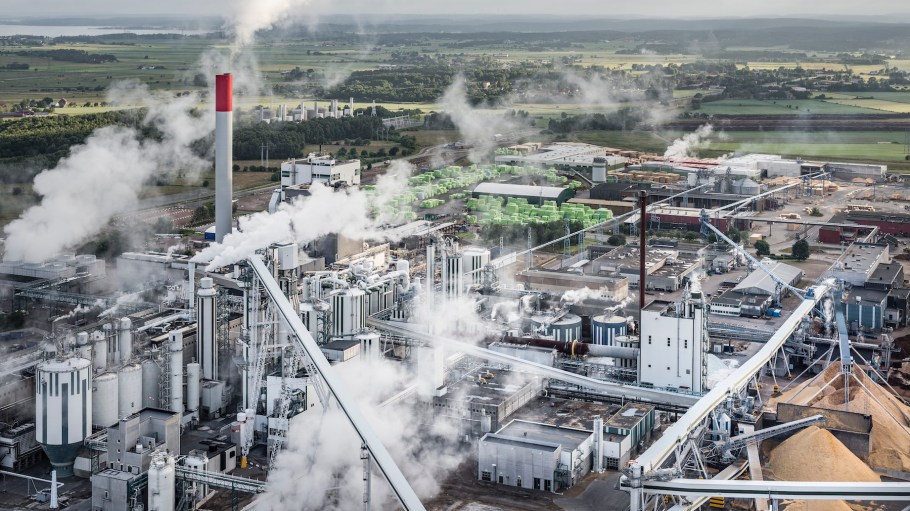
Sweden’s largest forest industry group has announced Södra blue S: a paper pulp that combines softwood fibers with oat hulls sourced from local grain processor, Berte Qvarn. The company said the material is designed to increase pulp yield and improve strength properties while incorporating agricultural residual streams into the production process.
According to Södra, the process allows forest fibers and agrofibers to be integrated directly within pulp manufacturing rather than treated as separate downstream additives. Pilot trials conducted at Södra Cell Värö showed positive runnability and strength results; the company reported establishing conditions for campaign-based production volumes toward the end of 2025.
“Södra blue S demonstrates what happens when we challenge our own assumptions,” said Annica Ahlstedt Larsson, head of product for Södra Cell. “By combining forest raw materials with oat hulls from a local partner such as Berte Qvarn, we increase resource efficiency and create value across two key basic industries.”
Interest in alternative fiber sources has expanded as manufacturers look for ways to get more output from existing raw material streams. By bringing oat hulls into the pulp process, Södra is effectively turning an agricultural byproduct into part of its industrial fiber supply.
“This collaboration shows what becomes possible when we look beyond our own value chains,” said Olof Stenström, CEO of Berte Qvarn. “By combining expertise, local residual streams and a shared ambition to develop new solutions, we take important steps towards the circular systems of the future. Together with Södra, we are exploring new ways of creating value from existing resources and contributing to long-term sustainable development.”
Asahi Kasei
Asahi Kasei is planning a series of operational changes at its Mizushima Works site through fiscal 2030, targeting businesses tied to polyethylene, acrylonitrile and polycarbonate diol production.
The diversified Japanese chemical company plans to streamline operations at its Mizushima Works by fiscal 2030, as part of restructuring its materials business. The effort will discontinue or combine several petrochemical derivatives tied to polyethylene, acrylonitrile and polycarbonate diol, according to Asahi Kasei.
The changes come as chemical producers continue to reassess older commodity materials operations amid weaker margins and rising operating costs. As part of the transition, Asahi Kasei said some supply responsibilities will move outside Japan, including ongoing acrylonitrile production through South Korea-based Tongsuh Petrochemical.
The restructuring reflects wider pressure across the chemicals sector as producers reassess legacy materials operations against rising energy costs, decarbonization demands and weaker long-term profitability in commodity segments. Asahi Kasei said future investment priorities will center on pharmaceuticals, electronics and other higher-growth businesses under its current medium-term management strategy.
The Lycra Company
The Lycra Company announced that the official global launch of Lycra Adaptiv fiber for non-woven textiles will take place at Index 26 in Geneva, Switzerland, May 19–22.
The stretch fiber is engineered to improve hygiene and personal care products, according to the Wilmington, Del.-headquartered producer. Proprietary research informed its unique polymer formulation, which adapts to the wearer’s body for a secure and comfortable fit that minimizes leakage. Lycra Adaptiv also offers inclusive sizing, easy donning and doffing and reduced concentrated compression to minimize skin irritation.
“This technology adapts to real bodies and how they move—an essential demand of today’s consumers,” said Doug Kelliher, executive vice president of product. “By introducing our proven apparel innovation to this space, we help manufacturers deliver a more personalized, comfortable and secure wearing experience—without adding product complexity.”
Notape
Notape plans to introduce a tape-free zipper construction at the upcoming EOW Outdoor Trade Show in Riva del Garda, Italy. Rather than attaching zipper teeth to a separate textile strip, the company said the teeth are formed directly onto the fabric itself.
The approach is designed to cut down on production steps tied to tape weaving and sewing. Morale also said the structure creates water resistance without relying on additional films or coatings.
Conventional zipper manufacturing typically relies on separate tape weaving, dyeing and sewing processes before the component can be attached to a finished garment. Notape said its approach collapses several of those stages into a one-step forming system that builds the zipper directly onto the fabric itself. The company also claims the structure allows for slimmer, less visible closures without sacrificing durability or bonding strength.
The pitch arrives as brands and suppliers continue looking for ways to simplify garment construction while reducing material inputs and production complexity. Rather than positioning itself strictly as a trim supplier, Notape reported pursuing licensing, equipment leasing and joint development partnerships centered on the manufacturing technology behind the system.
Standard Textile
Textile solutions provider Standard Textile has been selected as a 2026 U.S. Best Managed Company (BMC) for the sixth year in succession.
Sponsored by Deloitte Private and the Wall Street Journal, the BMC’s U.S. effort is a “premier mark of excellence” for stateside, private companies with at least $250 million in revenue, per the peer-to-peer cohort. Its 2026 recipients were acknowledged for strong strategic planning, commitment to their teams and strong financial performance, according to Standard Textile.
“Building on more than 85 years of innovation and service, this achievement reflects the dedication of our teams around the world and their commitment to continuous improvement, customer partnership and operational excellence,” said Alex Heiman, president of Standard Textile. “As we continue investing in innovation and sustainable growth, we remain focused on delivering exceptional value to our customers and creating meaningful impact in the communities we serve.”
The vertically-integrated company also earned the distinction of Gold Honoree—awarded to companies recognized as a BMC for four to six years—for demonstrating “consistent achievement and ongoing development,” per the program. An independent judges panel evaluates applicants on strategy, execution, corporate culture, and governance or financial performance.