The demand for H2O has hit critical levels, with environmental, political and economic pressures further intensifying the crisis.
According to the National Oceanic and Atmospheric Administration’s National Integrated Drought Information System, a record-setting drought is covering more than 60 percent of the continental United States. The United Nations University Institute for Water, Environment and Health is declaring a “global water bankruptcy.”
Simultaneously, tariffs and geopolitical conflicts in Iran and Ukraine continue to disrupt supply chains, forcing many companies to source materials and finished goods from other regions. For agricultural commodities such as cotton—which is primarily grown in China, India, Brazil and the U.S.—a new sourcing strategy can bring unintended consequences, including overuse of valuable water resources.
Related Stories
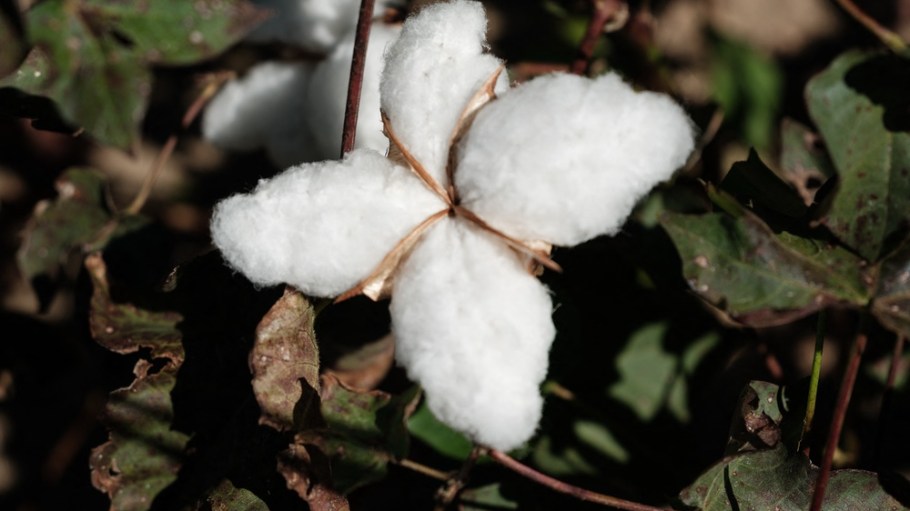
“When we trade agricultural products, we trade water,” said Jairo Trad, CEO and co-founder of climate tech company Kilimo. “Many farmers have seen significant pressure on water resources for production. In the cotton industry, for example, for 1 kilogram of cotton fabric, you need around 9,000 cubic meters, and that’s a lot of water.”
A recent analysis by the World Bank found that the global crop trade saves roughly 500 billion cubic meters of water each year by shifting production to more efficient regions. But with trade limitations such as President Donald Trump’s reciprocal tariffs driving companies to source from countries with better trade rates, regions with less-efficient farming practices are becoming greater suppliers.
“Trade disruption brings a big challenge because in many cases, you were able to pick the most efficient resource from anywhere in the world because trade was not as disruptive as it is right now,” Trad said. “And now many people are starting to source first internally in their countries, and those internal supply chains are not very efficient.”
Trad founded Kilimo to help alleviate that problem by equipping farmers with technical guidance and data to help them maximize irrigation and improve water use efficiency. The Argentina-based climate tech company also helps farmers monetize their water usage improvement.
“We think the opportunity lies in rewarding farmers for being good stewards of the resource,” he said. “They’re already good stewards of the land because the land is more important for them, and we think steering them to take that approach with resources like water is a key next step.”
Kilimo connects farmers with companies that want to invest in sustainability and help fund the transition to more environmentally friendly farming practices. The company provides data to help guide the farmers as they move to more efficient methods.
“We can convert a farmer using flood irrigation to drip irrigation, or we can help a farmer move from solid fertilizer to leakage fertilizer so they can reduce the runoff into streams, which reduces water that’s being polluted,” Trad said. “We can help farmers use technology that provides irrigation advice to help them make better irrigation decisions.”
While Kilimo has worked with farmers across the Americas and Asia, Trad said they primarily focus on areas where water is scarce but the interest in business investment is great, such as Texas.
“Those areas are the ones where we can deploy faster, and there is more value for everyone in the community,” he said.
Trad said that without interventions like these, water scarcity likely will continue to increase, causing further disruptions to supply chains dependent on agricultural crops.
“The true risk of every supply chain, especially those that are agricultural, is water,” he said. “We’re seeing significant disruption in water availability, and when that happens, that’s going to be a major disruptor of the supply chain because the fact is that you cannot produce more water.”
Trad said that for a long time, many companies had the luxury of a reliable supply chain that wasn’t subject to significant disruption. But since the pandemic and multiple rounds of tariffs, industries can no longer operate as if their supply chain is immune to disruption, and they must exercise greater control and oversight of those supply chains to ensure they remain viable.
“There are many major corporations that don’t have a clue where their products are coming from,” Trad said. “You see that in the wild, and it’s really frightening because we have so much data available, and it’s not being used.”
Trad said that he hopes brands will be more cognizant of where they’re sourcing, down to the farm level, and that they’ll be willing to make the investment to ensure that those farms are using resources such as water as efficiently as possible.
“Companies need to better understand the risk that’s happening in their supply chain, and they’ll realize that the main limiting factor is water,” he said.