As textile recycling continues to build momentum, the role of retailers is becoming more important to the success of circularity efforts. At the recent Textiles Recycling Expo held in Charlotte, N.C., stakeholders from Bank & Vogue, Eileen Fisher, UpCycle Fiber, National Stewardship Action Council (NSAC) and Kaltex discussed why retail must be a significant force in this movement.
As evidenced by several online thrift retailers exhibiting at the expo—such as college student-focused Thrifly, and online auction platforms Thryfter and MyThriftXChange—not to mention a spate of other online thrifting options, secondhand continues to be the primary way retail interacts with the reuse industry.
Related Stories
“I actually think that used clothes could have the ability to change the nature of retail,” said Steven Bethell, co-founder of secondhand wholesale supplier Bank & Vogue. “The Goodwill, the Salvation Army and the like should be an important part of the landscape of modern retail, and that’s the first place of reuse.”
But thrift shops can’t scale circularity on their own. Apparel retailers that sell new products also need to play a role.
“Demand is why retailers need to get on board,” said Eric Goldstein, executive vice president of apparel at Kaltex. “Retailers are kind of scared of circularity right now, that it will have quality or legal issues. Brands and retailers need to drive the demand and educate the customer. They need to have take-back programs and work with brands that are circular, and if you’re a multi-brand retailer, you promote the brands that are circular.”
Carmen Garma, director of circular design at Eileen Fisher, said that many brands in the fashion sector operate their own retail outlets, which gives them the opportunity to tackle circularity from a different angle.
“As retailers, we have to think that we are feedstock generators,” she said. “From the moment we start designing, we have to ask ourselves, ‘Can we produce product that can actually go back into the system?’ Making it so it’s easy to recover, easy to collect, easy to reprocess, to harvest the materials to become feedstock.”
Garma said retail take-back programs also figure into the equation for retailers, making it easier to collect post-consumer garments for reuse or recycling. Eileen Fisher operates a take-back program called Renew, which rewards customers $5 for every piece they bring in, no matter the condition. Those garments are sorted, and those in good condition are cleaned and resold at a discount. The remainder are recycled or transformed into new designs, such as a dress Garma wore to the expo made from recycled denim.
Garma said that while Eileen Fisher handles their take-back program in-house, retailers without that capability can also outsource the work to facilitate similar programs.
“There are a lot of systems out there that can support these take-back programs,” she said. “You don’t own your own factories, so you don’t necessarily have to own this operation.”
Take-back programs may be more complicated for retailers that sell multiple brands, but Heath Nettles, deputy director of NSAC, said that simply means those stores need to shift the way they select inventory and make more sustainable buying decisions.
“Retailers are no longer the endpoint—they are part of the grand system design,” he said. “What that means to me is that it starts at the design aspect. And then we’re making procurement decisions that are based on what’s going to happen to that product at the end of life. It’s about rethinking the materials that we use.”
Garma agreed, saying that designers need to be knowledgeable about current recycling technologies while engaging with stakeholders further down the supply chain to ensure garments are made to be recycled at the end of their life.
“It’s not going to happen if they’re not engaging with the recyclers, sorters, collectors, because that’s the synergy we need,” she said. “We need to have designers in the room along with the product development team and the business team to understand the system so they can bring it back to the drawing board. There’s a huge gap now and a lot of disconnection.”
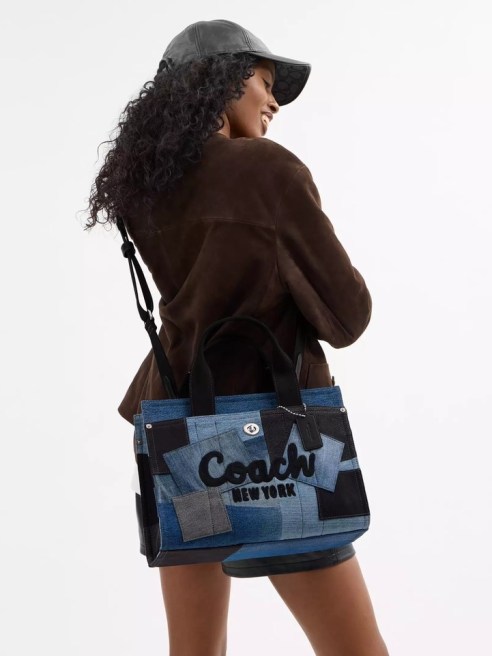
Bethell said that making designers aware of what’s available in terms of recyclable or reusable material can lead to greater adoption of circular practices. He pointed to Bank & Vogue’s collaboration with Coach to craft handbags from recycled secondhand jeans. But he said that kind of partnership is dependent on a large operation like Bank & Vogue’s.
“The ecosystem that I live in allows us to do something like the Coach product because we sort five million pairs of jeans a month,” Bethell said. “If you have a store in a city and you’re doing a take-back, you won’t get that scale.”
Ultimately, there’s no one-size-fits-all solution for retailers when it comes to improving circularity. But whether a retailer is a multi-brand department store or a single-brand outlet, opportunities exist to ensure fewer garments end up in landfills or incinerators. And Nettles said that work will lead to not only a healthier planet, but stronger, more resilient businesses, as well.
“What excites me about this is to think about the value we’re unlocking and why these circular systems that we’re building today matter,” he said. “That economic value is going to impact communities and our planet, and we can be a part of that.”