The energy crisis brought by the war in Iran and the near-shutdown of traffic through the Strait of Hormuz could result in jet fuel shortages at European airports by May.
If the shipping traffic through the strait does not resume in any “significant and stable way” within three weeks, airports across the continent could face “systemic” fuel shortages, according to a report from the Financial Times on Friday.
Airports Council International (ACI) Europe, a trade association representing more than 600 airports across the E.U., warned the European Commission’s sustainable transportation commissioner Apostolos Tzitzikostas that the airport industry sought proactive monitoring and action from the executive body as fuel reserves run low.
Related Stories
The FT report said jet suppliers are unable to guarantee deliveries into May.
Oil prices escalated worldwide after the start of the conflict amid Iran’s threats against the safety of ships sailing the Strait of Hormuz, which is the chokepoint that roughly 20 percent of the world’s oil supply flows through daily. Since Feb. 28, there have been 22 confirmed attacks from Iranian missiles and drones on vessels traversing the conflict-ridden waterway, with oil tankers and other vessels largely stuck in the Persian Gulf throughout.
Despite the U.S. and Iran reaching a two-week ceasefire last Tuesday, crude oil futures remain above $92 per barrel as of 4 p.m. Eastern time Monday. That represents a more than 35 percent jump over the roughly $67 per barrel on Feb. 27, the day before the war began.
In line with supply constraints, the price of jet fuel has increased dramatically.
The average global jet fuel spot price for the week ending Friday was $197.83 per barrel, according to the International Air Transport Association (IATA) Jet Fuel Monitor, which showcases data from energy information provider Platts.
That figure is down 5.3 percent from the week prior amid the ceasefire, but 99 percent above the $99.4 per barrel rate calculated on Feb. 27.
In response to the supply shock, four Italian airports briefly introduced restrictions on jet fuel after disruption at a key vendor. The airports—Milan Linate, Venice, Treviso and Bologna—alerted airlines that jet fuel would be limited between April 2 and April 9.
Airlines have been cutting services as the increase in fuel prices has made some routes unprofitable.
Last week, Delta Airlines said it would cut 3.5 percent of its passenger capacity between April and June, tying in with an anticipated $2 billion in extra fuel costs driven by the Iran war. In line with the Platts numbers, Delta confirmed in its earnings call last Wednesday that jet fuel prices were “roughly double” what they were earlier in the year.
During the call, chief operating officer Dan Janki ruled out short-term concerns about jet fuel shortages.
“We have no issues today, and we don’t see any over the next 30 days or so,” Janki said.
Delta is largely insulated from shortage concerns, largely since U.S. airlines don’t have the reliance on imported Middle Eastern oil that its European and Asian counterparts may have.
Hong Kong-based Cathay Pacific is one such airline, also recently reducing select capacity by 2 percent from mid-May through the end of June. The carrier’s low-cost HK Express line will cut capacity by 6 percent.
“In the past month, we have pursued every suitable means to keep our flights operating as normal. This includes adjusting the fuel surcharges in an attempt to mitigate the surge in jet fuel prices,” the airline said in a statement. “Despite our best efforts, the measures we have taken to mitigate the heightened fuel costs have not been enough.”
The moves follow decisions made by Vietnam’s air travel industry, with Vietnam Airlines targeting cuts between 10 percent and 20 percent of total flights as cost pressures remain. Other global airlines including United Airlines, Air India, Air New Zealand and Malaysia’s AirAsia have followed suit, all having taken steps to axe flights and pass on fuel costs to consumers.
Lufthansa pilots conduct two-day work stoppage
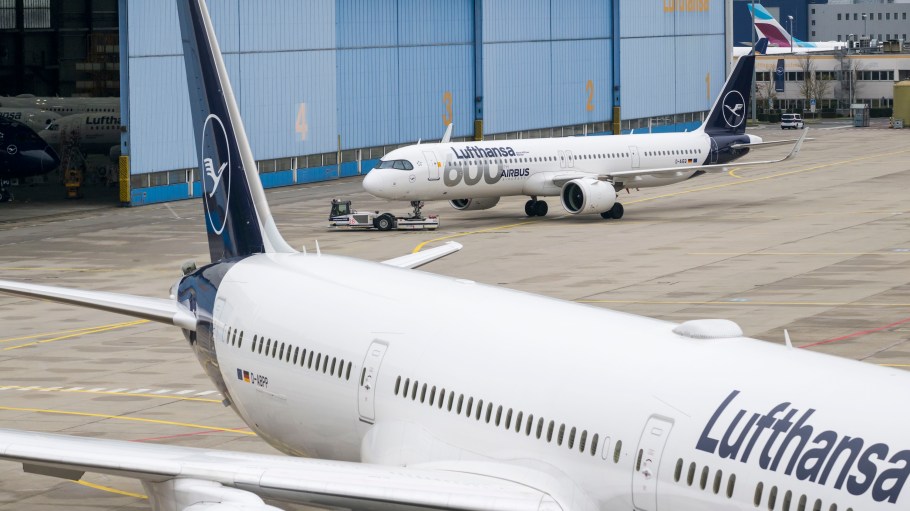
With fuel prices making a dent in overall air capacity, the problem is exacerbated by a pilots’ strike at Lufthansa that began Monday morning and will continue through Tuesday night.
The Vereinigung Cockpit (VC) union called the two-day work action on Sunday, resulting in either delays or cancellations to all Lufthansa departures from Frankfurt Airport.
All Lufthansa Cargo flights set to arrive in Frankfurt on Monday operated as scheduled, although the division warned that only limited cargo volumes may be available for shipments.
According to a statement from Lufthansa, the cargo division can operate up to two-thirds of our regular freighter operations.
The strike, the third this year from the pilots’ union, covers Lufthansa’s mainline airline, its cargo unit and regional carrier CityLine, while pilots at low-cost carrier Eurowings are walking out only on Monday. The work stoppage is primarily over negotiations to improve the company’s pension plan, with the union demanding the airline to double its contributions.
According to the union, more than 700 flights across airports canceled Monday. Andreas Pinheiro, president of the VC pilots’ union, said the strike is “proceeding as anticipated.”
“We have repeatedly given Lufthansa ample time to submit a serious offer. However, an offer that is to be financed elsewhere is not viable for us,” Pinheiro said. “Board members would certainly view such an offer critically when it comes to their own bonuses, which, incidentally, have been up to 100 percent—even though [Lufthansa] Classic, the largest part of the group, is presumably doing so badly.”
Tacking onto the labor disruptions, Lufthansa’s cabin crew union, UFO, said that it had called on its members to strike on Wednesday and Thursday.
Lufthansa Cargo already had been operating slightly shorthanded due to safety measures implemented in Middle Eastern markets, with the division suspending all freighter flights to and from Tel Aviv, Israel through April 30, and Beirut, Lebanon through Oct. 24.