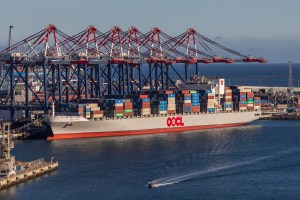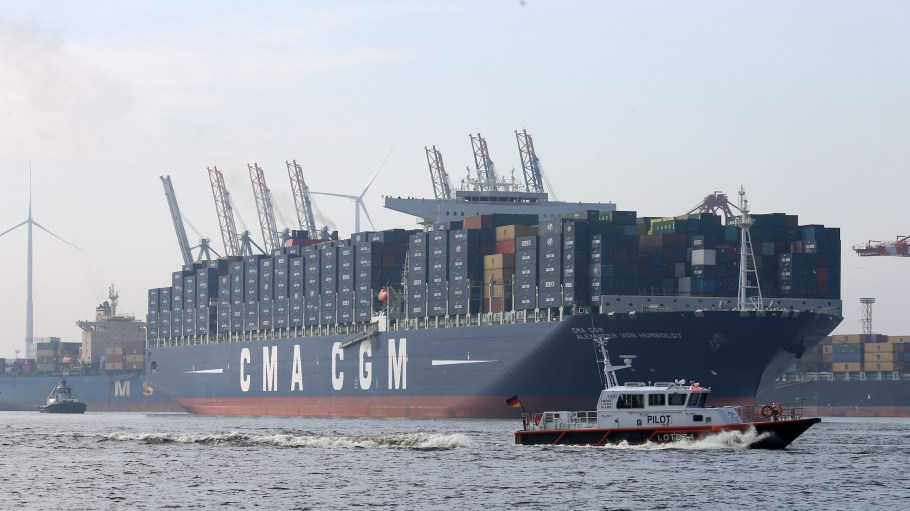
In a bid to safeguard America’s shipping sector from a spike in oil prices caused by the war in Iran, President Donald Trump has opted to waive the requirements of a century-plus-old trade law that regulates the way goods are transported between United States ports.
The Jones Act, which specifies that cargo shipped between U.S. ports must be carried on ships that are built, flagged and (mostly) owned by the U.S., will be waived for a period of 60 days in a bid to facilitate the transport of energy products across the country.
Related Stories
According to the White House, the tactic is meant to mitigate “short-term disruptions” to the oil markets. “This action will allow vital resources like oil, natural gas, fertilizer, and coal to flow freely to U.S. ports for 60 days, and the administration remains committed to continuing to strengthen our critical supply chains,” according to White House press secretary Karoline Leavitt.
“President Trump’s decision to issue a 60-day Jones Act waiver is just another step to mitigate the short-term disruptions to the oil market as the U.S. military continues meeting the objectives of Operation Epic Fury,” she said.
Signed into law in 1920 by President Woodrow Wilson, the Jones Act aimed to bolster the regrowth of the U.S. shipping sector following World War I. Since then, detractors have argued that its requirements are a form of protectionism that constrict domestic trade and drive up costs because American ships are pricier to construct and operate than those built offshore.
What’s more, there’s a major shortage of compliant vessels. “The Jones Act’s restrictions are particularly stark in the context of energy transportation. Of the world’s nearly 7,500 tankers for moving crude oil and refined products, just 54 comply with the law,” the Cato Institute wrote in a memo last month.
Trump has opted to hit pause on the statute as oil prices continue to rise, ushering in a new set of cost pressures for shippers. The Iran war, which began with a strike on Feb. 28, has ground almost all movement in the Strait of Hormuz, an essential trade route, to a halt, and that has led Middle East oil producers to pull back on production, generating scarcity and pushing up prices.
On Wednesday, brent crude oil rose to over $109 per barrel, up from $70.25 on Feb. 26, two days before the war began. Meanwhile, U.S. crude is trading between $94-$97 per barrel. Customers are already feeling the effects at the pump; the average gas price across the U.S. was $3.84 on Wednesday, up from $2.92 one month prior.
Now that the Jones Act has been put on ice for two months, the transport of about 172 million barrels of oil from the country’s Strategic Petroleum Reserve, which the Department of Energy said last week would be released, can begin. “This will take approximately 120 days to deliver based on planned discharge rates,” the agency said.
The Center for American Progress, however, believes Trump’s actions will likely have muted impacts.
Waiving the Jones Act “could have limited cost-savings benefits, decreasing East Coast gasoline prices by just three cents per gallon and could even raise costs on the Gulf Coast,” the think tank wrote in a memo last week. “It would also sideline American shipbuilders and workers and allow the oil industry to continue to profit from high prices while reducing transport costs.”