Beijing is hitting back at Washington over recently launched Section 301 investigations into China surrounding forced labor and excess production capacity.
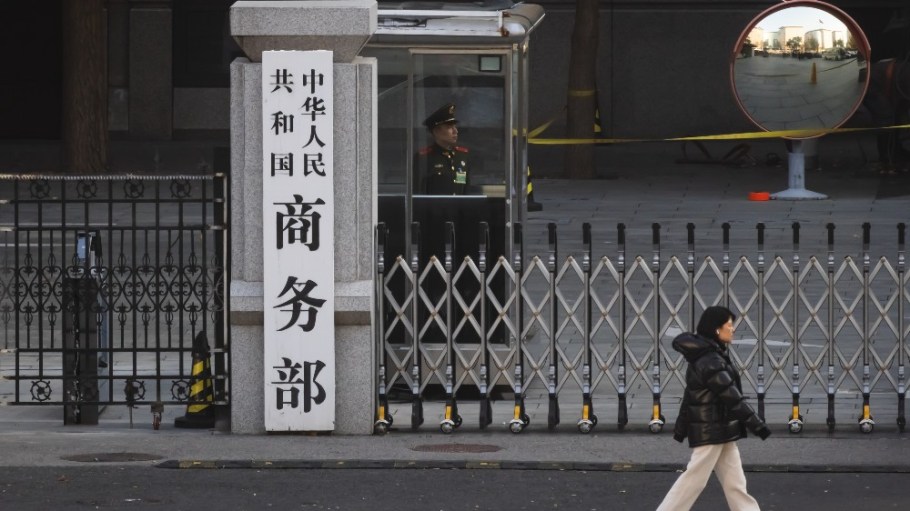
China’s Ministry of Commerce on Friday announced that “in order to resolutely safeguard the interests of relevant Chinese industries” it would address the recent measures taken by the Trump administration, saying that they threaten to upend international supply chain operations and hinder trade.
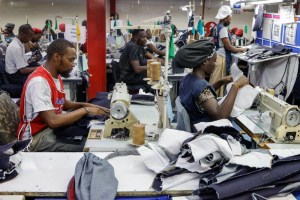
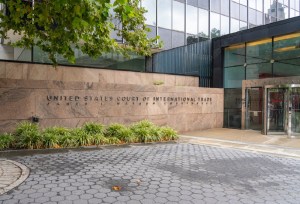
The Section 301 investigations, initiated by the U.S. Trade Representative earlier this month, target 60 nations including China for issues related to the overproduction and subsequent dumping of excess product and a failure to stop human rights abuses in the supply chain.
Related Stories
China expressed its “strong dissatisfaction and firm opposition to this,” according to a spokesperson quoted by state media outlet Xinhua. Now, China’s government plans to advance its own investigation into barriers to trade with the U.S. and take corresponding measures based on the probe’s results.
“Preliminary evidence and information obtained by the Ministry of Commerce indicate that the United States has implemented numerous practices and measures in trade-related areas that severely disrupt global supply chains, including but not limited to: restricting or prohibiting Chinese products from entering the U.S. market, restricting or prohibiting the export of high-tech products to China, and restricting or prohibiting two-way investment in key sectors,” it said in a public announcement.
“These practices and measures may seriously harm the trade interests of Chinese enterprises, and some of these measures are suspected of violating WTO rules and other economic and trade treaties or agreements jointly concluded or acceded to by China and the United States,” the Ministry added.
The investigation should be concluded within six months, and affected parties have been asked to submit written comments on the issues to the Ministry within 20 days of Friday’s announcement.
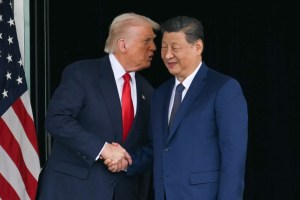
Despite the seeming escalation in trade tensions, President Donald Trump’s planned visit to Beijing to meet with Chinese President Xi Jinping is still in the works.
While the sitdown was originally planned for late March or early April, Trump delayed the meeting due to the war in Iran. A tentative visit for May 14-15 has been floated by news outlets, and while China Foreign Ministry Spokesperson Lin Jian has thus far declined to confirm the dates, he said “China and the U.S. remain in communication on President Trump’s visit to China.”
The U.S. and China are far from the only economies affected by shifting trade dynamics and mounting pressures on international relations.
At the World Trade Organization’s 14th Ministerial Conference in Cameroon last week, Director-General Ngozi Okonjo-Iweala said “the world order and multilateral system we used to know has irrevocably changed,” and “we will not get it back.”
“We cannot deny the scale of the problems confronting the world today,” she added. “It is no secret that the world trading system is experiencing the worst disruptions in the past 80 years.”
As a result, WTO economists predicted 1.9 percent growth in global goods trade this year as previously postponed tariffs kick in and geopolitics, energy prices and policy uncertainty continue to roil the supply chain. Should heightened oil prices persist as a result of the war in Iran and the constricted flow through the Strait of Hormuz, that forecast could fall even lower to 1.4 percent.