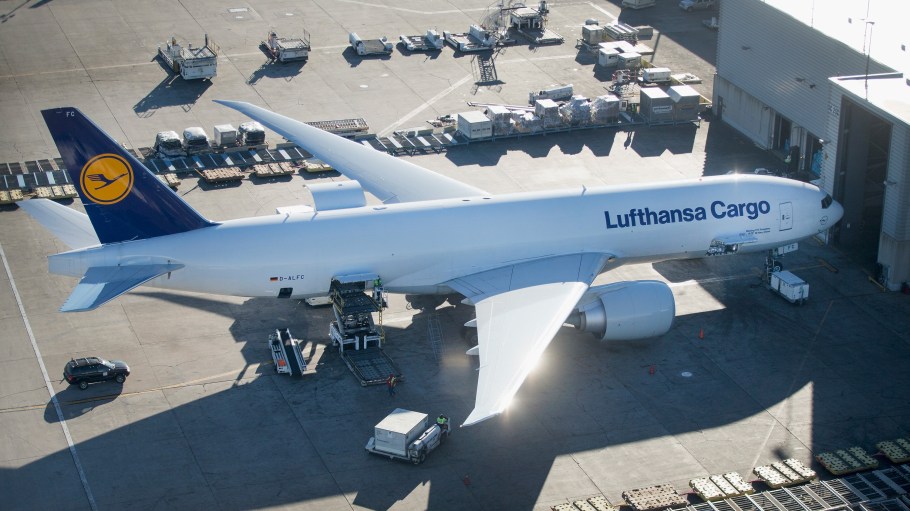
Fast-fashion giant Shein and logistics player Lufthansa Cargo announced Wednesday that they have signed a memorandum of understanding (MoU) meant to help them “explore a range of initiatives to drive the adoption of sustainable solutions for air freight.”
The MoU includes a plan to scale sustainable aviation fuel (SAF) usage on Lufthansa Cargo flights carrying Shein products. Ethan Shen, Shein’s general manager of global fulfillment, said the two companies will work in tandem on integrating SAF into Shein’s supply chain.
Related Stories
“Through this partnership, we aim to pilot and gradually expand the use of SAF where feasible, while continuing to explore additional ways to reduce the carbon footprint across our delivery network,” Shen said in a statement, noting that the company sees the move as “part of a broader decarbonization strategy.”
Today, SAF is not easily accessible in mass quantities; the International Air Transport Association (IATA) noted that SAF accounted for 0.3 percent of all jet fuel production globally last year. The organization expects SAF to hit 0.7 percent of all jet fuel production by the end of this year.
According to Reuters, 2024 Cargo Facts Consulting data showed that Shein ships about 5,000 tonnes of cargo daily.
Arif Gasilov, sustainability and ESG strategy partner at consultancy Gasilov Group, said that while Shein and Lufthansa Cargo’s pilot could see decreased emissions for one-off flights, it’s unlikely that a will significantly impact Shein’s at-large emissions in the immediate near term, in part because of availability challenges.
“In 2024 global production [of SAF] was about one million tonnes, which is only around 0.3 percent of total jet fuel use. That means SAF is still a drop in the bucket, but on the flights where it is used it can cut lifecycle carbon emissions by roughly 80 to 85 percent compared to conventional jet fuel. For a company like Shein, which ships more than 5,000 tonnes of air cargo per day, running even a single Boeing 777 freighter on SAF would dramatically cut emissions on that flight, but it would barely move the needle on their overall footprint until supply grows,” Gasilov told Sourcing Journal.
Air cargo is widely considered one of the least environmentally friendly ways to ship goods. According to Freightos, air freight shipments creates 20 to 30 times as much pollution as ocean freight shipments.
Shein ships much of its product to customers using air freight, though its 2024 impact report noted that it plans to “promote the greater use of land, sea or multimodal routes, thereby reducing the need for air freight” in the future. Last year, by shifting some of its shorter routes to trucking rather than air cargo, it saved about 502,000 tonnes of CO2e.
Still, that same impact report showed that in 2024 the company’s upstream transportation and distribution emissions accounted for more than 8.5 million tonnes of CO2e, up 13.7 percent from 2023. Its fuel and energy-related activities spiked 106 percent, as compared with 2023.
Ken Pucker, professor of the practice at The Fletcher School at Tufts University, said that Shein’s latest pilot doesn’t change the fact that it relies heavily on air cargo to support its business.
“Good that Shein is exploring low carbon transportation options. That said, the company’s cargo emissions were staggeringly large,” Pucker said. “Their air shipment-based delivery model is profligate and damaging.”
In addition to the SAF pilot, the MoU between Lufthansa Cargo and Shein will see the e-tailer offsetting carbon emissions by supporting the growth of the SAF market. In return for the offsets purchased, Lufthansa Cargo will issue what it calls “Proof of Sustainability” certificates that indicate the SAF quantities used. Betsey Rafeld, senior client engagement manager at Carbon Direct, said purchasing SAF offsets may be a viable option for some markets because of the difficulty of accessing SAF in certain geographic regions; she noted that the U.S. and Europe lead regular adoption.
“Because SAF is relatively limited geographically, the use of SAF Scope 3 certificates is critical to enable buyers globally to interact with the market even if they are not able to physically utilize a flight running on SAF,” Rafeld explained, noting that the impact such certificates could have would be determined by how large an investment Shein decides to make.
Gasilov said that because Shein has built its business model around the use of air cargo for shipping, it could help convince major brands and retailers of SAF’s potential, in turn building up the demand for the alternative fuel. Like many other sustainability initiatives, including the rise of next-generation materials, demand signals help producers make strides toward production at scale. Still, as Rafeld said, without contracts in place, movement can be slow going and difficult.
“[This partnership] puts pressure on other large e-commerce players to explore similar steps and helps build the market for SAF,” Gasilov said.
Lufthansa Cargo reportedly told the Loadstar that a binding contract focused on SAFs has not yet been signed. In the announcement about the MoU, the companies noted that they plan to engage in a “long-term collaboration,” both on SAF and on other environmental and traceability-related initiatives. Rafeld said that a contract outlining the requirements of the partnership could procure more meaningful results.
“Airlines and cargo operators really rely on corporate fliers like Shein to pay the green premium for SAF, so these kinds of partnerships and demand signals are important to support the growth of SAF globally. Ultimately, however, the real impacts are realized when these exploratory relationships become firm deals and completed offtakes,” she said.