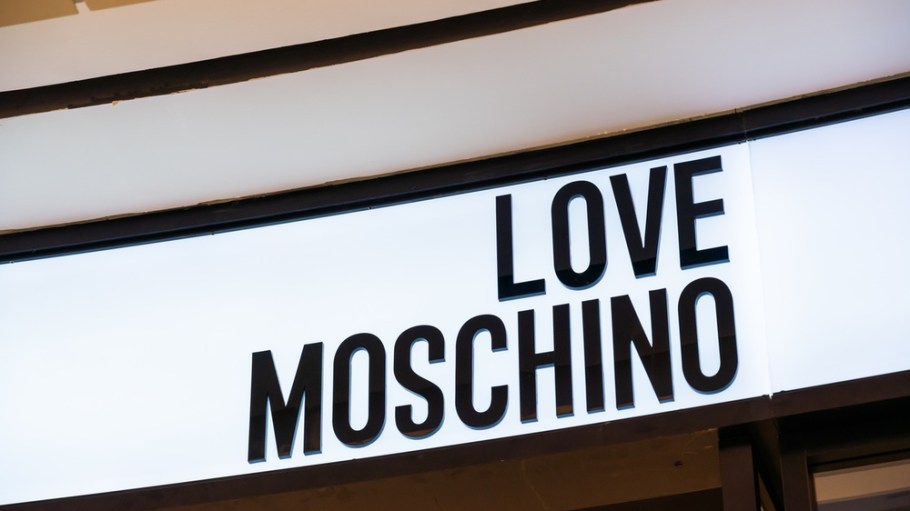
An Italian civil society group has filed a complaint against Love Moschino and OVS for maintaining production in Myanmar despite deteriorating labor conditions in the military-ruled nation.
Writing to the Organisation for Economic Co-operation and Development’s Italian National Contact Point, Italia-Birmana Insieme charged the brands with flouting the intergovernmental organization’s guidelines for responsible business conduct by multinational enterprises, including respecting the right of workers to organize and collectively bargain.
Related Stories
Since the junta seized power in 2021, hundreds of union activists have been arrested, threatened or treated with violence in Love Moschino’s and OVS’s supplier factories in violation of both the guidelines and the United Nations’ guiding principles on business and human rights, according to a copy of the complaint that Sourcing Journal obtained. Due to the military’s crackdown on freedom of association, the presence of free, independent and democratic trade unions is impossible, it added.
Love Moschino and OVS did not respond to requests for comment.
OVS, which was ranked No. 1 in Fashion Revolution’s latest Fashion Transparency Index, released a statement shortly after the coup condemning any human rights abuses and offering its support to the country’s workers.
“Given the small number of orders currently made in Myanmar, OVS could very easily abandon production there; however, while it is possible, the company will be maintaining a limited presence in Myanmar, suspending any business with suppliers who carry out discriminatory acts against workers involved in protest actions,” it said at the time. “OVS has always placed respect for and protection of human rights at the heart of its activities, together with ethical action and transparency.”
Love Moschino’s parent company Moschino, responding to allegations of abuse at its Burmese suppliers in 2022, told the Business & Human Rights Resource Centre that it carries out its operations in “full accordance with the human rights and with the full respect of the principles of the United Nations Universal Declaration, the International Labour Organization Conventions, the OECD guidelines and the Charter of Fundamental Rights.”
“In addition, within the scope of its various licensing relationships, Moschino requires…its licensees to respect the human rights and to comply with the indications and with the rules contained in the abovementioned code and precepts,” it said.
Khaing Zar Aung, the exiled president of the Industrial Workers’ Federation Of Myanmar, which worked with Italia-Birmana Insieme on the complaint, said that fundamental rights at work have been under attack since the start of the coup. She also denounced a European Union-backed initiative designed to prop up business practices in the country as “whitewashing” that provides space for “fake trade unions and a fake social dialogue.”
“We are taking action to counter the lack of cooperation of the brands who insist on remaining in Myanmar,” she said in a statement via IndustriALL Global Union. “Many brands are hiding behind support from the European Union through the MADE in Myanmar program.”

Whether the OECD will accept the complaint remains to be seen. According to OECD Watch, an international network of NGOs that maintains a database of OECD complaints, only seven out of 35 complaints involving garments and textiles have been accepted since 2001.
“There’s not much which can be said about it at that moment, pending their decision, particularly as the complaint isn’t public which I think is in accordance with their guidelines on tabling complaints,” Vicky Bowman, director of the Myanmar Centre for Responsible Business and a member of MADE’s steering committee, told Sourcing Journal.
“Since the OECD guidelines are aligned to the UN Guiding Principles on Business and Human Rights, my expectation is that the NCP will focus on whether the Italian companies are undertaking heightened—or as OECD tends to call it ‘enhanced’—human rights due diligence and whether or not they are communicating what they are doing,” she said.
Bowman said that MADE’s Memorandum of Understanding asks companies to commit to heightened human rights due diligence. “Therefore I would expect the consideration and recommendations of the Italian NCP to complement the objectives of the MADE project,” she added.
Myanmar’s junta recently extended the state of emergency it imposed when it ousted the elected government, further delaying the elections it promised when it took over.
In March, a group of 20 unions filed an OECD complaint against Nike in Washington, D.C. The filing accused the Just Do It firm of failing to address and remediate “severe human rights impacts” at the factories it contracts as required by guidelines.