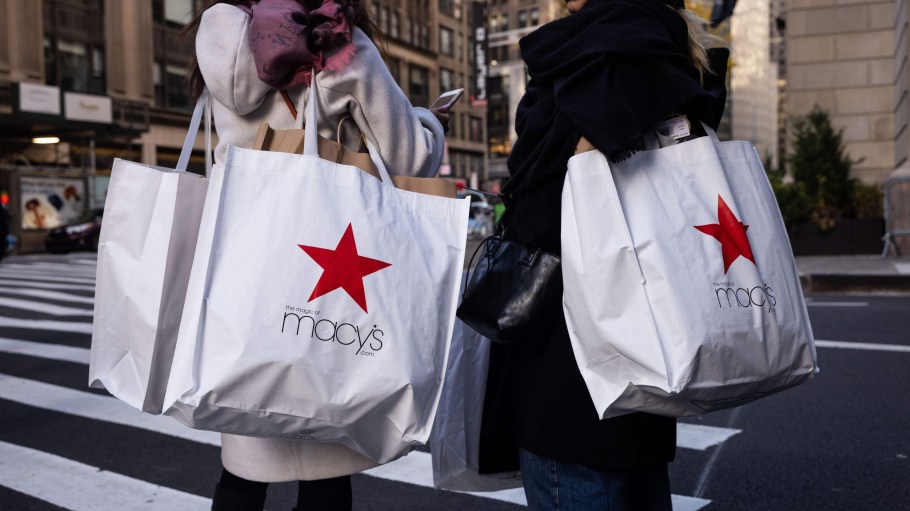
The long-predicted “retail apocalypse” has been officially replaced by a high-tech renaissance. According to a new report from Colliers, titled “How AI Is Redefining Retail Real Estate in 2026,” the integration of artificial intelligence is not replacing brick-and-mortar locations, but rather making them more indispensable than ever.
Authors of the report found that while digital commerce continues to grow, a staggering 85.1 percent of U.S. retail sales still flow through physical stores, which is prompting 71 percent of retailers to expand their physical footprints this year.
Related Stories
The modern store is undergoing a profound structural change. It is no longer just a showroom for products. It has become a sophisticated fulfillment hub and a critical support system for omnichannel commerce. Researchers at Colliers said this shift is driven by the fact that one in four online orders is now fulfilled directly through a physical store. This is a figure that is expected to climb to more than 35 percent by the end of the decade.
The report found that as retailers integrate AI into customer experiences and logistics, they are creating a new set of infrastructure demands that landlords and developers must meet to remain competitive.
The survey also revealed how retailers are responding to these demands.
The data showed a widening chasm between “retail leaders” and their slower-moving peers. Companies that prioritized IT spending (those increasing budgets by 52 percent over the last five years) are projected to see profits grow nearly three times faster than their competitors in 2026. This financial success is directly linked to consumer behavior. The report said nearly half of all shoppers now use AI for product recommendations, and 75 percent admit these tools significantly influence what they buy.
The adoption of AI agents is also set to more than double by the end of this year, jumping from 19 to 46 percent. The impact of these tools is perhaps most visible in high-profile success stories such as Macy’s, where customers utilizing AI-powered shopping assistants spend approximately 400 percent more than the average shopper.
Early adopters of in-store AI technology are seeing the rewards on the balance sheet, reporting 79 percent higher store sales growth compared to those who have delayed investment.
What are the implications for retailers and brands?
First, the Colliers report signals a “now or never” moment for brands and retailers. Companies can no longer view technology as an optional layer. As Anjee Solanki, Colliers national director, retail services and practice groups, noted, the infrastructure required for modern AI, such as real-time inventory tracking and integrated data systems, cannot be easily retrofitted. Brands must invest in “fulfillment-grade” real estate that supports complex logistics and high-speed data processing. Those who wait to upgrade their physical locations risk falling into a permanent technological deficit.
Secondly, the store must now serve three masters: the browsing customer, the AI-driven personal shopper and the local delivery network. This requires a redesign of the floor plan to balance aesthetic shopping environments with back-of-house fulfillment efficiency. Brands that successfully merge these functions will turn their real estate from a traditional overhead cost into a high-yield engine for online and offline growth.
Then there’s an opportunity with buy online, pick up in store, or BOPIS, which now accounts for nearly 9 percent of total retail revenue, but only 18 percent of retailers have fully optimized this process. This represents a massive opportunity for brands to capture market share.
By utilizing AI to streamline the “last-mile” handoff from the store to the customer, retailers can significantly improve margins and customer satisfaction. Early AI adopters are already seeing 34 percent higher BOPIS performance, proving that efficiency in the physical space is a primary driver of digital success.
The massive spending increase by AI assistant users shows that the value of a physical store visit is now tied to how much data can be captured and utilized in real time. Authors of the report said brands must focus on creating “phygital” (physical-digital) experiences that encourage shoppers to engage with AI tools while in the aisles.
This connectivity allows for personalized upselling that was previously impossible in a traditional retail environment, fundamentally changing the ROI of a physical square foot.