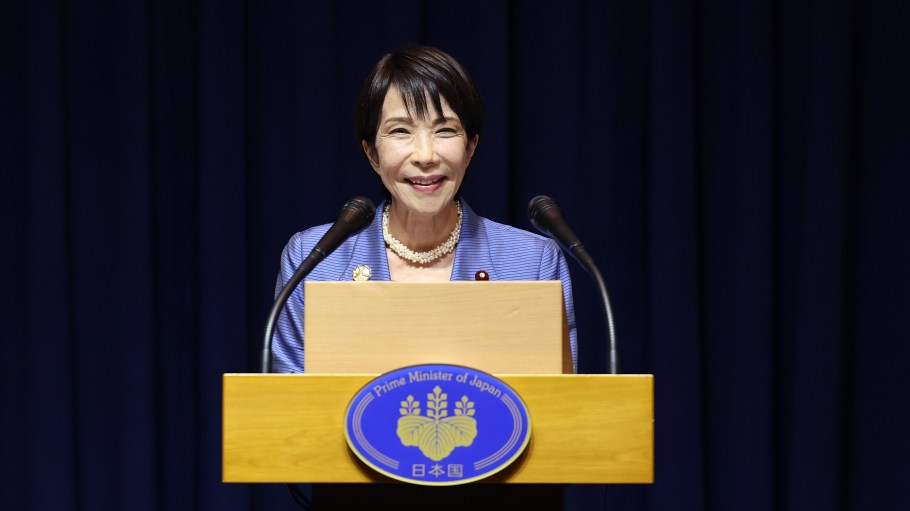
China–Japan relations have hit a low point after its newly elected Prime Minister Sanae Takaichi’s comments about Taiwan sparked anger in Beijing.
During a recent parliament meeting, Takaichi suggested that Japan could deploy its Self-Defence Forces in a hypothetical case in which China attacked Taiwan. A law was passed in 2015 that activated Japan’s Self-Defence Forces in response to a “survival-threatening situation” to Japan and its allies.
After Takaichi’s remark, China lodged “solemn complaints and protests” via its foreign ministry and urged Takaichi to retract the remarks and “not go down the wrong path,” said Chinese Vice Foreign Minister Sun Weidong.
Related Stories
Last week, Takaichi declined to do so, defending her case as “in line with the Japanese government’s position.” However, she said her remarks were “hypothetical” and that she would refrain from making similar comments.
Beijing also began advising its citizens to avoid traveling to Japan in the near term and warned Chinese students of heightened risks in the country.
Following the row, stocks related to retail and travel nosedived on Monday. Shares of Isetan Mitsukoshi, the department store group, fell 11 percent in afternoon trading, while another retail giant, Takashimaya’s, shares tumbled around 5 percent.
Japan Airlines fell about 4 percent on Monday.
“The warning against traveling in Japan is a negative for the luxury sector as most of the offshore Chinese spending happened in Japan over the past year,” remarked Barclays in a research note, adding that around 40 percent of Chinese nationals’ luxury spending happens abroad.
Chinese traveling to Japan has been a major trend in travel retail since the beginning of 2024 due to a weak yen — LVMH Moët Hennessy Louis Vuitton recently stated during its third-quarter conference call that growth in 2024 mostly came from Chinese tourists; for Kering, around 40 percent of Japan sales in the first quarter of 2024 were accounted for by Asian tourists.
“Overall, the increased tension between Japan and China is clearly a headwind, but we think it might accelerate the shift of Chinese consumer buying elsewhere,” said the Barclays report.
As the currency exchange rate becomes less favorable, Chinese travelers began to shift spending to neighboring Hong Kong or South Korea in the third quarter of this year.
Barclays estimates that Japan represents “a bit less than 10 percent” of sales on average for luxury brands.
Barclays said that Japan generates around 14 percent of sales for Moncler, 10 percent for Hermès, 10 percent for Richemont, 8 percent for Kering, as well as LVMH, and only 6 percent for Burberry.
“Despite having 10 percent of sales from Japan, we think Hermès might be less impacted than peers by any Chinese spending disruption, as sales in Japan are mostly driven by domestic spending,” noted the report.