Amazon sellers based in China can now store their goods in bulk closer to the product’s origin to cut down on warehousing costs and better optimize inventory replenishment based on consumer demand.
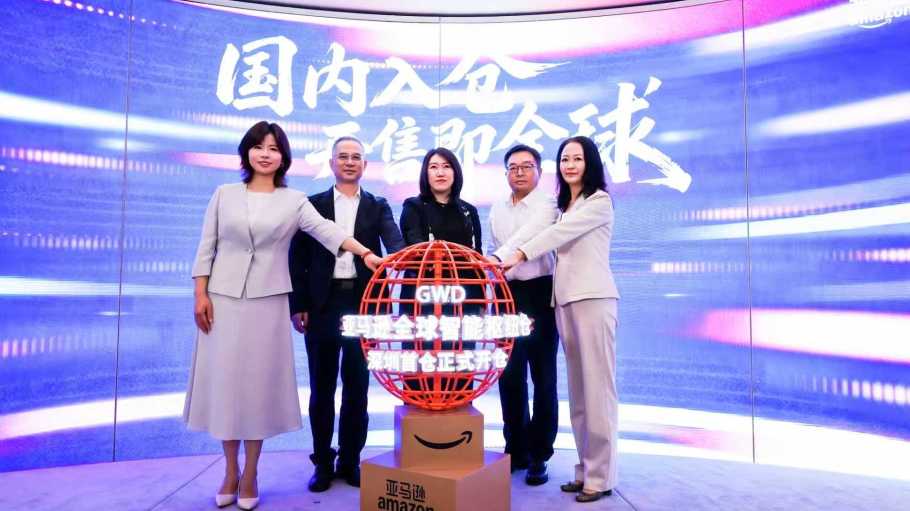
As part of the launch of its Global Warehousing and Distribution (GWD) program, the e-commerce giant opened its first warehouse in the country’s manufacturing hub of Shenzhen in April.
Amazon says using the Shenzhen warehouse can reduce storage costs by up to 45 percent compared to using the low-cost bulk storage alternative in the U.S., Amazon Warehousing and Distribution (AWD).
Related Stories
Building on AWD, the GWD program is designed to handle cross-border logistics services, customs clearance and delivery to Amazon fulfillment centers in the U.S. all through a single, integrated solution. Sellers can opt to automatically replenish stock based on sales performance, reducing the risk of inventory backlogs.
According to Amazon, the program can move inventory to U.S. fulfillment centers up to seven days faster when paired with the company’s end-to-end cross-border shipping service Amazon Global Logistics (AGL). That service enables sellers to bypass third-party freight forwarders to move cargo directly from the manufacturer from China to the U.S. via ocean or air.
The launch comes after a year of changes in U.S. trade policy that created more of a headache for Chinese sellers seeking to access the market. Tariffs on Chinese goods escalated dramatically during President Donald Trump’s first year back in office, and stood at roughly 47 percent after his October meeting with President Xi Jinping concluded.
The Shenzhen facility is also designed to help third-party sellers avoid having to pre-pay on any potential duties on goods, in that the merchant could keep their goods in China without needing to have them sit in an American warehouse for months.
Although most of those tariffs have since been rolled back due to a Supreme Court ruling, changes ended the de minimis trade exemption that allowed packages worth less than $800 to enter the country duty free. This posed a serious setback for Chinese sellers on Amazon, Alibaba, Temu and Shein alike, as many had often relied on it to sell products to American shoppers online at lower prices.
As of September 2025, Chinese sellers represent 50 percent of Amazon’s active seller base, and were 62 percent of new seller registrations in 2024, according to data from Marketplace Pulse.
Amazon has sought to expand its ties with China-based sellers in recent years, and is looking to shake away the competition that other players have brought even amid the trade policy shifts. The tech titan and Temu both held the same 24 percent share of the cross-border e-commerce market in 2025, despite Temu holding just 1 percent of share in 2022, according to a survey by postal services provider International Post Corp.
According to Sunny Jain, worldwide head of Fulfillment by Amazon (FBA), the biggest impacts of the platform go beyond cost.
“It’s about cash flow, flexibility, and the ability to test new regions without excessive risk. The response has been immediate,” said Jain in a post on LinkedIn Friday. “Within two days of our announcement, sellers are already booking shipments. The demand signal is clear that sellers want simpler, cheaper, faster global supply chains.”
Jain said Amazon plans on expanding to more locations in China. The company said it plans to bring GWD to the Shanghai’s Yangtze River Delta region to support shipping to Amazon’s European and Japanese fulfillment centers.
The program is designed so that sellers can list once, bring their inventory to the warehouse at origin, and sell it anywhere from the first day of signup in the program.
Zhang Hui, vice president of Amazon China and head of Amazon Global Logistics Asia Pacific, said feedback from sellers during the program’s trial phase was “very positive.”
“Sellers used to encounter problems and ask, ‘Where are the goods? When will it arrive at the FBA warehouse? Will there be customs clearance problems? These have brought very high labor and communication costs,” said Zhang in a statement. “Now, through GWD and AGL, from the moment the goods enter the warehouse, Amazon manages the whole process, and sellers can be more at ease.”
According to Zhang, AGL is designed to provide greater certainty for sellers, and enable them to can focus more on the core customer-facing aspects of their business.
Interested sellers can create a delivery request for the Shenzhen facility within Amazon’s Seller Central portal, according to Amazon’s announcement.