President Donald Trump’s five-day jaunt to Asia kicked off with a bang over the weekend, and surrogates say the United States is closing in on a trade framework with China to be finalized during the president’s long-awaited meeting with Chinese leader Xi Jinping on Thursday.
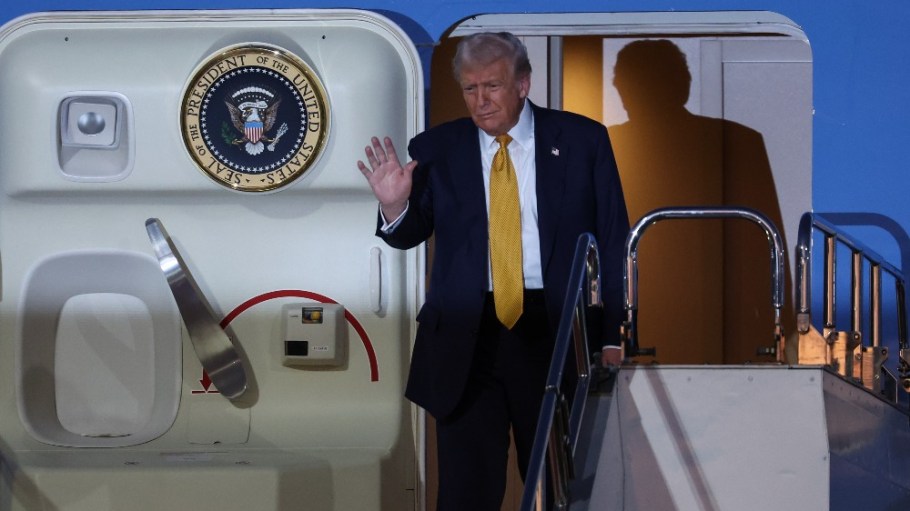
Trump’s sojourn began Sunday, taking him to Kuala Lumpur for the opening of the 47th ASEAN Summit where he sought to impart a message of mutual cooperation with the nations of Southeast Asia. While he held firm on double-digit duties for Malaysia, Cambodia, Thailand and Vietnam, freshly rehashed reciprocal agreements now feature new provisions, like tariff exclusions on select products.
Related Stories
While the president met with heads of state and showed off his signature dance moves, Treasury Secretary Scott Bessent and U.S. Trade Representative Ambassador Jamieson Greer sat down with China’s key trade negotiator, Li Chenggang, and Chinese Vice Premier He Lifeng, behind the scenes. Li said Sunday that the parties had brokered a preliminary framework for a trade truce including new provisions regarding China’s export controls and safeguards against the smuggling of fentanyl and its chemical precursors.
“President Trump gave me a great deal of negotiating leverage with the threat of the 100 percent tariffs, and I believe we’ve reached a very substantial framework that will avoid that and allow us to discuss many other things with the Chinese,” Bessent said on “Meet the Press” on Sunday.
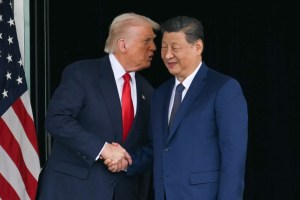
Bessent, Greer, Li and He laid the groundwork for a scheduled meeting between Trump and Xi on Thursday on the sidelines of the APEC Summit in South Korea, where the leaders are expected to finalize the agreement. “I think we’re going to have a deal with China,” Trump said following the meetings between trade officials.
In an effort to cauterize the conflict, which has been festering for the better part of a decade, Bessent said Trump plans to visit Xi in Beijing in early 2026, while the Chinese president is slated to attend the G20 Summit in Florida at one of Trump’s properties next December.
On Monday, the president set out on the second leg of his journey, landing in Japan and meeting with Emperor Naruhito at Tokyo’s Imperial Palace for the first time since 2019. Administration officials including Ambassador Greer traveled with Trump to Tokyo.
The Japan News reported that the two countries are now planning to establish a “Japan-U.S. shipbuilding working group” memorandum that will collaboratively enhance shipbuilding capabilities as a means of reducing reliance on China-made vessels, with hopes of giving the partners a leg up in the competition with the world’s most prominent shipbuilder.
According to the outlet, the parties plan to set up a working group to carry out the plan, which will involve joint investment into the building and bolstering of shipyards to give Japanese and American shipbuilders a competitive edge. They may also explore homogenizing vessel designs and parts to allow for greater collaboration. During trade negotiations over the summer, Japan committed to invest $550 billion into U.S. industry and infrastructure, with shipbuilding called out as an area of interest. At the time, Trump called the agreement “the largest deal ever made.”
The draft memorandum, which will likely be signed by Land, Infrastructure, Transport and Tourism Minister Yasushi Kaneko and U.S. Ambassador to Japan George Glass, stipulated that “a strong and innovative shipbuilding industry is vital to the economic security, strength, and competitiveness of the maritime sector and the industrial resilience of both nations.”
Trump is scheduled to meet with Japan’s first female Prime Minister, Sanae Takaichi, on Tuesday, where the two are expected to lend their signatures to a memorandum regarding rare earth minerals.
While Trump’s first 36 hours on the continent have led to largely positive progress, back home in North America, a government shutdown rages on in Washington and trade tensions with Canada have again reached a boiling point.
Trump, incensed by a revelation last week that Canada’s Ontario province was running an anti-tariff ad featuring a voiceover of President Ronald Reagan, said over the weekend that he plans to add to the country’s tariff burden by levying a further 10 percent duty on its exports to the U.S. Now, Canada will pay 35 percent tariffs.
Taking to Truth Social Saturday evening, Trump accused the Canadian government, helmed by Prime Minister Mark Carney, of attempting to capitalize on the legal challenges his tariff regime is facing, taking particular umbrage with the fact that the ad, now paused indefinitely, was allowed to run during the World Series.
“The sole purpose of this FRAUD was Canada’s hope that the United States Supreme Court will come to their ‘rescue’ on Tariffs that they have used for years to hurt the United States,” Trump Truthed. The high court is set to hear oral arguments for and against Trump’s International Emergency Economic Powers Act (IEEPA) tariffs on Nov. 5.
“Ronald Reagan LOVED Tariffs for purposes of National Security and the Economy, but Canada said he didn’t! Their Advertisement was to be taken down, IMMEDIATELY, but they let it run last night during the World Series, knowing that it was a FRAUD,” Trump wrote. “Because of their serious misrepresentation of the facts, and hostile act, I am increasing the Tariff on Canada by 10% over and above what they are paying now.”