
OXFORDSHIRE, England –At the World Economic Forum in Davos last month, British Prime Minister Theresa May signaled that a post-Brexit Britain will become even more globalized and internationalist in spirit.
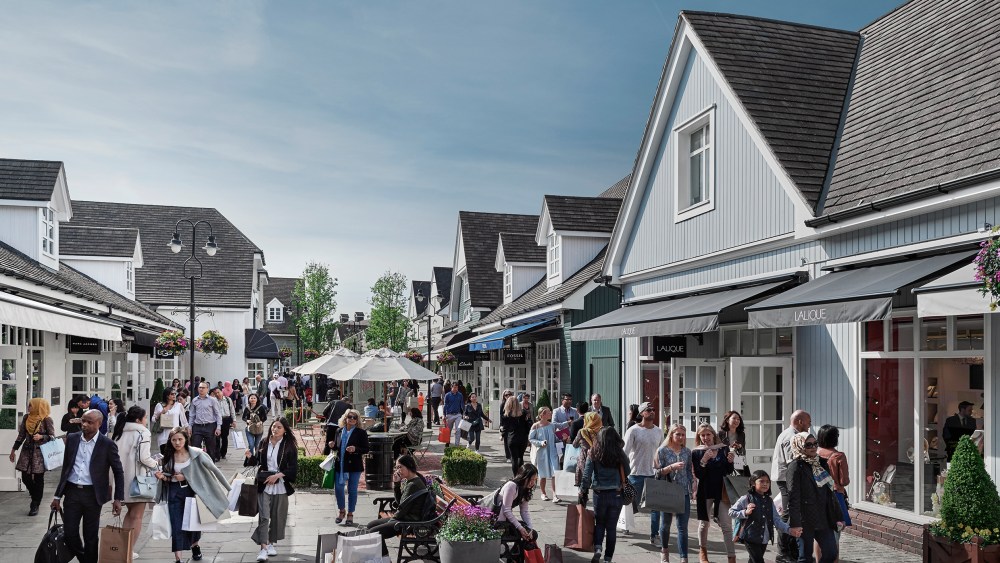
Stores at Bicester Village, a high-end international outlet development with 130 brands like Mulberry, Burberry and Alexander McQueen, certainly got the memo. They have geared up for a bumper Chinese New Year, which runs this week. For December, China was the top contributing market in terms of non-EU tax refunded sales at Bicester Village, according to official figures from the luxury outlet village. This was a 22 percent increase in Chinese tax refunded sales compared to the same period last year.
Related Articles
Consumers from the Middle East and Asia are nothing new to Bicester Village, which is part of the Value Retail chain and boasts 11 outlets in Europe and China. However, this Chinese New Year, with the weak pound and growing appetite for international travel amongst Chinese tourists, Bicester Village has gone above and beyond to welcome in the Year of the Rooster. It still remains to be seen just how much those efforts are translating into real sales as the company declined to disclose details on how Chinese New Year sales are progressing as of press time.
You May Also Like
By 2020, total overseas spending by the 186 million Chinese projected to travel abroad will be $349 billion per year, up from an estimated $229 billion in 2016, according to an estimate by Fung Global Retail & Technology, together with China Luxury Advisors, in their second annual survey of Chinese consumers who travel abroad. The study noted that as middle-class incomes rise, millions of Chinese tourists are able to take their first overseas trips.
One such tourist is a 30 something office worker from Beijing, Xue Jiang. “I first heard about Bicester Village at home in Beijing. On this trip, I went to Scotland for four days, London for three days and now Bicester for three days. I have come to Bicester Village everyday. I am spending more money because the pound is weak and I am buying lots of shoes here. Foreign brands in England are cheaper than they are in China,” she said.
This is just the type of Chinese consumer that Bicester Village is hoping to tap into during Chinese New Year, a weeklong national holiday in China. The international outlet village already caters to its Chinese guests through focused hospitality teams and dedicated centers on the ground, some of whom speak Mandarin or are trained to be culturally sensitive.
The ease of transportation to Bicester Village has improved since the introduction of a frequent train service from London Marylebone just over a year ago, taking 45 minutes door to door, which now represents 7.5 percent of total footfall. Other added bonuses for hardcore Mainland shoppers are the left luggage area at the train station, a hands-free concierge service, which transports purchases all the way from the store to the drop-off at Marylebone station, air miles redemption, the ability to redeem VAT on all tax free purchases on-site, and crucially, a 10 percent off offer for China UnionPay members, which is also available across Value Retail villages in Europe.
During the Chinese New Year period, Bicester Village is placing a special focus on Chinese guests, with over 80 brands participating in offers, traditional red envelopes handed to visitors and messaging in windows, in-store and on vinyl banners for the festive season.
Over the past couple of years, Value Retail has opened two similar villages in China, one in Shanghai and one in Suzhou, however, the company claims that those new openings have not cannibalized Chinese consumer spending internationally, with the spending for 2016 in Bicester Village up 10.5 percent year on year, according to company figures.
Chinese tourists are targeted by the outlet village at home, through promotions on a Chinese language website and tourism partnerships. As part of the Chinese New Year initiative this year, Chinese guests claiming their tax refund on-site are also offered redemption vouchers of 100 renminbi ($14.5) to use at Value Retail’s outlets in China, Suzhou Village and Shanghai Village, making the most of cross-promotional marketing opportunities.
The ability to shop using a Chinese bankcard is a bonus for many Chinese travelers, and 95 percent of stores at Bicester Village accept UnionPay as a method of payment.
“We use our 10 percent UnionPay discount here. For us, the weak pound doesn’t really matter because we just buy what we want to buy,” said Ray Liu from Tianjin, who was spending the day at the outlet village shopping with his girlfriend.
Walking around the outlet village, it is easy to spot Chinese shoppers flitting in and out of luxury stores. The types of consumers visiting the high end shopping village in the UK, however, are not necessarily price sensitive enough to be affected by the currency fluctuations in the pound, or may have booked their visit to the country before the shock news about Brexit.
“I’m just looking around to see if there is anything suitable for me and for my friends to buy, the weak pound doesn’t make a difference to me. The 10 percent off Union Pay discount makes a difference, but you can’t use it in every store,” said student Shu Zhaozhang.
Shopping is seen as a legitimate hobby for many Chinese consumers and “retailtainment” centers, which combine shopping, dining, and entertainment experiences, are becoming increasingly appealing to Chinese holidaymakers. In a recent report by McKinsey China, The Modernization of the Chinese Consumer, two-thirds of consumers said that shopping with family is the best way to spend time with them, an increase of 21 percent compared to three years ago.
“It is more convenient to shop here than in London. We have just come here for the day to have fun, not because it is cheaper,” said Frank Zhu from Shanghai, who was visiting the outlets with his wife and children.
In terms of recent spending patterns amongst Chinese tourists at Bicester Village, the modernization of the Chinese consumer is in evidence.
“Anecdotally, it has been suggested that the Chinese guests at Bicester Village seem younger than last year, more fashionable, visiting more brands than the usual luxury ones. We don’t have any hard data on numbers of Chinese guests eating in the Village’s restaurants, but generally the Farmhouse restaurant has proved very popular with guests and the dwell time at Bicester is much greater than in department stores in London,” said a spokesman.
Although prices in the UK might be cheaper for now, the market for retailing foreign goods to Chinese consumers is hotly contested and businesses will have to differentiate themselves on many other aspects other than just price.
“Research talks about a consumer less and less inclined towards shopping tourism, and more towards travel experiences where they can purchase products that are not available anywhere else. On top of that, the governmental attempts at reducing price difference between China and the West, as well as global pricing policies applied by luxury brands, are reducing the opportunity for shopping abroad,” said Andrea Fenn, founder of Fireworks, a digital consulting agency based in China.
As Chinese consumer spending matures, taste follows suit. However, even if millennials and early adopters at the forefront of Chinese shopping trends are not as inclined to go on shopping excursions abroad, there is still an army of newly minted Chinese consumers who are.
“Older or lower-tier consumers will be still attracted by shopping tourism. Most organized tours still include visits to outlets in Italy, France and I imagine UK as well. The low pound would certainly be a very strong motivator if choosing between Paris and London as a shopping tourism destination,” said Fenn.