PARIS — As luxury brands increasingly turn to art and culture to stand out in a crowded market, Maison Maróm is building a cultural group of companies from the ground up, positioning an upstart fashion label as part of a wider ecosystem.
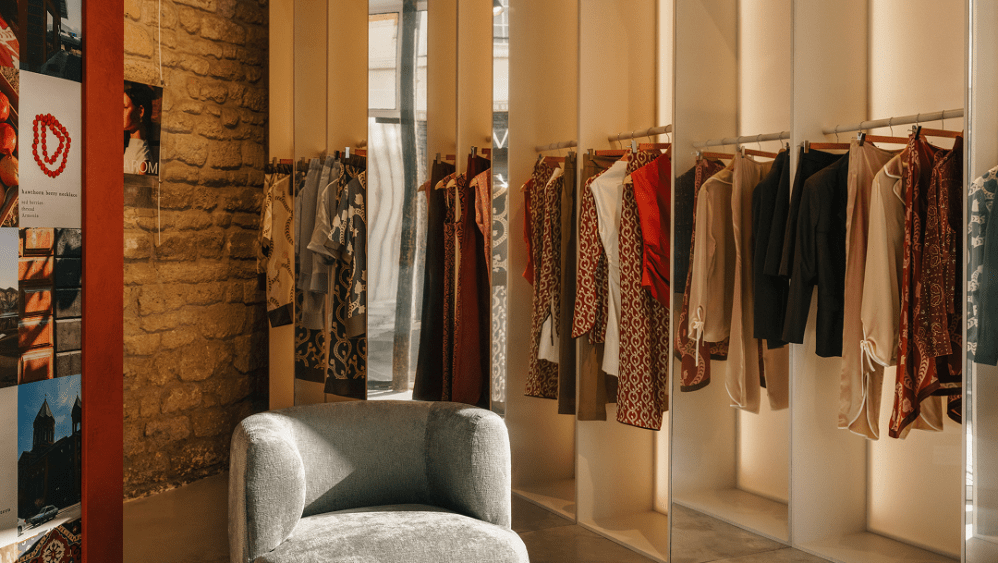
The fashion brand, Maróm, opened a pop-up in Paris on Wednesday. It is the first physical showcase of its debut collection and a testing ground for its big ambitions.
Maison Maróm was cofounded in 2024 by Marita Gevorkyan and Olga Medelyan to elevate Armenian cultural heritage on a global stage.
Related Articles
It is not just the fashion label, but a multipronged “cultural universe,” with interconnected projects spanning a concept store called Rien-a-Porter; cultural foundation Hosq, which hosts artists’ and writers’ residencies as well as festivals, and experimental food concepts such as Melonpan, which traces the Armenian origin of the popular Japanese baked good with a restaurant in Yerevan and which recently hosted an exhibit in Japan.
You May Also Like
In Paris, that philosophy is translated into a tightly edited fashion offer at the Marais store. The studio collection has been developed through dual ateliers in Paris and Yerevan, combining emerging Armenian talent with more experienced French teams.
“We always come from real authentic heritage,” Maróm chief executive officer Marine Guinobert said in an interview. “It won’t be a folklore or a museum brand. It’s still about Armenian heritage, but it is contemporary.”

The clothing itself is rooted in research, with intricate swirling patterns on silks and linens based on Armenian art. The brand works with an in-house historian to source archival patterns and motifs, some dating back centuries. For example, one print is based on embroideries from the 1600s, reinterpreted on a modern loose pajama-style silhouette.
The collection is focused on natural materials including Italian silks and wool, as well as organic cotton for pieces produced in Portugal, while knitwear is made in Armenia.
The brand produces between 50 and 70 designs, with each style made in runs of 50 to 100 units. The full range is released in a single annual drop.
Maróm’s aesthetic is positioned as elevated everyday wear, including relaxed tailoring, soft silhouettes and understated detailing, such as the brand’s logo discretely looped on the waistband of drawstring pants.
Womenswear accounts for around 70 percent of the collection, with menswear making up the remainder, alongside a growing jewelry category. Silver pieces incorporate Armenian historical motifs, including the culture’s circular and spooled infinity symbol, rendered in hoop earrings.
The Paris pop-up sits within a wider ecosystem that extends beyond fashion into food, hospitality and cultural programming.
“The idea and guideline from Marita is to work all together, even if we are building our project separately and maybe not in exactly the same market,” said chief executive officer Guinobert, who formerly held positions at Fast Retailing’s Comptoir des Cotonniers and Princesse Tam Tam brands, as well as L’Oréal.
“So, I’m already thinking about how we can work with our chef of Melonpan, or what kind of event we can build with the foundation. We each build our own [house], but we want to work all together to build a strong message and a real consistency across the brands,” she added.
Unlike many established luxury houses, which increasingly borrow from art, gastronomy or heritage institutions to reinforce brand relevance, Maróm is attempting to structure culture itself as the foundation of its business model.
With the overall luxury market struggling, Guinobert believes that positioning can help Maróm differentiate.
“Of course, it’s not the best moment [to launch a brand] and the fashion market is changing a lot — but there is so much possibility,” said Guinobert. “There are a lot of people now who want more meaning, a more deep connection when buying, and they want to feel that we share not only clothes, but values.”
The foundation invites global creative figures to work in Yerevan, with the aim of both developing local talent and exporting Armenian cultural perspectives internationally. The company sees this as a two-way exchange, anchored in diaspora communities as well as cultural tourism.
In that sense, Armenia functions less as a reference point than as a structural origin for the brand’s identity.
Guinobert added that the young brand is taking an experimental approach to growth. At the moment, she is prioritizing short-term activations and test markets before opening any stand-alone stores.
“We don’t work as a classic brand and company,” added Guinobert. “We work fast, we try, and we test. We need the opportunity for customers to touch and feel the quality. That is the best way to make customers understand our position very fast.”
Beyond product, the pop-up itself is being used as a live testing ground for future expansion, with an eye toward a possible Los Angeles pop-up next.