Mexico has become the latest country to suspend shipments to the United States market as the de minimis provision winds down this week.
Correos de México, the country’s postal service, follows in the freshly trodden footsteps of European carriers like Germany’s Deutsche Post and DHL Parcel Germany, U.K.-based postal service Royal Mail, Norwegian postal group Posten Bring, Swedish-Danish group PostNord, Belgium’s Bpost and Austrian Post, which announced they were suspending service to the U.S. last week.
Related Stories
Japan and Australia, too, have announced that their postal carriers will halt shipments of parcels worth $800 or less, which have historically been able to enter the U.S. duty-free under de minimis.
In a statement Wednesday, Mexico’s government espoused hopes that the decision to stop service will not be permanent, and that ongoing negotiations with the U.S. will yield a fruitful outcome for the shippers and importers of small, low-value packages on either side of the border.
“Mexico continues its dialogue with U.S. authorities and international postal organizations to define mechanisms that will allow for the orderly resumption of services, providing certainty to users and avoiding setbacks in the delivery of goods,” it wrote.
The move won’t just impact businesses trying to ship goods to customers, but average Mexican citizens looking to send parcels to friends and relatives in the U.S. The announcement comes just hours before the trade provision is due to expire on Aug. 29.
China, the most prolific user of the duty-free “loophole,” saw its access revoked on May 2. President Donald Trump then set his sights on restricting access for the rest of the world, with an eye trained specifically on Mexico and Canada due to his perception that porous borders and a free flow of commercial goods were allowing drugs like fentanyl to be trafficked into the U.S.
He signed an executive order officially ending de minimis treatment on July 30. Now, packages that would have once sailed through customs with ease will be subject to more stringent formal entry requirements along with tariffs and fees.
Reactions from U.S. brands, retailers and producers have been mixed, with small businesses and drop-shippers fulfilling orders from overseas feeling vexed that their products, now subject to import duties, will be rendered less competitive.
The National Council of Textile Organizations (NCTO), a longtime proponent of de minimis reform, believes on the contrary that de minimis has undercut American manufacturers by allowing millions of packages containing impossibly cheap wares into the country unchecked.
“Those addicted to the profits of de minimis have been raising alarms about the change to the status quo perpetuating false information, but the fact remains that consumers will still receive their online orders,” NCTO president and CEO Kim Glas said Thursday.
“These packages—over 90 percent of which enter the United States as express shipments—will now come in under a system that is fair, transparent, and enforceable. U.S. Customs and Border Protection (CBP) is equipped to handle this change and has the systems in place,” she added. “The U.S. Postal Service is ready and has the systems in place. The U.S. is not stopping international mail.”
Amid the continued confusion surrounding tariffs and de minimis, Mexico appears to be attempting to curry favor with the U.S. by limiting the domestic access and influence of its biggest competitor: China.
According to reporting from Bloomberg, the Mexican government is gearing up to boost tariffs on Chinese imports including textiles, plastics and cars as a part of a 2026 budget proposal that will be submitted to the country’s Congress in September.
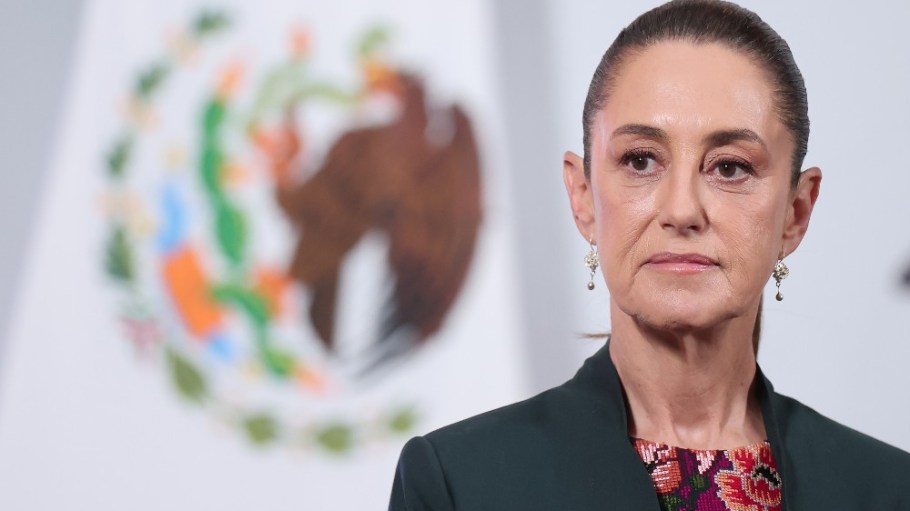
The outlet wrote that Mexican President Claudia Sheinbaum may also see the move as a means of raising government revenue and offsetting the country’s budget deficit.
“China firmly opposes moves that are taken under coercion to constrain China or undermine China’s legitimate rights and interests under any pretext,” he said, saying “unilateralism, protectionism and discriminatory and exclusive measures” have no place in dealings between the two nations.
In a press conference Thursday, China Foreign Ministry spokesperson Guo Jiakun decried the rumored move.
“Mexico is China’s second largest trading partner in Latin America, and China is Mexico’s third largest export destination. Our trade and economic cooperation benefits both sides,” he said.
“China firmly opposes moves that are taken under coercion to constrain China or undermine China’s legitimate rights and interests under any pretext,” he added, saying “unilateralism, protectionism and discriminatory and exclusive measures” have no place in dealings between the two nations.
Guo’s criticism of protectionism to was likely a reference to Trump, who has pedaled rhetoric about Chinese products entering the U.S. market via Mexico for months. The American president has put pressure on his Mexican counterpart since taking office, urging her to put a stop to transshipment of China-originating goods and to limit China’s influence on Mexico’s manufacturing sector.
Sheinbaum, for her part, has acquiesced in many instances to Trump’s requests, almost certainly with the goal of safeguarding Mexico’s relationship with its biggest export market, along with protecting Mexico’s burgeoning apparel industry from competition from Chinese operators.
In January, Sheinbaum signed an executive order upping duties on certain categories of China-made apparel by 15 percent or 35 percent, effectively restricting the flow of duty-free clothing imports for several months.
Meanwhile, earlier this month, the country raised duties on low-value shipments worth $2,500 or less from countries that aren’t part of free trade agreements from 19 percent to 33.5 percent.