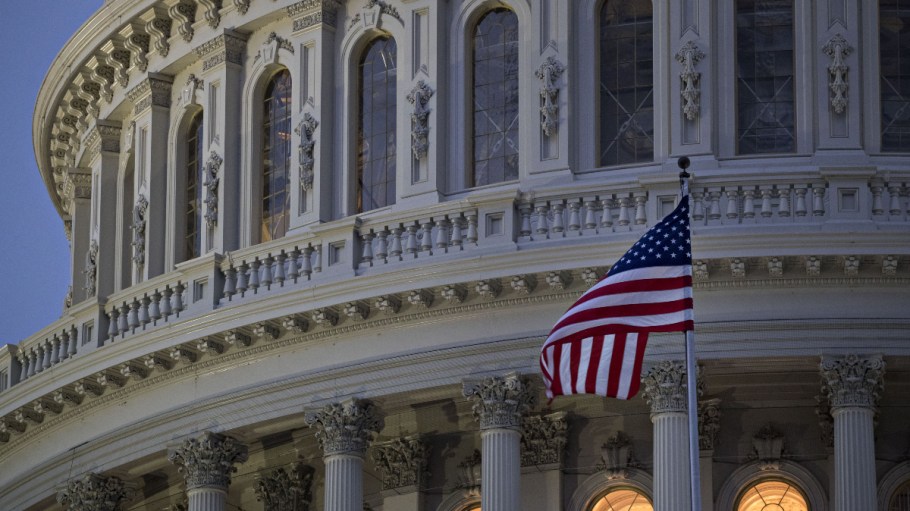
During a mark-up session on Wednesday, the House Ways and Means Committee discussed advancing legislation offering three-year extensions of the African Growth and Opportunity Act (AGOA) and the Haiti HOPE-HELP trade preference and aid programs—both of which lapsed in late September without a renewal despite widespread and bipartisan support from lawmakers.
Lawmakers hope to pass the extensions, which would renew the programs until December 2028, swiftly, so they may be included in the Continuing Resolution temporary spending bill.
Related Stories
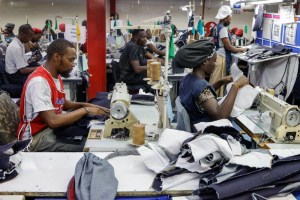
The AGOA Extension Act would extend the duty-free treatment of imports from nearly three dozen sub-Saharan African countries and provide for repayments of duties paid since the program expired on Sept. 30. It would preserve the original statute’s Third Country Fabric provision, which extends free-trade AGOA benefits to beneficiary countries even if they use yarns and fabrics from other markets (like China), provided the finished products undergo a substantial transformation. The provision has allowed African apparel hubs to produce and export finished goods with imported inputs as they work to establish more self-sufficient supply chains.
Meanwhile, the Haiti Economic Lift Program Extension Act would extend the Haiti HOPE and HELP preference programs, which support Haiti’s textile and apparel sector by granting them duty-free access to the U.S. market.
Democratic Alabama Congresswoman Terri Sewell noted that the lapse in AGOA benefits over the course of the past month “is doing real harm.”
“Without these trade preferences, African exporters face sudden and significant tariff spikes—costs that may may not be absorbed. For some countries, these duties are doubling or tripling the cost of doing business with the United States, and every day that passes without congressional action means loss of orders, shuttered factories and weakening supply chains,” she said. “Let me be clear, the cost of inaction is falling hardest on low-income producers and emerging industries in Africa, but American businesses are paying the price as well.”
The AGOA region is not just an opportunity market for production, but for exports, she added, noting that Africa’s population is projected to double by 2050 as its middle class expands. “Africa is not just a humanitarian or diplomatic priority—it is a growth market. It is a strategic market. It is a market where the United States cannot afford to fall behind.”
Representative Adrian Smith (R-Neb.) agreed, calling AGOA a “unique opportunity to strengthen trading relationships through market signals and cooperation on our partners’ trade and investment policy, rule of law, as well as worker and human rights.”
AGOA also represents “a signal to the world” that the U.S. is committed to maintaining strong partnerships in Africa—an effort America should be willing to broadcast in light of growing global influence from its greatest competitor.
“We cannot sit on the sidelines while our global adversaries, including the Chinese Communist Party, spread their malign influence across the continent of Africa as and elsewhere,” Smith said. “As the Trump administration redefines trade engagement, AGOA can be a complementary trade policy as we look to build mutually beneficial reciprocal trade.”
Moving onto the the Haiti Economic Lift Program Extension Act, Stacey Plaskett, delegate to the House of Representatives from the U.S. Virgin Islands’ at-large district, called the country “our strategic ally” in the region, often aligning itself with U.S. interests. It’s one of the few countries in the Western Hemisphere that still recognizes Taiwan’s sovereignty, for example.
“Support for the Haiti’s apparel sector is mutually beneficial,” she went on to say. “Haitian apparel utilizes a great deal of American grown cotton, and when [the preference program] is in place, plays an essential role in further shifting supply chains out of China and into the Western Hemisphere.”
Plaskett said that a short-term extension of Haiti HOPE-HELP “will preserve production and jobs in Haiti, while providing a runway for Congress to further strengthen this program, assisting Haiti in diversifying its economy beyond textile production, which can often be a global race to the bottom on labor costs.”
Congresswoman Gwen Moore (D-Wis.) called Haiti HOPE-HELP “a toehold into maintaining economic and national security” in the region. “This whole program not only is vital for restimulating the economic wellbeing of Haiti, but it’s also in our national interest. I mean, this is our hemisphere. We’ve bragged heartily how we’re protected by two oceans, but if we continue to alienate our neighbors in the Caribbean and in our hemisphere, I don’t think that that is a very wise program and a strategy,” she said.
The American Apparel and Footwear Association (AAFA) has long supported the renewal of both AGOA and Haiti HOPE-HELP. The trade group said the programs’ lapse imperiled sourcing operations for fashion firms and their producers, which rely on uninterrupted, stable investment and access to the U.S. market.
The uncertainty surrounding these programs could inhibit companies looking to diversify operations into these burgeoning textile and apparel production areas and prompt those already engaged in doing business there to reconsider their long-term strategies, the group has said.
AAFA has advocated for a 16-year AGOA extension, but Beth Hughes, its vice president of trade and customs policy, said the group is optimistic about the prospect of a three-year extension.
“This renewal will be a major win for American workers, our partners in Sub-Saharan Africa and Haiti, and for U.S. competitiveness,” she said. “These programs safeguard and support 3.6 million American workers while sustaining jobs abroad and opening markets for U.S. cotton and textile exports. Restoring them is urgent, cost-effective, and bipartisan—exactly the kind of practical leadership our supply chains need.”
Dr. Sheng Lu, professor of fashion and apparel studies at the University of Delaware, said he believes brands and retailers, along with apparel suppliers from AGOA countries and Haiti, will welcome the renewal though it falls short of their hopes for a longer-term extension.
“Should the two trade preference programs be approved for a three-year renewal, they will support U.S. fashion companies’ short-term sourcing from the region, especially since these countries also have relatively low ‘reciprocal tariff’ rates of 10 percent,” he said.
“However, because of a lack of long-term policy assurance and certainty, U.S. fashion companies as well as other stakeholders will be hesitant to make long-term investments in the region.” Without new investment to increase Africa’s production capacity, it will be difficult for fashion firms to substantially scale up their sourcing from AGOA countries. “In other words, AGOA and Haiti may mostly still be viewed as sourcing diversification options rather than key sourcing bases,” Lu said.
What’s more, a three-year renewal “could trigger a new round of debate about their next renewal and potential reforms immediately.” With a presidential election in 2028, the timing for the next extension could be “complicated” by those potential changes, the academic added. “Additionally, it may not be ideal for AGOA and Haiti to have many different ideas about their future circulating, which could make fashion companies even more hesitant to commit to long-term investments in the region, not knowing what to expect after three years.”
The Trump administration has voiced its support for a one-year extension of AGOA, with U.S. Trade Representative Ambassador Jamieson Greer reiterating that stance on Wednesday at a Senate Appropriations subcommittee hearing. However, he said he may support excluding South Africa from the program. “If you think that we should give South Africa different treatment, I’m open to that because I think they are a unique problem,” he said.
On the day AGOA expired, Senator John Kennedy (R-La.) introduced a revised plan, “AGOA 2.0,” which axed South Africa from the deal. The legislation would prioritize countries that support the economic and foreign policy interests of the U.S. for two years—a move to mitigate “China’s growing influence in Africa.” South Africa has aligned itself too closely with the interests of U.S. adversaries including China and Russia, the bill said.