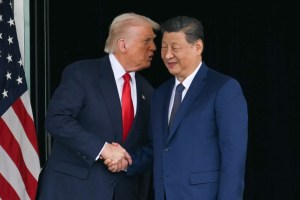
The United States-Mexico-Canada Agreement (USMCA), once referred to by President Donald Trump as the “best and most important trade deal ever made,” hasn’t lived up to the high expectations he set when he called it the “largest, fairest, most balanced, and modern trade agreement” on record and vowed that it would rebalance trade and drive U.S. manufacturing job growth.
Since he was sworn in for his second term, tensions between the North American trading partners put the future of the agreement in a state of flux. The president, once its primary proponent, even branded it “irrelevant,” noting that America’s neighbors are far more reliant on the deal than the U.S.
Related Stories
But even trade experts and lawmakers who believe the agreement has missed the mark, demonstrating dubious effectiveness at its stated goal of lowering the country’s trade deficit, said Tuesday that walking away from the six-year-old deal would be as much a disaster as allowing it to continue without improvements.
A webinar hosted by Rethink Trade illuminated the shortcomings and opportunities inherent within the USMCA three months before the deal comes up for its mandatory six-year review on July 1. According to the Washington-based think tank, which is an arm of the American Economic Liberties Project, the pact has failed to deliver on its stated goals, but it should be revamped, not scrapped.
Under the current USMCA, manufacturing jobs have fallen, with 91,000 roles lost from the beginning of the president’s second term through the end of 2025. The U.S. goods trade deficit with Canada and Mexico rose by 36.3 percent since the deal was signed into law, driven by a deep deficit with Mexico, which grew by a whopping 47 percent during the same period.
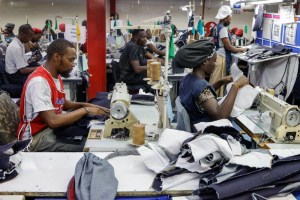
According to Rethink Trade’s research, the imbalance has been driven primarily by suppressed wages for Mexican factory workers, who earn an average of 40 percent less than Chinese workers in similar industries and 88 percent less than workers in the U.S. As such, foreign direct investment in Mexican manufacturing and logistics has exploded, especially following the China tariffs imposed during Trump’s first term, which created a burgeoning business in avoiding duties. The report cited Baker Institute data that identified 200 current Chinese manufacturing and infrastructure investments in Mexico, worth billions of dollars, by January 2025.
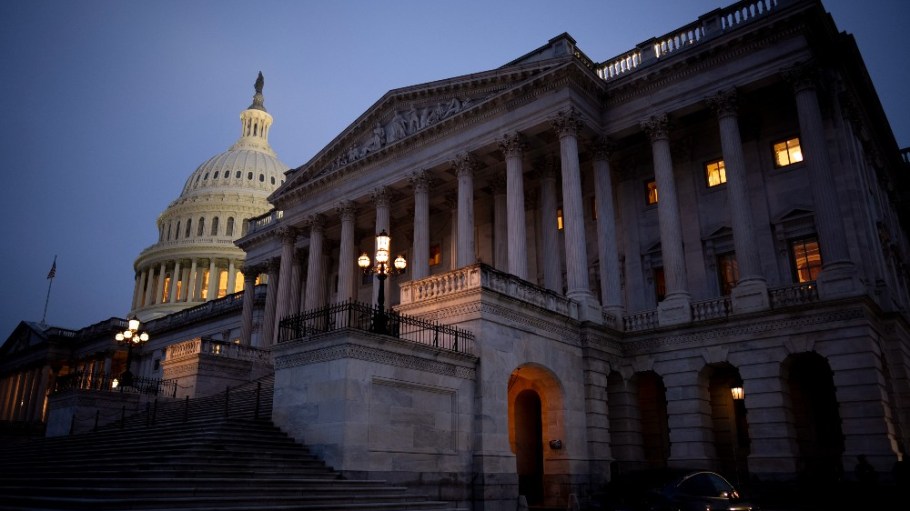
So why keep USMCA going? “Democrats—there were some of us who supported it—didn’t think it was the best trade deal. We believed it was a beginning,” U.S. Representative Debbie Dingell (D-Mich.), co-chair of the Democratic Policy and Communications Committee, said.
Dingell said it’s clear the legislation hasn’t passed muster, though it was, at the time, an improvement upon the North American Free Trade Agreement (NAFTA), instituting stricter content requirements for the automotive sector, enhancing labor standards and allowing for factory-level investigations, and giving the U.S. increased access for certain food and agricultural products.
“While we knew that the USMCA was an important step forward from NAFTA, the agreement was always intended to be a floor, not a ceiling, and we knew we’d have to reevaluate its impact and come back to it,” Dingell said. “And I hope the president is going to do that, because he said that he would… I hope he’s not going to abandon it, and I’m really worried about these negotiations right now.”
Dingell said she believes there’s plenty of hope for a better version of USMCA that lends stability to the trilateral free-trade relationship. America’s dealings with other nations across the globe have been imperiled by the threat of tariffs, and keeping this commitment to cooperation on the table is a must in the current trade environment.
But the renegotiation process must address the legislation’s pitfalls. “We have seen that what we did do on labor standards made some difference, but we’ve got to continue to address it, and we’ve got to address the continued offshoring of good jobs,” she said.
Noting that she is “5,000 percent committed” to the future of the agreement, Dingell added that she wants the renegotiated USMCA to ensure that “China does not build a plant in Mexico or Canada and try to market it as a North American product,” giving tariffed goods from overseas producers a thoroughfare into the U.S. market.
Rep. Rosa DeLauro (D-Conn.) echoed that USMCA “in its current form is simply not suited to addressing the current crisis that we are experiencing.”
The Congresswoman said she worries that the administration is pushing forward a review process with very few changes to the original statute. While Trump has threatened to pull out of the agreement, the DeLaura appeared on Tuesday to believe that was mostly bluster, and that it’s far more likely that USMCA will move forward without changes or a formal renewal (and be subject to annual, rather than six-year reviews) or that it will be renewed without the overhaul her party so desires.
U.S. Trade Representative Jamieson Greer hinted at as much on Tuesday at a Hudson Institute event. “We aren’t probably going to be able to resolve all issues by July 1,” he said. “But I think we are on track to resolve many of them and to move as quickly as we can.”
“It’s time for Democrats to engage like we did, to improve the deal that President Trump proposed,” DeLauro said. “I’ve said this is USMCA is not a model moving forward, but it establishes important principles we can build from.”
According to DeLauro, she wants to renegotiation process “to craft effective and meaningful labor standards, to protect workers rights, to construct an enforcement mechanism for U.S. and Mexico, raising, strengthening, protecting and enforcing environmental standards.”
During the first round of negotiations on USMCA, DeLauro fought for those provisions.
“We fought hard for the USMCA agreement to be different from our trade agreements of the past, which, quite frankly, sold out American workers and businesses by looking the other way when our partners abused their workers or cheated to drive down prices. I worked to ensure that wages and income in the United States and our trading partners did not get further suppressed,” she said, and to ensure that the agreement didn’t undermine U.S. wages to promote an environment ripe for outsourcing.
“We made progress, as has been established. There is no question, and none of us are denying that, and we established that floor that we could build from the important steps forward,” she said.
Rep. Chris Deluzio (D-Penn.) was more stark in his assessment. “Look, if these fixes to this agreement don’t happen, I think things will continue to get worse for U.S. workers,” he said. “The record has been clear—it’s been jobs shipped abroad, it’s been union busting, approved in places like Mexico and even in this country. It’s essentially giving a free pass to terrible working conditions, terrible environmental rules, suppressed wages abroad.”