Discussions between the United States and Mexico about the future of the trilateral pact facilitating North American free trade—the U.S.-Mexico-Canada Agreement (USMCA)—began on Monday.
Less than four months before the official review of the six-year-old deal is scheduled to take place, the process has already been bogged down by tensions.
They percolated to the point of occasionally boiling over as President Donald Trump’s expansive tariff regime took hold last year. Trump began his second term with shots across the bow at both Mexico and Canada, which he accused of doing nothing to curb the smuggling of fentanyl across U.S. borders. Threats of tariffs escalated, creating chaos and confusion that has morphed into strain and worry over the future of the relationship between North American allies.
Related Stories
Under the USMCA, which Trump brokered to replace the Bush and Clinton-era North American Free Trade Agreement (NAFTA) in 2020, a significant portion of imports from Mexico and Canada were spared from new duties—but certain automobiles, like trucks, do face a hefty 25 percent tariff, along with steel, aluminum and copper, which are taxed at 50 percent.
With annual trade between the three neighbors worth a whopping $1.6 trillion (about $4 billion in goods move across the U.S.’ border with Mexico and Canada daily), the importance of regional trade is undeniable. The countries involved, at the time of the USMCA’s negotiation, professed a desire to reduce reliance on China. But the rejiggering of the sourcing map has prompted a rebalancing of trade that Trump perhaps did not anticipate, and certainly doesn’t appreciate given his vow to usher in a new era of U.S. manufacturing dominance.
America’s trade deficit with Mexico in particular grew last year to record levels, reaching $197 billion as U.S. industry turned to nearshoring to replace China-centric sourcing models. Meanwhile, the goods trade deficit with Canada has shrunk significantly, falling more than 25 percent ($15.5 billion) in 2025 to $46.4 billion.
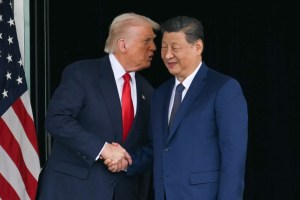
Despite the massive differential in deficits, Trump and cabinet members like U.S. Trade Representative Ambassador Jamieson Greer have painted Canada as the more difficult party to negotiate with. Trump has vacillated between indifference and contempt for the USMCA, at times threatening to pull out of the agreement altogether and work instead to negotiate two separate, bilateral deals with Mexico and Canada. In January, he called the deal, which he once characterized as a crowning achievement of his first term, “irrelevant.”
Moving forward, the parties have several choices. They could renew USMCA for 16 years (a longshot), they could continue to discuss improvements to the framework leading to a renewal by 2026, or they could allow it to lapse entirely.
There are USMCA proponents and detractors on both sides of the aisle. On Tuesday, Senator Chuck Grassley (R-Iowa) took to the Senate floor to expound upon the agreement’s benefits and call for its extension.
Speaking in honor of National Agriculture Week, Grassley said, “I would like to continue my review of the U.S.-Mexico-[Canada] Agreement—USMCA, for short. And I do it today by thanking President Trump for what he called, ‘the largest, fairest, most balanced and modern trade agreement ever achieved.’”
“I hope that President Trump remembers those words—and they were very appropriate words—as he leads the reconsideration of USMCA today,” he added, pointing to the pact’s upsides for American farmers, like a provision prompting Mexico to reverse its ban on non-GMO corn.
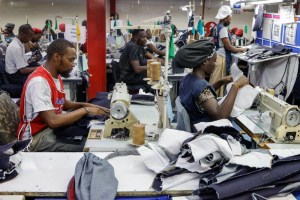
When it comes to apparel sourcing, none of the North American neighbors “has benefitted much from the apparent near-shoring interest and the overall tariff advantages over Asian suppliers in 2025,” according to Dr. Sheng Lu, professor of fashion and apparel studies at the University of Delaware—but that doesn’t mean the agreement doesn’t still have the potential to bolster the sector’s regional growth.
Imports of clothing from Mexico and Canada decreased by 0.4 percent last year, but USMCA’s utilization rate grew in spite of the sourcing slowdown. That’s a phenomenon Lu believes speaks volumes. About 88.7 percent of U.S. apparel imports from Mexico and Canada claimed duty-free benefits under USMCA, up from 86.1 percent in 2024 and 85.7 percent in 2023.
It’s tough to prompt companies to shift the way they manage operations in order to utilize free trade agreements unless there are significant upsides. Lu attributes the uptick in USMCA utilization to cost pressures and tariffs—the biggest anxieties facing executives today. It’s ironic, then, that amid increased interest in the agreement’s benefits and a tariff-driven trade policy pushing companies toward nearshoring, that Washington could be moving toward pulling the plug.
For Democratic Arizona Senator Ruben Gallego, there are several issues with USMCA that need to be ironed out in order to ensure its efficacy—and to stop China from using Mexico as a “back door” to the U.S. market—a worry that Trump has cited himself.
In a letter to Trump and Ambassador Greer last week, Gallego wrote that some elements of the trade agreement hadn’t delivered on their intended goals, opening up the U.S. market to the very vulnerabilities it hoped to avoid by spurring more regional trade.
“A renegotiated USMCA must include more robust labor standards and enforcement, wage protections, and updated rules of origin to prevent China from inflicting a second shock to America’s manufacturing workers by cheating their way into North American markets,” he wrote.
While the NAFTA replacement legislation enhanced labor standards and enforcement provisions, the past five years of usage indicate that more needs to be done to raise workers’ wages in both Mexico and the U.S. In Gallego’s estimation, “economic instability and financial stress for Mexican citizens perpetuate a cycle of illegal migration to the United States,” and “[a] robust Mexican middle class where workers earn higher wages will reduce” that issue.
At the same time, China’s ballooning exports to Mexico, as well as Chinese firms’ direct investment into Mexican industry, “[raise] the possibility of another China shock occurring in the United States via goods entering through the Southern border,” he added. Firms in China, some subsidized by the country’s government, have planted their flags in Mexico explicitly to gain preferential access to the U.S. market and to “evade trade-cheating penalties imposed on Chinese imports,” the letter said. China currently accounts for about 30 percent of global manufacturing output and its trade surplus is “at an all-time high.”
In order to counter these developments, the USMCA rules of origin requirements, along with other safeguards, must be strengthened during the review process, Gallego believes.
He also took shots at the administration’s “misguided use of broad, on-again, off-again tariffs and attacks on investments in critical supply chains,” saying that they’ve been “counterproductive”—”spiking input costs, enabling price gouging that harms American families and small businesses, and creating chaos that depresses investment in new factory construction and leaves border communities in a state of confusion.”
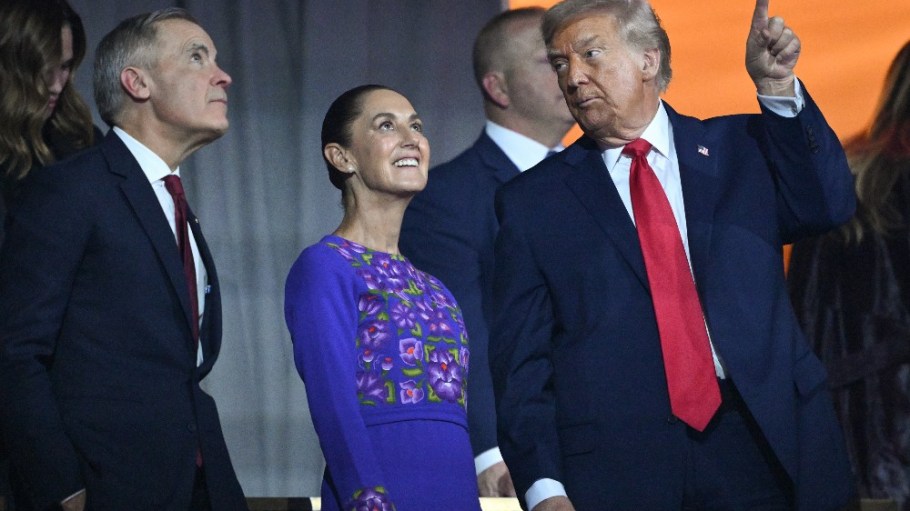
Mexican President Claudia Sheinbaum has sought to soften the blows caused by Trump’s persistent tariff threats with a measured approach, and there’s every indication her government plans to negotiate for better terms for Mexico while pushing for the renewal of USMCA. Earlier this month, she said Mexican trade officials will negotiate a drawdown of tariffs on goods that adhere to the spirit of the deal.
“We want the reduction—or outright removal—of all tariffs on products that comply with the rules of origin,” Sheinbaum said.