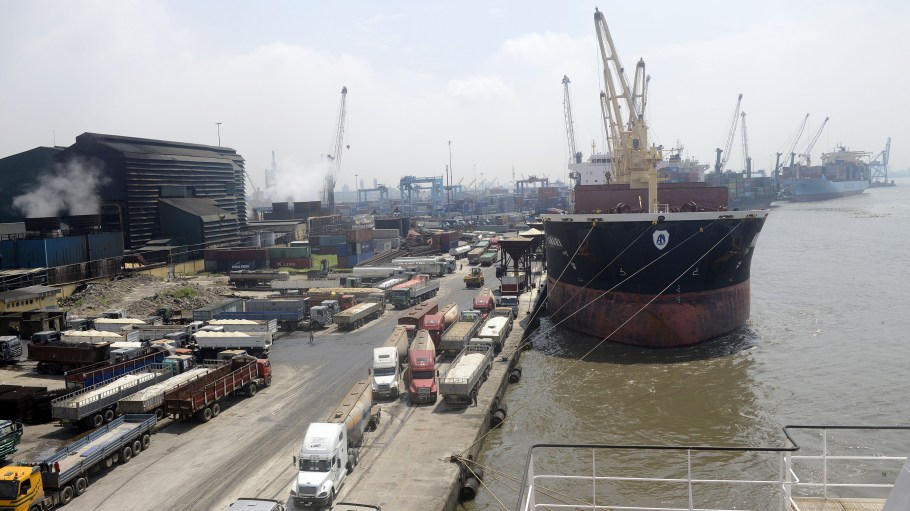
As global brands reassess sourcing concentration in Asia, diversification has shifted from a long-term aspiration to an active strategic priority. Rising costs, capacity constraints, geopolitical risk and tariff exposure have intensified pressure on sourcing teams to identify viable alternatives. Preferential trade frameworks, such as the African Growth and Opportunity Act (AGOA), have historically placed Africa in an advantageous position on the sourcing map.
Yet sourcing from Africa is not simply a matter of shifting orders.
Related Stories
Across much of the continent, apparel manufacturing capacity exists but remains disconnected from integrated supply chains. Production is fragmented, scale is limited, and supporting infrastructure, logistics, compliance systems, and supplier coordination are often weak. Meeting buyer requirements depends on alignment across factories, shared infrastructure, systems, and value chain coordination, which typically requires upfront investment.
That investment reality brings a practical question to the fore for sourcing executives, investors, and policymakers alike: Is there sufficient demand to justify the build-out? Increasingly, how this question is framed determines whether Africa moves from episodic interest to scalable integration into global supply chains.
The demand question is framed too narrowly
In most sourcing and investment decisions, demand is assessed almost entirely through export potential. The implicit assumption is that factories and infrastructure in Africa must be justified primarily by orders from global buyers.
This export-only framing creates a familiar chicken-and-egg problem. Buyers wait for proven capacity, while investors wait for committed volume. The issue is not that export demand is unimportant, but that it is treated as the only demand that matters.
In large African markets, domestic demand represents a second, powerful demand source. Under the right conditions, the same production capacity can serve export buyers while also supplying domestic and regional markets, under the African Continental Free Trade Area (AfCFTA).
Many Africa-focused sourcing initiatives stall because demand is evaluated through a single lens.
Nigeria and the logic of dual demand
Nigeria illustrates this dual-demand dynamic clearly. With a population exceeding 200 million, Nigeria combines significant consumer demand with limited domestic production capacity. Textile imports have risen sharply, reflecting a widening gap between consumption and local manufacturing. Annual apparel consumption is estimated at $2.5 billion to $6 billion, far exceeding current domestic output.
The implication is straightforward: Nigeria already represents a market capable of absorbing industrial production before a single export order is shipped.
For investors and sourcing strategists, this matters because factories established to meet export orders in Nigeria do not operate in a demand vacuum. They can substitute imports, supply domestic buyers, and serve regional markets under the AfCFTA, while using that operating base to support export production. The relevant question, therefore, is not whether export demand alone justifies investment, but whether total addressable demand does.
Why large domestic demand changes the investment equation
From a sourcing and investment standpoint, sizable domestic demand alters early-stage risk.
Domestic orders typically involve shorter lead times, simpler logistics, lower documentation costs, and faster payment cycles than export orders. While unit margins may be lower, domestic demand can improve baseline utilization, reduce idle capacity, and shorten the time it takes for factories to reach operational stability.
Export orders can then layer onto an already-functioning system rather than carrying the full burden of sustaining it. Domestic demand is not a substitute for exports. It is a stabilizing factor that makes investment more viable.
When demand is evaluated solely through an export lens, risk appears high and the case for investment fragile. When domestic and regional demand are incorporated in parallel, the economics change. Capacity utilization improves, learning curves shorten, and reliance on early export volumes decreases. Risk does not disappear, but it is redistributed. Diversification becomes a staged build rather than a binary bet.
Addressing the margin and ROI pushback
A common objection is that export markets deliver higher margins and clearer returns. At the unit level, this is often correct. However, factory ROI depends on more than margins alone. Utilization rates, order continuity, cash flow timing, and downtime costs materially affect returns. A factory operating sporadically on export orders alone may generate lower overall returns than one operating steadily with a mix of domestic and export production.
The relevant comparison is not export margins versus domestic margins, but whether total demand supports sustainable capacity.
The strategic takeaway
Sourcing outside Asia is not simply about shifting orders. It is about building new production systems capable of supporting those orders.
In Africa, the viability of those systems depends not only on export access but on the presence of large domestic and regional consumer markets. In its largest economies, Africa is not only an alternative production base competing on cost or trade preferences. It is a demand-backed production environment where domestic and regional consumption helps underwrite the investments needed to serve global buyers.
For executives navigating supply chain diversification in a constrained global environment, this distinction is not theoretical. It is central to whether Africa remains a peripheral diversification option or becomes a durable pillar of future apparel supply chains.
Eme Bassey is a textile, apparel, and industrial development specialist with more than a decade of experience across Africa’s manufacturing and trade ecosystems.
Bassey currently serves as Special Adviser on Cotton, Textile, and Garment (CTG) to the Honourable Minister of State for Industry at the Federal Ministry of Industry, Trade and Investment, Nigeria, where she supports industrial policy and value chain development initiatives. She is also engaged with the United Nations Industrial Development Organization (UNIDO), supporting the implementation of Nigeria’s Programme for Country Partnership (PCP). Her work focuses on strengthening regional value chains, enabling intra-African trade, and positioning manufacturing as a driver of economic growth and job creation.