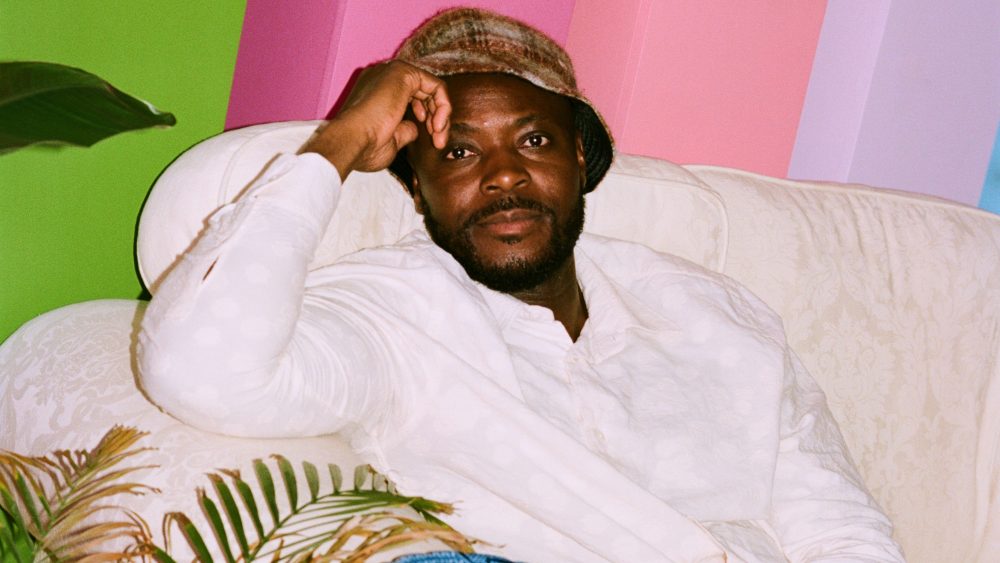
MILAN — Yinka Ilori, a British Nigerian multidisciplinary artist, designer and entrepreneur, is known for striking prints and designs that spark joy.
On Thursday, the London-based creative told WWD he’s focused on empowering communities in Nigeria and elsewhere and inspiring young talent.
In October, he launched the Yinka Ilori Foundation, a nonprofit organization dedicated to reimagining how communities around the world access creativity and opportunity.
Related Articles
The foundation’s first flagship site will open in Nigeria, marking the beginning of a movement to use design as a tool for social change. Ilori said the foundation will launch a permanent playscape created with and for local residents in the Ondo State. This space will feature modular play structures that are co-built with the community. Access to free cultural and skill-based workshops in music, craft, storytelling, entrepreneurship and fabrication will be offered alongside the new space.
You May Also Like
Here, Ilori discusses his new mission.
WWD: Why was it so important for your foundation to begin its work in Nigeria?
Yinka Ilori: There are many reasons. When I first went to Nigeria as a child, I realized the sheer luck of being born in the U.K. with free education, stable systems, public spaces and other privileges. I didn’t see many playgrounds, public spaces, or even basic things like proper footwear over there — and felt very grateful for the opportunities my parents gave me by moving to the U.K. Nigeria is bursting with creativity, resilience and culture, yet so many communities lack the resources to fully thrive. The work of the foundation could not only address practical needs like building safe, inspiring spaces for children but also celebrate local stories, crafts and traditions in a way that empowers individuals and communities.
WWD: How can design initiatives like these forge change in communities around the world?
Y.I.: For me, design has always been about more than aesthetics, it’s about creating change people can truly feel. I recently read that one in three U.K. children no longer play outdoors after school, even though outdoor play is proven to strengthen emotional and social development. That really stuck with me. It’s why the foundation feels so timely, we really want to reignite the power of play and creativity through these community spaces and initiatives.
We’ll also work with local organizations, artists and educators to make sure each project is rooted in its community from Day One. It’s not just about building spaces to me, it’s about building confidence, connection, and a real sense of ownership.

WWD: What region is most special to you?
Y.I.: It starts off in my mother’s hometown, Ondo State. That state is known as “The Sunshine State,” and I think the name really translates into the people, the culture, the dialect and the clothes they wear. Ondo State is known for its beautiful handwoven fabrics that people wear to showcase their heritage and identity.
WWD: You mentioned that your parents inspired you. How so?
Y.I.: Growing up, I saw my mum provide water to locals near her Nigerian home when she was there. After she passed away last year, I reflected on her selflessness and her impact, and that really pushed me to start the foundation. I want to provide hope to these communities and empower people to dream — whether it’s to become an artist, architect, designer, or musician. But to me, it all starts with play and public spaces that bring people together.
WWD: So the foundation is in honor of your mom?
Y.I.: Most definitely, yes. It’s about pushing the idea of empowerment through play, and my mom inspired it all.
WWD: Each Nigerian region is unique in terms of identity, heritage, craftsmanship and creative capital. In the same vein, the Nigerian diaspora continues to grow stronger and empower Nigeria’s own design community. Have you noticed this change?
Y.I.: Yeah, it’s insane, actually. It’s always been there. You’ve got great galleries like Omenka Gallery, Nike Art Gallery, and concept stores like Alara, designed by Sir David Adjaye, which is like the DSM (Dover Street Market) of Nigeria. They sell a lot of homemade Nigerian brands and products. They also host talks, exhibitions and installation throughout the year.
WWD: Your work is distinctly recognizable and celebrated all over the world and in museums like the MoMA. What influences your aesthetic overall?
Y.I.: My work combines my Nigerian heritage and roots, my parents’ use of color in Swiss foil laces and Dutch wax prints, and my love for storytelling and folklore, which my parents passed on to me. Early in my career, I was embarrassed about being Nigerian because of negative media portrayals, but now my work celebrates my heritage unapologetically, combining Nigerian storytelling, textiles, folklore and color.
New and Upcoming Projects
WWD: What projects are you working on?
Y.I.: I’m preparing a new edition series with Cristea Roberts Gallery, for Art Basel in Miami this December. Next year, I’ll have a solo gallery show in June or July, which will include prints, sound, music and film storytelling. It’ll be a full-on experience, and I’m truly excited about it.
WWD: The foundation isn’t the first time you have worked on community projects. Around the U.K. your murals and your playground in Barking, for example, have been honored at the highest levels, hence your MBE for your services to design. How do you balance murals, building projects and products?
Y.I.: It depends each year! For example, this year, I’ve only done one mural, but in other years, I may do more murals or focus on prints or products. One major project was my mural in Milton Keynes titled “Walk With Your Dreams,” which celebrates the Nigerian community there. My murals always seek to uplift and celebrate the communities where they’re placed. With the playground in Barking, I saw intergenerational play and joy — it was overwhelming in the best way.
WWD: What’s the next step for the foundation?
Y.I.: Next year, we’ll start research and workshops in Ondo State, talking to the community to understand what they need and design public spaces accordingly. We plan to engage local talent — fabricators, architects, carpenters — to produce the playgrounds locally. In parallel, we’re also identifying our next locations. Ghana is already on our radar, and we’re also assessing opportunities across the U.S., U.K., Middle East and Asia.