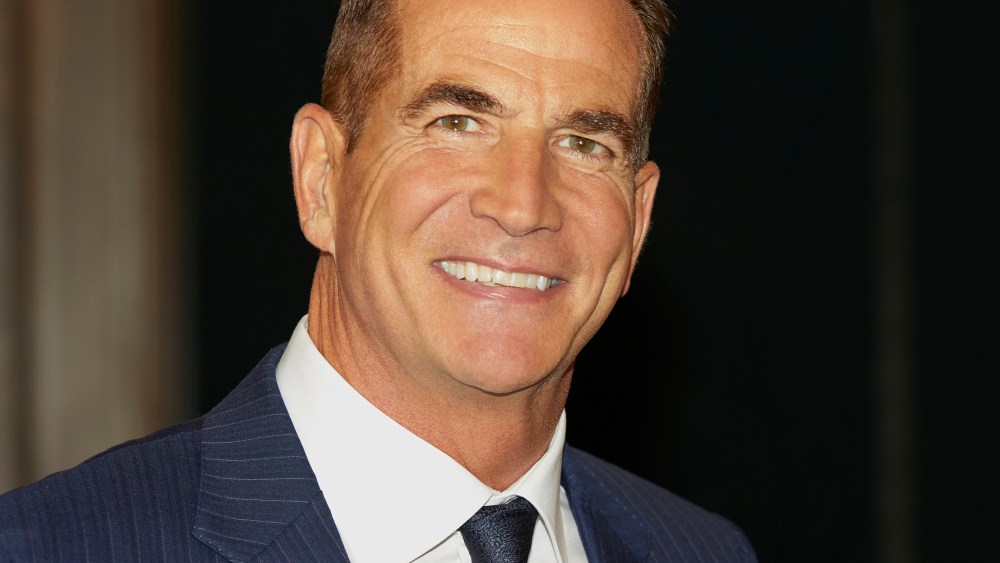
MILAN — David Kohler is the fourth generation of the family that in 1883 turned a cast iron horse trough into a bathtub by applying enamel and adding four legs.
Since being elevated to chief executive officer of his family-run company in 2015, Kohler has been focused on engineering proactive health monitoring systems like Dekoda by Kohler Health, an intuitive passive monitoring device that transforms daily bathroom routines into an opportunity to better understand hydration and gut health. He’s also on a mission to transform the bathroom into an in-home sanctuary of wellness. So far he’s done so with artistic panache, leading Kohler’s internal industrial design teams around the world, and collaborating with major figures in the industrial design and lifestyle sectors.
Related Articles
In Milan during design week, Kohler made headlines for its collaboration with Richard Christiansen and his Los Angeles lifestyle brand Flamingo Estate for “The Flamingo Estate Bathhouse by Kohler,” an immersive, multisensory installation that was graced by Kohler cast iron ambassador Martha Stewart.
You May Also Like
At Milan Design Week 2024, the firm unveiled its collaboration with fashion creative and industrial designer Samuel Ross and his industrial design studio SR_A, which included a massive sculptural installation in Palazzo del Senato and the release of the Formation 02 toilet, which features a heated seat, customizable cleansing, nightlight, hands-free opening/closing, automatic flush and a touch screen remote.
Both proved that even the in-home “shrine” could be elevated to a work of art.

The Kohler family has come a long way since 1873, when his great-grandfather John Michael Kohler cofounded the firm in the farming heartland of Sheboygan, Wisc. In an interview with WWD, Kohler reflected on the future.
WWD: Amid a rapidly evolving era in which the home is ever more a hub for family, relaxation and work, how does Kohler envision the evolution of living spaces, particularly bathrooms and kitchens, in the next 10 years?
David Kohler: Living spaces are becoming more intentional and wellness-centered. Kohler continues to be at the leading edge of evolving the bathroom from a functional space into a place for restoration, reflection, wellness, and even proactive health insights. A good example of this is the recent introduction of Dekoda by Kohler Health, an intuitive passive monitoring device that transforms our daily bathroom routines into an opportunity to better understand our health from home. Across kitchens and baths, the future continues to be about thoughtful design, smart technology, health and wellness, and sustainable use of resources, working together to elevate daily rituals.
WWD: In what ways is Kohler expanding its global footprint, and are there particular regions you’re focusing on for growth?
D.K.: Kohler operates in more than 50 countries, and our growth strategy is focused on regions where design, hospitality and wellness are converging. We’re continuing to invest in our largest markets, the U.S., China, India and all across Southeast Asia and EMEA [Europe, Middle East and Africa]. In 2024, we acquired KLAFS, the leading global luxury sauna brand, based in Germany. This move strengthens our wellness design leadership and reflects our focus on expanding capabilities, not just geography.
WWD: Kohler products uphold a balance in which functionality is imbued with artistic design. How does the company continue to innovate in creating spaces that inspire consumers?
D.K.: Innovation is about creativity, seamless design, intuitive technology, and making products people genuinely want to live with every day. We believe that great design creates emotion. To that end, we combine engineering performance with emotional resonance, whether that’s through enhanced showering and bathing experiences, smart toilets, or evolving heritage materials like cast iron.
We believe everyday objects can also be works of art, a philosophy embodied in our Pearlized finish, a softly luminous, light reflective surface that transforms functional products into something refined, expressive and quietly unexpected. Pearlized was developed in partnership with David Franklin, a two-time Arts/Industry resident and Kohler MakerSpace artist — programs that uniquely reflect Kohler’s commitment to craft, experimentation and creative exchange.
WWD: How does Kohler stay ahead of changing customer preferences, especially as the consumer has become more demanding, seeking both personalized and eco-friendly products?
D.K.: Our customers want spaces that reflect their values as much as their style. Personalization shows up in everything from tailored smart toilet and digital shower settings to highly customized design services. Sustainability means continued leadership in water efficiency, durable materials like enameled cast iron, and greater transparency around product impact. Personalization and sustainability drive innovation at Kohler so we can deliver more choices while helping people live more responsibly.
WWD: How does Kohler adapt its products and designs for global markets, considering cultural differences and preferences?
D.K.: It starts with respect for cultural differences and daily rituals. Bathing, cleansing and cooking vary by market. Our approach is to combine global brand strength with deep local insight to design for regional needs, codes and aesthetics while maintaining Kohler’s quality and design integrity. Kohler has design studios all over the world where we design and build products for the markets we operate in. Our global manufacturing network and in-market teams allow us to be authentic and specific and avoid one-size-fits-all solutions.
WWD: In 2024, you collaborated with fashion creative turned industrial designer Samuel Ross and his industrial design studio SR_A. How did the project perform? What was the response after that?
D.K.: The Samuel Ross collaboration pushed boundaries in the way we intended. It challenged expectations of what a heritage brand like Kohler can contribute to contemporary culture, sitting at the intersection of art, architecture and water in a way that felt provocative but grounded in real innovation. The response confirmed there’s real appetite for brands willing to take creative risks, especially when those risks are grounded in craft, material innovation, artistry and purpose.
WWD: How is conceptual design integral to Kohler’s strategy? How do you select talent?
D.K.: Conceptual design allows us to explore where culture, technology and ritual are heading before ideas become mainstream. It keeps us from thinking only in terms of incremental improvement.
We look for talent who embrace a passion for our mission to help people live gracious, healthy and sustainable lives. We explore different points of view and encourage associates to have a genuine curiosity about how water, materiality and space shape human experience. The best ideas challenge us as much as they inspire us. A terrific example of pushing innovative boundaries is Kohler’s Anthem EvoCycle smart shower, a recirculating dual-mode system that delivers up to 80 percent water savings in Cycle Mode while maintaining full flow — a tremendous sustainable solution, and we are thrilled to lead the industry in this important market.
WWD: Why is having a presence in Europe so important to growth?
D.K.: Europe remains one of the most influential centers for global design culture, wellness innovation and luxury hospitality. It’s not just a commercial market, it’s where many design conversations that shape the industry begin. Being present keeps us close to architects, designers, and developers whose work has global reach, which is why Europe is both a growth and leadership market for Kohler.
Our installation at Milan Design Week this year reflected that commitment, presenting a brutalist bathhouse created with Flamingo Estate where architecture, landscape and design come together as a single, restorative experience. Featuring “Reverie,” a Kohler enameled cast iron bath with a true copper shroud, the project explores how heritage materials, craft, and restraint can support enduring wellness and a more thoughtful way of living.
WWD: How did Kohler perform in 2025?
D.K.: We saw continued momentum and market share growth in our key geographic markets and product segments. We continued to demonstrate design and technology leadership with an array of new products in kitchen and bath, health and wellness, and premium experiences. We continued investing in innovation, sustainability and wellness-forward launches including smart toilets and bidets, Kohler Saunas, and the Kohler x Remedy Place Ice Bath. Our focus remains on strengthening the foundation for long-term growth.
WWD: What is your guidance for 2026? How do you think the bath market will perform and what are the major challenges?
D.K.: In 2026, we expect the premium and luxury market to remain strong. Our target customers and designers love their homes and are passionate about creating beautiful spaces that deliver long-term value through well-being, durability and timeless design.
The challenge is navigating global economic uncertainty while exceeding expectations around sustainability and performance. The opportunity lies in quality, restraint and meaningful innovation, which is exactly where we’re focused. Projects like Kohler’s collaboration with Flamingo Estate in Milan reflect how we’re thinking about the future through design, craft, and nature to create experiences that are relevant, restorative and enduring.