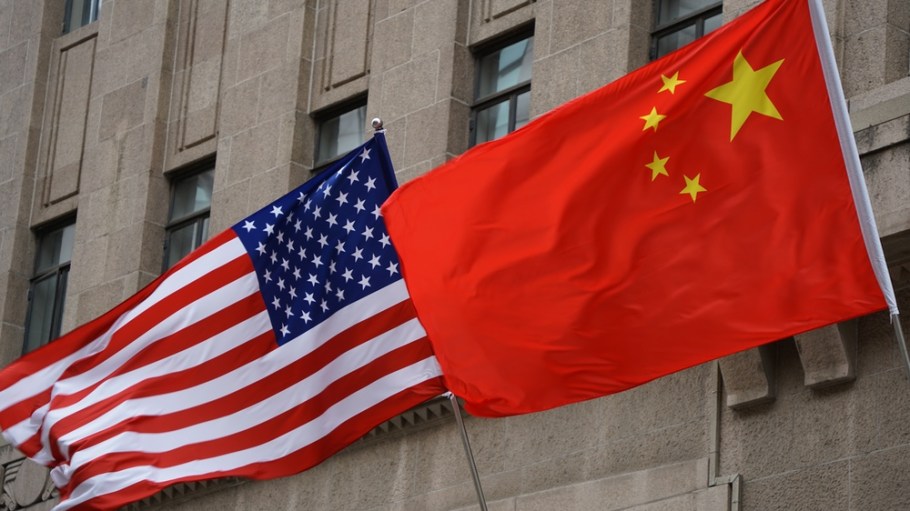
China announced Wednesday it would raise its tariffs on goods inbound from the United States—previously set at 34 percent—by 50 percentage points to 84 percent.
Beijing’s biggest blow in the tumultuous trade war brewing between the two countries comes after President Donald Trump’s 104-percent tariffs on Chinese imports took effect Wednesday morning.
On “Liberation Day,” Trump slapped a 34-percent tariff on goods imported from China on top of the existing 20 percent. At the time, Beijing said it would hit back by imposing the same duty on U.S. imports—and it followed through. As a result, Trump threatened a 50-percent tariff on Chinese goods inbound into the U.S. if China did not rescind its retaliatory strike. Compounded with previous tariff decrees, that brought the tariff on most China-made goods up to 104 percent.
Related Stories
The move effectively means that Chinese companies looking to import goods from the U.S. will pay an 84-percent duty, while U.S. companies importing goods from China will pay 104 percent in duties. Experts project the added cost of goods resulting from such tariffs could be passed down to American consumers, who already exhibit price sensitivity amidst warnings from investors like Morgan Stanley that Trump’s tariff strategy increases recession risk.
Chinese officials have not made it immediately clear whether they plan to come to the table to negotiate with the U.S., as other leaders rush to cut deals after the “reciprocal” tariffs Trump slapped on their respective nations.
Lin Jian, spokesperson for China’s Ministry of Foreign Affairs, said Wednesday that Beijing “will not tolerate any attempt to harm China’s sovereignty, security and development interests.”
“If the U.S. truly wants to resolve issues through dialogue and negotiation, it should adopt an attitude of equality, respect and mutual benefit,” Jian said.
Still, Beijing has made a vow that it will continue the war, should Trump decide to hit again.
“If the U.S. insists on further escalating its economic and trade restrictions, China has the firm will and abundant means to take necessary countermeasures and fight to the end,” the Ministry of Commerce wrote in a statement regarding a white paper on trade with the U.S. it released Wednesday.
Investors are considering the potential for a residual burn fueled by the trade war; on Wednesday, the S&P 500 and Dow Jones Industrial Average were mixed following a steep sell off the last few trading days.
Though Trump has not yet directly commented on China’s latest hit in a trade war rapidly gaining steam, he posted a message again urging companies to bring sourcing and manufacturing back to the U.S.
“This is a GREAT time to move your COMPANY into the United States of America, like Apple, and so many others, in record numbers, are doing. ZERO TARIFFS, and almost immediate Electrical/Energy hook ups and approvals. No Environmental Delays. DON’T WAIT, DO IT NOW!” he wrote on his Truth Social account Wednesday morning.
Still, China’s latest round of tariffs threatens the health of U.S. manufacturers sending goods to China, the U.S.’s third-largest export destination; Beijing’s latest could see Chinese companies pulling away from U.S. imports because of price. Simultaneously, U.S. manufacturers often import components from China to create finished goods; those items will face significant price hikes when accounting for the import duties imposed by Trump.