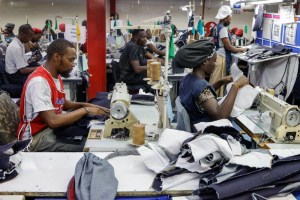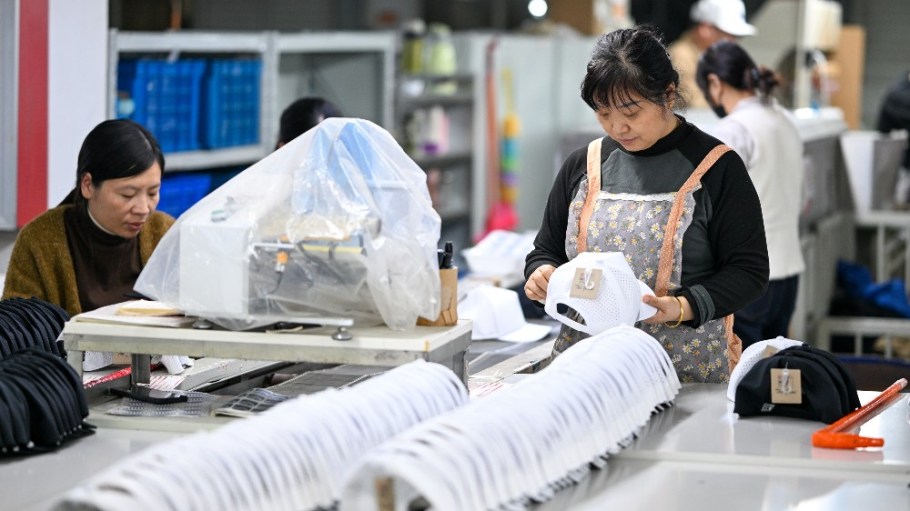
Amid protracted trade tensions with its largest export market, China’s manufacturing activity has slowed for the seventh consecutive month.
According to data released Friday by the country’s National Bureau of Statistics (NBS), the manufacturing purchasing managers index (PMI) contracted in October, falling to 49 from 49.8 in September—the lowest in six months.
Within the index, which is based on a survey of factory managers, a reading below 50 indicates contraction, while readings above 50 indicate growth. October’s 49-point reading was worse than the 49.6 projected by economists in a recent Reuters poll. Other sub-indexes that track new orders, raw material inventory, production and employment also fell.
Related Stories
According to Huo Lihui, an NBS statistician, the slowdown over the past month was due in part to an eight-day Chinese holiday, though “increased complexity in the global environment” contributed significantly.
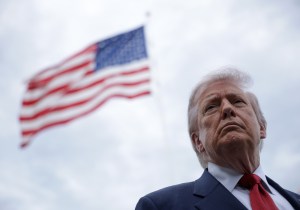
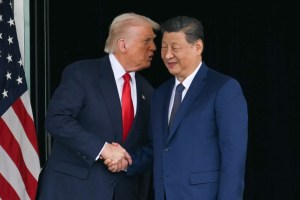
The news comes one day after a much-anticipated meeting between President Donald Trump and Chinese President Xi Jinping, which both American importers and Chinese exporters no doubt hoped would result in a lowering of trade barriers.
On the Chinese leader’s promise to address the smuggling of narcotic precursors via trade channels, Trump agreed to lower fentanyl tariffs from 20 percent to 10 percent. Xi also agreed to defer the export controls China recently announced for rare earth minerals by one year, prompting Trump to walk back his threat to levy 100 percent duties on China on Nov. 1.
While these developments portend an improvement in relations in the months ahead, a formal trade deal has not been signed. And while the leaders’ public performances were meant to signal mutual goodwill between the trading partners, plenty of complications and tensions remain.
For example, U.S. Trade Representative Ambassador Jamieson Greer told Fox Business on Thursday that a probe into China’s compliance with the Phase One trade deal signed during Trump’s first term would continue despite the progress made that day.
“We didn’t solve every problem in the U.S. China relationship today, there are a lot of issues with U.S. companies operating in China, or trying to operate in China, that are that are not resolved,” he said. “Today was really about making sure rare earths can flow to the whole world, making sure the Chinese resume [agricultural] purchases, making sure we get cooperation on fentanyl, and we got all of that stuff done.”
Referring to the rare earth export control truce—one of the most important points of discussion between the two leaders—Greer said, “We’ll have a one year period, and it’s a confidence building step.”
“Hopefully it’s a situation where we can find ways to trade together in a mutually beneficial way to balance out the trade deficit more to trade non-sensitive goods,” he added.
But the USTR Ambassador did not signal that this week’s negotiations represent an end, or even a beginning to the end, of trade negotiations or even retaliation. “If it’s something where the confidence building step doesn’t pan out, then we certainly have other options and other things we can do,” he said.