In the wake of hefty tariffs levied by the United States that have bruised global supply chains, China and the Association of Southeast Asian Nations (ASEAN) have solidified their own free trade pact aimed at deepening cooperation and reducing reliance on the American export market.
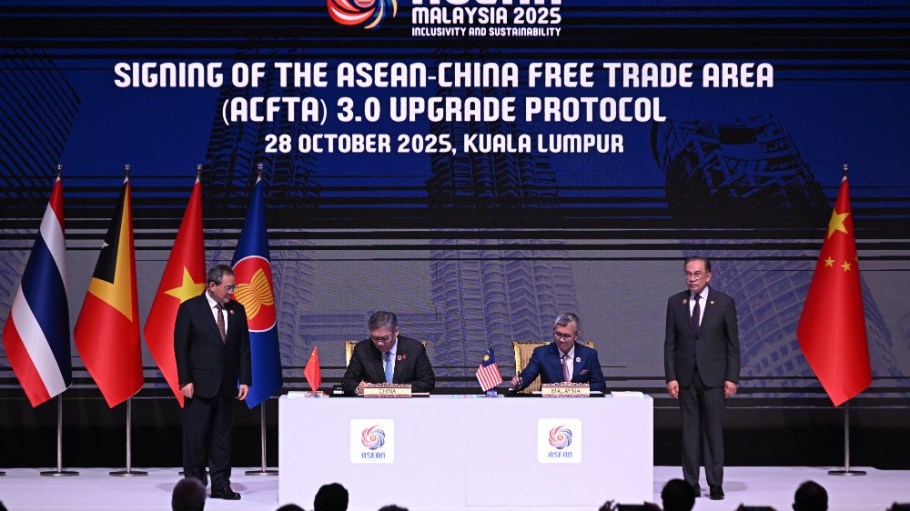
Signed on the sidelines of the 47th ASEAN Summit in Kuala Lumpur by China’s commerce minister Wang Wentao and Malaysia’s investment, trade and industry minister Tengku Zafrul Azizin in a ceremony attended by Chinese Premier Li Qiang and Malaysian Prime Minister Anwar Ibrahim on Tuesday, the plan upgrades an existing framework in an effort dubbed the China-ASEAN Free Trade Area 3.0 Upgrade Protocol.
Related Stories
With U.S.-bound exports from China dwindling due to tariff strain and uncertainty about how a potential trade agreement will shake out, regional trade between Asian nations has blossomed.
China and ASEAN—the trade bloc which includes Cambodia, Indonesia, Laos, Malaysia, Myanmar, the Philippines, Singapore, Thailand, Brunei and Vietnam—have been each other’s biggest trading partners for five years in a row, and the bilateral exchange of goods is only growing. During the first three quarters of 2025, China’s trade with ASEAN amounted to about $785 billion, up 9 percent from the same period last year, according to China’s State Council. Bilateral trade reached $771 billion last year, ASEAN government statistics showed.
Premier Li on Tuesday delivered an address at the ASEAN Summit urging China and ASEAN to join forces to resist or fend off “external disruptions”—a thinly veiled dig at fluctuating U.S. trade protocols that have upended supply chains and the regular flow of commerce.
The protocol agreed upon this week strengthens the existing 2026-2030 Plan of Action to Implement the ASEAN-China Comprehensive Strategic Partnership, Li said. By uniting through his framework, the nations will better be able to defend their rights and interests, increase trade, make strategic collaborative investments and integrate industries, he added, according to China’s official state media outlet, Xinhua.
The trade element of the plan is well underway. Currently under construction, Malaysia’s East Coast Rail Link is expected to highly enhance regional connectedness by bridging the distance between key cities and linking up existing railways along the corridor, which includes the 10-mile Genting Tunnel.
Meanwhile, Indonesia’s Jakarta-Bandung High-Speed Railway and the China-Laos Railway are already facilitating the movement of goods under China’s Beld and Road Initiative, which the country’s government said had reduced the cost of transportation and logistics.
The next phase of collaborative investment will be sky-bound. An air cargo partnership between ASEAN and China known as the Zhengzhou-Kuala Lumpur “Air Silk Road” will reportedly streamline cross-border logistics and e-commerce between China and Malaysia.
“ASEAN must seize this opportunity. This is why I encourage our logistics companies, especially local airlines and ground handling companies, to be more proactive in connecting with partners in the ASEAN region, consolidating more ASEAN products for export to China,” Malaysian Transport Minister Anthony Loke Siew Fook said, according to a memo from China’s State Council.
Outside of trade, China and ASEAN plan to work together to expand industrial supply chains for automotives, including electric vehicles and batteries, technology and green energy.
China and ASEAN have a history of working together in such capacities, as both are members of the world’s biggest trade bloc, known as the Regional Comprehensive Economic Partnership (RCEP), which spans about 30 percent of global gross domestic product. While the ASEAN Summit was taking place earlier this week, Malaysia also hosted its first RCEP Summit in five years.
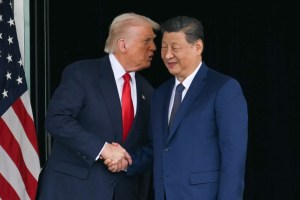
China’s talks with ASEAN this week ended with a signed memorandum, but negotiations with the U.S. are continuing to heat up in anticipation of a sit-down between President Donald Trump and Chinese President Xi Jinping.
Trade officials from both sides met over the weekend to establish a framework for the deal, which is expected to be finalized by Trump and Xi on Thursday. In it, according to the Wall Street Journal, is a potential commitment by the U.S. to roll back certain tariffs if China addresses the export of fentanyl and chemical precursors to the U.S. market.
Sources familiar with the state of negotiations told the outlet that China’s government is expected to enact more controls over the manufacturing and sale of such compounds, and in return, Washington plans to walk back up to 10 percent of the 20 percent tariff currently in place due to fentanyl. China’s tariff rate, currently the highest of any U.S. trade partner at 55 percent, would come down to 45 percent—lower than Brazil and India.
Treasury Secretary Scott Bessent has repeatedly expressed confidence that ratification of a trade deal through an amicable tete-a-tete between Trump and Xi will help avoid the imposition of 100 percent tariffs threatened by the American president earlier this month over China’s export controls.
“I believe that we have the framework for the two leaders to have a very productive meeting for both sides,” Bessent said on “Meet the Press” on Sunday.
Even should a productive deal be reached with China, the bulk of Trump’s tariffs, imposed using the International Emergency Economic Powers Act (IEEPA) could be unraveled in the coming weeks.
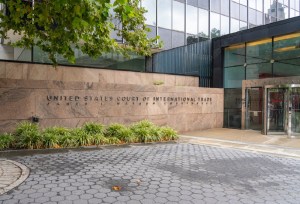
On Nov. 5, the Supreme Court will hear oral arguments in the case against the president and his tariff regime. On Tuesday, the seven small businesses—led by toy company Learning Resources—announced that they had chosen a lawyer to represent them in court next week.
Neal Katyal of international law firm Millbank LLP was appointed to the role following a coin flip and “a few days of discussion between the parties,” CEO of Learning Resources Rick Woldenberg said. “We are honored to be represented by Neal at this important moment in the case, and are putting all our energy into preparing for the hearing in Nov. 5th.”
Katyal served as an acting solicitor general for the Obama administration and earlier this year worked on another challenge to Trump’s tariffs led by wine and spirits distributor V.O.S. Selections. That case was later combined with the Learning Resources case.