Material World is a weekly roundup of innovations and ideas within the materials sector, covering news from emerging biomaterials and alternative leathers to sustainable substitutes and future-proof fibers.
Kintra Fibers

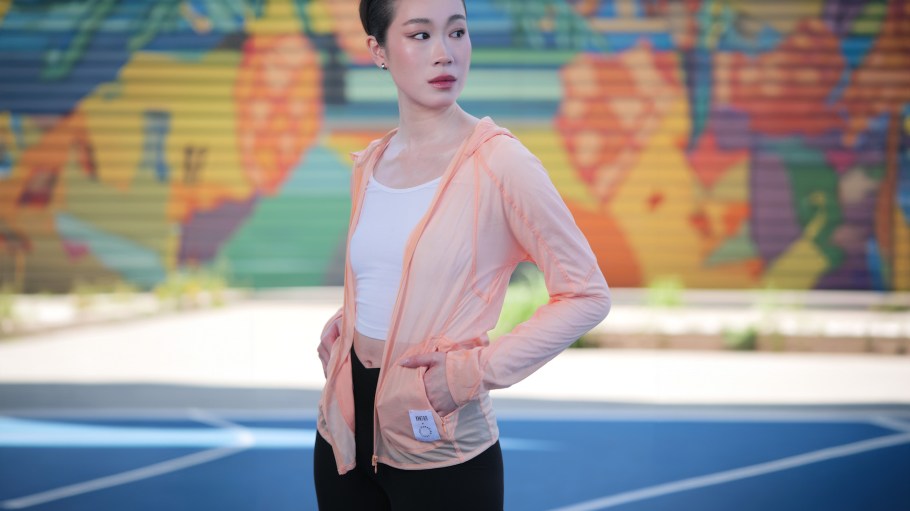
Paradise Textiles, the material science hub of Alpine Group, teamed with Kintra Fibers to produce the first garment using the materials science company’s proprietary bio-synthetic material. The resulting jacket serves as a proof-of-concept milestone, following a successful pilot project between the two companies last year.
Related Stories
“At Paradise, we continually seek innovative fiber technologies that offer a lower carbon footprint and serve as viable alternatives to fossil-based synthetics,” Lewis Shuler, head of innovation at Paradise Textiles, said. “Kintra not only meets these criteria but also delivers additional benefits in impact and performance. We are excited to further our collaboration, leveraging Kintra’s potential to engineer a diverse range of textiles.”
Made on the same equipment as conventional polyester, Kintra’s resin is estimated to reduce emissions by 95 percent, water usage by 30 percent and energy consumption by 20 percent.
Paradise Textiles’ performance tests found that Kintra yarns are on par with polyester in strength but are four times softer and twice as stretchy. Fabric tests found that Kintra’s knits and wovens are on par with—or surpass—the polyester benchmark in strength and durability tests, including tensile strength, seam slippage and tear strength.
Paradise Textiles chose to debut a jacket made from Kintra because of the material’s “outstanding” abrasion and pill resistance. The jacket also underscores Kintra’s compatibility with existing machinery and processes.
“The creation of this prototype is a testament to the viability of our material and a significant step forward in transforming the fashion industry toward sustainable practices,” Billy McCall, co-founder and CEO of Kintra Fibers, said. “Paradise Textiles’ expertise in innovative fabric development has been instrumental in bringing our vision to life, and we are excited about the potential this partnership holds as we move toward commercial-scale production.”
Lenzing
Lenzing Nonwovens expanded its Lenzing Lyocell Dry fiber portfolio with two cellulosic fiber choices. One is a fine, dry fiber that delivers strength and softness, while the other option is a coarse, dry fiber that enhances airflow. Both materials will help the regenerated cellulose fiber supplier’s customers “confidently broaden” what applications Lenzing can support.
All Lenzing fibers in the Lyocell Dry family—standard, fine and coarse—have hydrophobic properties, thus ensuring “efficient liquid management” for extensive nonwoven applications. The new fine fiber offerings go a step further, producing nonwoven fabrics with higher density than Lenzing Lyocell Dry’s standard fiber.
The coarse fibers render wide, open fabrics due to its extended fiber diameter. In turn, the “pore sizes” between the fibers in the fabric increase, allowing more air (or liquid) to flow through the material. It’s “particularly suitable,” Lenzing said, for the acquisition and distribution layer in hygiene products. The group is exploring industrial filter applications as well.
“By offering a diverse range of hydrophobic cellulosic fibers from fine to coarse—which are not plastic, according to the EU’s Single-Use Plastics Directive—our customers can use alternative fibers for a wider range of applications while delivering superior performance,” said Monique Buch, Lenzing AG’s executive vice president of nonwovens.
Lenzing will showcase its Lyocell Dry fiber family during the Hygienix conference held Nov. 18-21.
Green Theme Technologies
Green Theme Technologies (GTT) just closed a $6 million Series C funding round.
Pangaea Ventures and Cottonwood Technology Ventures, two VCs known for supporting sustainability and material innovation, led the round. The funding will strengthen the water-free and PFAS-free textile finishing maker’s mission to transform the industry—and meet the “urgent needs” of both consumers and manufacturers—with its high-performance, sustainable technology, Empel.
“GTT’s Empel technology aligns perfectly with our mission to invest in companies creating impactful solutions,” said Dave Blivin, managing partner at Cottonwood Technology Ventures. “Their approach to eliminating toxic PFAS from the textile production process is groundbreaking, and we are excited to support their expansion and success.”
Green Theme’s water-free performance technologies provide sustainable alternatives to traditional textile treatments by removing harmful chemicals and minimizing water use. The influx in capital will be used to expand GTT’s development capabilities, scale its tech and meet the mounting demand. The funding will also drive “continued RCD efforts” to refine Empel and grow the company’s global impact.
“We are delighted to partner with investors who share our commitment to environmental stewardship and innovation,” said Tom Lopez, CEO of Green Theme Technologies. “With this investment, we are well-positioned to accelerate our growth, advance our technologies and drive meaningful change in the textile industry. Our solutions offer an effective way for manufacturers to produce high-performance products without sacrificing sustainability, and we are excited to expand this impact.”
Lead investor Pangaea Ventures specializes in hard tech investments, focusing on planetary health. Established in 2000, Pangaea Ventures is committed to advancing innovation for a sustainable future.
“Green Theme Technologies has developed a remarkable solution that meets an urgent need within the industry,” said Chris Erickson, general partner at Pangaea Ventures. “As lead investors, we’re proud to support a company pushing the boundaries of what’s possible in sustainable manufacturing.”
AMSilk
AMSilk, the world’s first industrial supplier of vegan silk biopolymers, and Ajinomoto Foods Europe, a company with over 50 years of experience in industrial fermentation and the affiliate of the globally established Ajinomoto Group, expressed mutual interest in entering a long-term partnership to biomanufacture silk proteins at Ajinomoto’s manufacturing facility in Nesle, France.
“As a global player with longstanding expertise, Ajinomoto is an ideal production partner for us,” Ulrich Scherbel, AMSilk’s CEO, said. “Their premier fermentation capabilities in France enable us to meet the demands of our European customers by providing nearshored, high-quality materials.”
As such, AMSilk is forming a strategic collaboration with the group, leveraging its experience in precision fermentation and its strategically located site in France. The space—near AMSilk’s key demographic—is “backwardly integrated” with locally-sourced raw materials and relies on renewable energy, in line with the supplier’s sustainable business practices. In taking advantage of Ajinomoto’s fabrication capabilities and its state-of-the-art facilities, the partnership will help AMSilk scale toward becoming a commercial supplier of spider silk-based proteins.
“We are thrilled to partner with AMSilk and are committed to accelerating the market development of their innovative products by supporting their large-scale biomanufacturing efforts,” Hiroshi Kaneko, president of Ajinomoto Foods Europe, said. “Together, we aspire to create a substantial economic and social impact while driving global innovation forward.”
Asahi Kasei
Japanese technology company Asahi Kasei has signed a memorandum of understanding with Aquafil, an Italian manufacturer of polyamide (PA6), to develop a “novel material” for 3D printing applications using Aquafil’s Econyl Polymer—a 100 percent regenerated nylon—and Asahi Kasei’s cellulose nanofiber (CNF). The agreement is supported by Tokyo-based trade company ITOCHU Corporation, which has made a capital investment (of an undisclosed amount) in Aquafil.
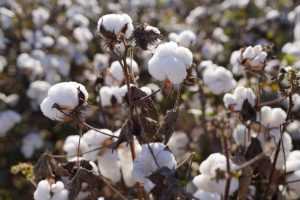
Econyl Polymer is a chemically recycled PA6 derived from pre- and post-consumer waste. Using polyamide waste from sources like fishing nets and old rugs, the material is depolymerized into monomers before being re-polymerized into Econyl Polymer chips. Asahi Kasei’s CNF is made from cotton linter and features high heat resistance and network-forming abilities, as well as superior material recyclability. Together, the CNF/Econyl Polymer compound showcases “excellent formability and strength,” particularly in 3D printing applications.
Asahi Kasei will begin trial filament sales in the European Union, United States and Japan by the third quarter of 2025. The material was showcased at Fakuma in Germany and the Sustainable Material Expo in Japan in October.
Cookiecad
Cookiecad
Cookiecad, a 3D printing filament and design company, revealed the TPU 95A: a soft, flexible and “remarkably strong” 3D filament.
“3D printing has gained a lot of popularity in recent years. Most people started with the hard plastic called PLA, which is great, but has a limited number of real-world applications,” said Melissa Kaye, lead designer at Cookiecad. “TPU opens the 3D printing community to new and exciting possibilities such as clothing, shoes, accessories and even combat robotics.”
Thermoplastic polyurethane (TPU) is a flexible and elastic material known for its rubber-like qualities. It’s a high-performance material ideal for textile applications, including wovens and tarps as well as nonwovens and synthetic leathers, as its waterproof, lightweight and durable.
“For younger people in the fashion space, and those in robotics especially, this kind of technology can really help people express themselves,” Kaye said. “Both creatives and engineers today want options other than boring gray, and this is going to open up a whole new world of color for them.”