Much has been made of the apparel sector’s waste-making ways and the impact of disposable fast fashion on developing economies, but new research suggests that the situation is more nuanced than previously thought.
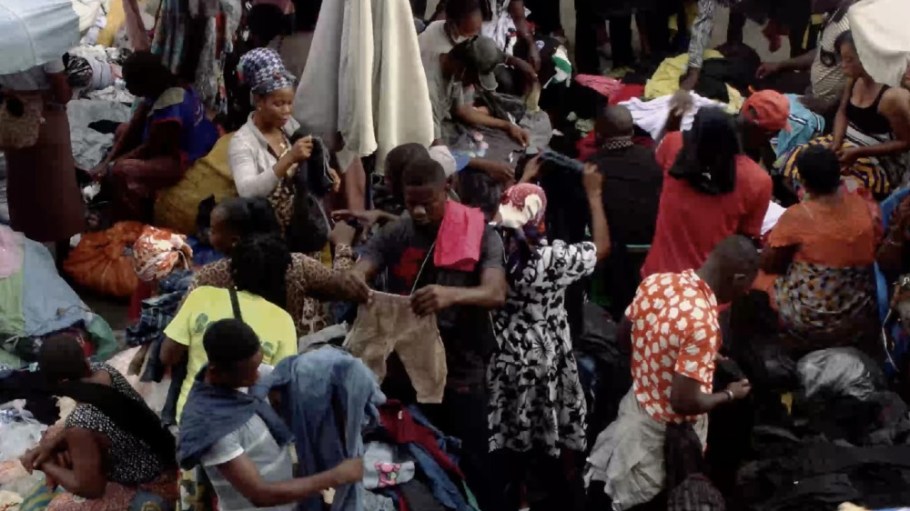
The Ghana Used Clothing Dealers Association this week released a report claiming that less than 5 percent of the secondhand clothing imported into the West African nation from offshore locales is actually waste—an assertion that upends the widely held belief that the continent has become a dumping ground for unwanted duds.
Related Stories
According to the group, which is comprised of 2.5 million dealers who sell used clothing, footwear and accessories, the secondhand market is part of a sustainable ecosystem that helps propel a global circular economy.
What’s more, about 95 percent of Ghanaians consume secondhand apparel, according to a survey of 621 respondents. The trade contributed $29.5 million to the country’s economy in 2022, with 92 percent of the 370 Ghana-based retailers surveyed saying they rely on the inventory to stock their businesses.
“The continued use of inaccurate information circulating in some parts of the media about the secondhand clothes trade must stop,” general secretary of the Ghana Used Clothing Dealers Association Edward Atobrah Binkley said. “Those who’ve spent years using and repeating false and inaccurate figures about waste in the trade should apologize now for the damage they have done and the harm they have caused.”
According to Binkley, the report aims to show that the secondhand apparel trade is low-waste and essential to promoting circularity, “providing a solution to the challenges of climate change and waste the world faces, as well as the over consumption of fast fashion that is wreaking damage on a global scale.”
“It is also pivotal to Ghana‘s economy and way of life, providing affordable clothing to millions while supporting livelihoods across the nation and contributing significantly to Ghana’s government tax revenues,” he added. “Policy makers should be extremely cautious before they further regulate an already well run and regulated, global trade based upon bad data and misleading figures.”
The report outlines new definitions of apparel waste as defined by the traders who sell it. Under 2 percent of those surveyed said stained or torn apparel was unsalable and therefore designated as waste, because such issues can be resolved easily through cleaning and repair. By contrast, 45.7 percent of traders said they consider clothing that “appears old”—either because it’s faded, worn out or outdated in style—to be waste, suggesting that it’s not new, trendy, fast fashion styles that aren’t selling, but well-worn vintage clothing, that doesn’t appeal to the market.
When apparel is imported into Ghana, traders buy it by the bale, and they’re largely unaware until after purchasing what kind of inventory they’re going to get. Still, 73 percent of traders reported between 0 percent and 4 percent waste in the bales they purchase regularly.

“In media reports there are two claims about the [secondhand apparel] industry in Ghana that dominate the narrative,” the report said. “One is that 40 percent of clothing items in imported bales are considered waste and almost immediately discarded, and related to this, the second claim is that secondhand clothes make up a large proportion of landfill waste and the waste polluting local waterways.”
Textile waste makes up between 1.7 percent and 2.2 percent of all waste in Accra, Ghana, the report said, referring to data from waste pickers.
According to the Observatory of Economic Complexity, an online database of trade insights, the biggest sources of used clothing for Ghana’s secondhand market in 2022 were the United Kingdom ($64.7 million), China ($40.8 million), and Canada ($10.6 million). The U.S. ranked No. 6 after the Netherlands and Poland, sending $5.5 million in used apparel to Ghana during the same time frame.
The report’s writers argued that Ghana isn’t just a destination for secondhand apparel, but an export market, and the resource bolsters the country’s economy. In 2022, the country exported $585,000 in used clothing, representing a “tangible contribution” to export earnings. Key destinations for that product included Benin ($242,000), Côte d’Ivoire ($173,000), Niger ($72,700), United States ($20,100) and the United Kingdom ($16,500).
Interviews with members of the Ghana Used Clothing Dealers Association showed an interest in driving circularity within the sector to manage the waste that does result from the grade. The report said, “[T]here is much scope within Ghana to make the trade more sustainable through investment in waste management facilities and greater collaboration between stakeholders such as vendors of [secondhand apparel], consumers, waste management companies and government agencies.”
While the trade group argues on behalf of the secondhand apparel trade and against its regulation, environmental activists, regulatory bodies and NGOs have said the free flow of used goods into African nations stymies local industry and harms the ecology.
In February, Greenpeace staged a protest of the fast fashion industry at Berlin Fashion Week, creating a mountain of textile waste more than 11 feet tall and 39 feet wide sourced from the Kantamanto Market in Accra, the largest secondhand market in Ghana.
The East African nation of Kenya has also been a massive recipient of secondhand apparel from across the globe, so much so that the Changing Markets Foundation titled a 2023 report, “Trashion: The Stealth Export of Waste Plastic Clothes to Kenya.” The group asserted that Kenya has become “ground zero” for fashion waste, which largely consists of synthetic garments that never biodegrade.
Traders in that market who were interviewed by Clean Up Kenya and Wildlight said that 20 percent to 50 percent of the used apparel they buy in bales is unsalable due to quality, damage, size or unsuitability for the market.
Meanwhile, research from the Kenya Institute for Public Policy Research and Analysis (KIPPRA) last year said the used clothing racket is also inhibiting the growth of the country’s local footwear and apparel sector. The country’s government is keen to build up its domestic fashion industry by enacting stimulus programs like the Buy Kenya Build Kenya initiative and investing in local cotton production—but locals aren’t buying enough new clothing to fuel growth, KIPPRA said.