Hand finishing remains a part of the jeans industry, but companies throughout the supply chain are increasingly adopting faster, more efficient methods to create jeans with sought-after fades and bold designs.
A new collection of fabrics by Soorty is made for exactly this reason.
The Pakistani vertically integrated denim manufacturer has partnered with Spanish finishing technology company Jeanologia to create Fast Fade, a collection of fabrics engineered to react optimally to digital finishing.
Related Stories
To achieve high-contrast, authentic denim without traditional, resource-heavy wet processing, Soorty aligned its fiber selection, yarn construction and weaving processes with Jeanologia’s laser and dry process technologies. By engineering the textile specifically for dry processes, the fabrics achieve outstanding wash effects while eliminating the need for manual whiskering, hand sanding and wet process chemistry.

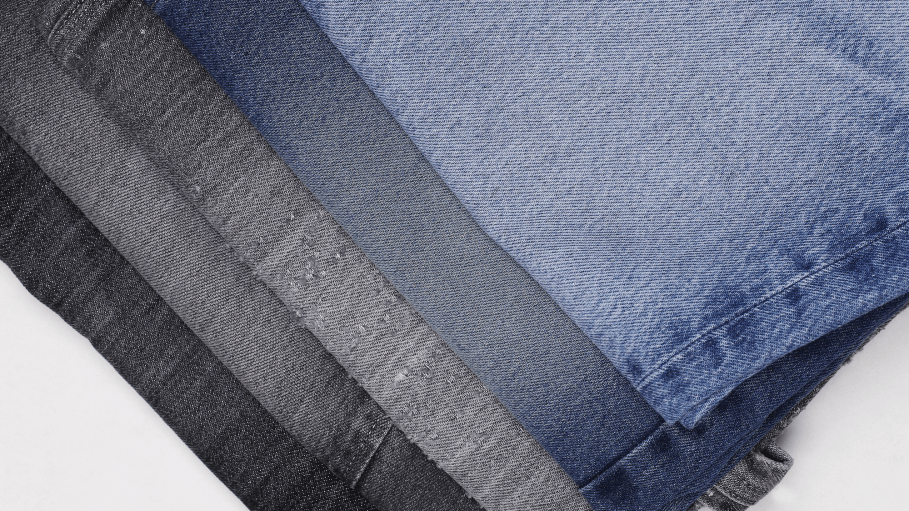
The Fast Fade collection offers five rigid fabrics: two indigo shades and three black shades. The shades were engineered to respond to laser and wash processes so surfaces open up, brighten and develop contrast rather than fading flat.
The fabrics are made with blends of conventional cotton, Tencel and Second Life, Soorty’s own traceable denim-to-denim recycled cotton.
Soorty says the collection represents a significant step toward scaling low-impact premium denim—all which is achieved through collaboration. This collection was months in the making. Jeanologia experts traveled to Soorty’s facilities in Pakistan to work on-site with the development team. Their work was followed by reciprocal workshops at Jeanologia’s headquarters in Spain.
“We trust Jeanologia’s expertise in innovative laundry technology completely—and that trust creates the right conditions for genuine exchange,” said Alper Cataloglu, Soorty Fabrics VP product development. “Sharing knowledge, sparking new ideas, learning from each other: this is what feeds both companies and pushes the work further. In this project, we also brought our fabric technology insights to the table, making it a truly two-way conversation.”