The United States is entering one of its most sport-saturated periods in years, with major national and global events drawing millions of fans into stadiums, watch parties and citywide celebrations.
Nowhere is this momentum more concentrated than in the denim industry’s U.S. hub, Los Angeles, which is set to host matches from the 2026 FIFA World Cup, Super Bowl LXI in 2027, and the 2028 Olympic and Paralympic Games.
With thousands of athletes and millions of spectators expected to pass through the city, L.A. is becoming a focal point of global sports culture. That surge of game-day energy is spilling into fashion, particularly denim—a staple that fits seamlessly into stadium style. From vintage jeans paired with team jerseys to licensed fan gear with a streetwear twist, the excitement is helping reframe denim as the unofficial uniform of modern fan culture.
Related Stories
Brands and retailers with denim roots are claiming their spots. Levi’s got an early taste with Super Bowl LX held in February at the Levi’s Stadium just outside of its hometown of San Francisco. The denim giant marked the event by rolling out immersive pop-up experiences and exclusive product drops like a collection of NFL team jackets with Starter and its latest collaboration with Jordan Brand.

Association with the cultural-defining sports event (and Bad Bunny halftime show) was a major win for Levi’s. Launchmetrics reported that mentions of the brand in relation to the stadium generated $110.3 million in media impact value (MIV).
Ralph Lauren also made its mark on sports this year. The U.S. heritage brand, a long-standing Olympic partner, stood out at the 2026 Milan-Cortina Games as the official outfitter for Team USA’s Opening and Closing Ceremony uniforms. According to Launchmetrics, the brand generated $100.8 million in MIV—a 4 percent increase over its typical monthly global coverage in 2025. By comparison, Ralph Lauren’s MIV from Milan Men’s Fashion Week in January totaled $28 million, highlighting the unique visibility of the Olympics.
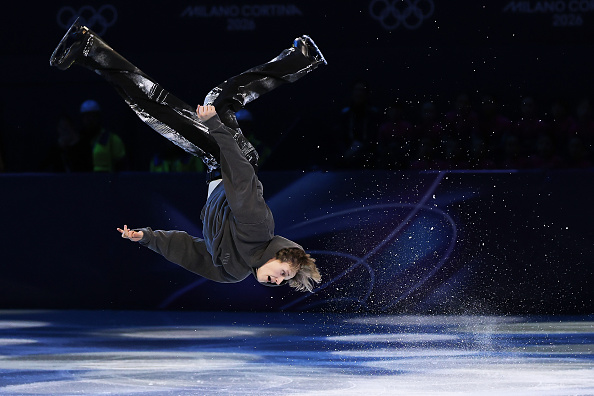
Designer jeans also made a surprising appearance on the Olympic ice when Team USA gold medalist Ilia Malinin sported a pair of $1,100 Balmain jeans during his final skate at the Games.
Meanwhile, athletic brands are tapping into denim culture. In March, Adidas Originals launched a throwback collection inspired by the iconic denim-print kit worn by the U.S. Men’s National Team (USMNT) during the 1994 FIFA World Cup, which took place across nine U.S. cities. The 1994 away kit reflected the fashion of the era while paying tribute to hard-wearing denim.
“Sport sits at the intersection of emotion, identity and performance, and fashion today is increasingly shaped by those same forces,” said Ana Paula Alves de Oliveira, founder and strategic director of the consultancy Be Disobedient. “Clothing needs to adapt to hybrid lifestyles and sport has long solved that equation taking advantage of consumers who have been looking for comfort and versatility.”
However, Alves de Oliveira highlighted how the trend is part of a bigger cultural cycle. She emphasized how global sporting events like the Olympics and the World Cup create waves of national pride, collective emotion and of course, consumption.
“When billions of people watch the same moment, aesthetics and trends inevitably follow. On other hand, younger generations are revisiting Y2K sport culture: tracksuits, technical fabrics, and street athletics through the lens of wellness and lifestyle,” she said. “As a Brazilian, I have seen how sports have always been a powerful cultural language. Exporting this influence globally is a way to unite people through something bigger than fashion.”
Sports influence is making its mark on the runway—from Thom Browne’s high-profile battle with Adidas over stripes to Dsquared2’s Fall/Winter 2026–2027 tribute to winter sports, featuring a cameo from “Heated Rivalry” star Hudson Williams. Varsity iconography, racing stripes and hybrid silhouettes are commonplace in men’s and women’s fashion. However, Alves de Oliveira said the most interesting adaptations are by brands that include sport, luxury, and street in the same design conversation.
“Fashion is cyclical,” she said, noting how Lacoste transformed tennis attire into elegant casualwear in the 1920s, “essentially inventing the idea that athletic clothing could be worn beyond sport.” In the ’70s and ’80s, sport culture exploded into fashion through basketball, hip-hop and sneaker culture, led by brands like Nike and Adidas.
“More recently, designers like Stella McCartney pushed the category further, proving through her long collaboration with Adidas that performance, sustainability, and fashion could coexist beautifully,” she said. “In denim specifically, Levi’s has consistently bridged workwear, youth culture and sport through streetwear influence.”
Retail games
Major sporting moments are key opportunities to engage and create cultural relevance, according to Richard Cox, Pacsun’s chief merchandising officer. The Anaheim, Calif.-based retailer works across a range of licensing agreements and creative partnerships with major sports leagues, teams and cultural figures. Pacun has also created collections around global sporting moments like the Summer and Winter Olympic Games, recognizing how these events unite audiences worldwide and influence fashion, travel and culture.
“Sports is one of Pacsun’s four core brand pillars, alongside fashion, music, and art, and it’s a key way we engage Gen Z,” he said. “For this generation, sports aren’t just games—they’re cultural touchpoints that shape identity, community, and self-expression. Athletic references naturally influence how they dress, the brands they follow, and how they curate their wardrobes.”
Last summer, the NFL and Abercrombie & Fitch announced a multi-year partnership naming Abercrombie & Fitch the NFL’s first-ever Official Fashion Partner.
The brand brings a fashion-first perspective to fan apparel, blending everyday style with traditional team gear. “We are rethinking game day style, creating pieces and overall looks that feel just as relevant in everyday life as they do in the stadium. Our customer already lives in Abercrombie denim so when we think about styling licensed product, it naturally starts there,” said Carey Collins Krug, CMO of Abercrombie & Fitch.
Abercrombie began seeing organic growth in NFL licensed product back in 2022, when it started licensing deals with just five NFL teams. That has grown to all 32 teams. “This growth gave us confidence that our customer wanted this intersection of fashion and fandom. Becoming the NFL’s first official fashion partner in 2025 was a natural next step as it formalized something that was already resonating,” Collins Krug said.
The partnership also reflects the NFL’s broader push to expand its audience—particularly among women, who now make up roughly half of the league’s fan base. In October, Abercrombie launched the “In Her Own League” campaign, highlighting women who are not only connected to the NFL, but who also have distinguished careers, notable accolades and a strong fashion influence both within the league and beyond it.
The initiative was an opportunity to “widen the lens outside the field,” according to Collins Krug. She said women like model and entrepreneur Olivia Culpo, who is married to San Francisco 49ers running back Christian McCaffrey, and Chloe Kim, an Olympic snowboarder and girlfriend of Cleveland Browns defensive end Myles Garrett, brought their own accomplishments and influence into the conversation while also being connected to the league through their partners.
Partnerships often feel most authentic when brands align with sports. For Abercrombie, becoming the NFL’s first-ever official fashion partner felt like a natural evolution for the brand. “Abercrombie was founded in 1892 outfitting sportsmen, and we were literally selling football gear at one point in our history, so in many ways this partnership reconnects us to our roots while pushing us forward,” she said.
The collaboration goes beyond merchandise for the brand. “It’s about the wave of fashion, sport and culture converging, and making sure Abercrombie is at the center of that shift,” Collins Krug said. “The pre-game tunnel walk for athletes has become the new runway. Athletes aren’t just influencing how people play sports they’re influencing how people dress, how they show up, how they express themselves. Fashion and football aren’t separate conversations anymore.”
On the field
Sports merchandise gives brands a powerful way to connect with fans through immersive activations and partnerships.
From in-stadium experiences to community-focused activations, Cox said Pacsun’s partnerships with the Los Angeles Rams, Los Angeles FC and Angel City FC drive deep local engagement. He added that the “collaborations connect us with fans in meaningful ways, balancing entertainment, style and community-building while showing how seamlessly Pacsun merges fashion, sports and culture.”
Meanwhile, Pacsun’s multiyear collaboration with Formula 1 allows the brand bring race weekend energy into fashion through limited-edition capsules, in-market events and social storytelling that Cox said feels authentic and exciting for Gen Z. For example, Pacsun aligned with the 2024 Formula 1 Lenovo United States Grand Prix in Austin, Texas. At the race, fans could shop Pacsun’s latest styles—including T-shirts, hoodies and jeans—at a trackside booth. The activation also featured a photo moment and complimentary tote bags.
“Each activation feels organic and culturally aligned, blending sports, fashion, and lifestyle while reinforcing Pacsun’s role at the center of youth culture,” Cox said.
Abercrombie’s deal with the NFL has brought the brand closer to the league’s athletes. To celebrate the partnership, Abercrombie debuted “Style Concierge,” a national seasonal campaign featuring players known for their personal style off the field, including Christian McCaffrey, Amon-Ra St. Brown, CeeDee Lamb and Tee Higgins. The campaign was the largest advertising investment Abercrombie has made in the sports space.
Collins Krug described Style Concierge as the “cornerstone” of the partnership, particularly as it has evolved into a service, giving select players access to Abercrombie’s in-house stylists.
The season culminated in Abercrombie’s Super Bowl LX activation when the brand hosted an invite-only tunnel walk–inspired fashion presentation, featuring athletes and their partners as the models. The majority of what walked was shoppable mainline product with a few key archival references.
For Abercrombie, the presentation was an opportunity to reinforce the brand’s authenticity in sports. “We featured ephemera from our 134-year-old history, and blended vintage Abercrombie archive pieces with modern mainline product to illustrate how sport influences our design approach,” Collins Krug said.
Style sells
While traditional fan gear leans heavily on team colors and established branding, fashion brands are translating those elements for a more contemporary, trend-focused consumer.
Abercrombie’s NFL collection spans women’s High Rise 90s Relaxed Jeans with team embroidery, half-zips, baby tees, ribbed dresses, sweatshirts, vintage-inspired graphic tees and knit sweaters and cardigan made with the brand’s super soft LuxeLoft fabric.
“We find that the styling matters just as much as the product,” Collins Krug said. “We’re seeing a strong response when these pieces are layered and styled as part of a full look—relaxed denim, structured outerwear or elevated fleece.”
Pacsun has found success by reflecting how Gen Z gets dressed—blending sports with streetwear and lifestyle apparel. The brand has also partnered with leagues and cultural tastemakers to collaborate on design.
A capsule with DJ and producer Chase B in partnership with the NBA celebrated iconic franchises through streetwear-inspired graphics. A collaboration with designer Aleali May and the NFL reimaged team merchandise through a fashion-forward lens. “These projects allow us to reinterpret traditional fan gear in ways that feel authentic to youth culture,” Cox said.
Pacsun is also seeing strong momentum around vintage-inspired sports merch, especially ’80s and ’90s styles. To tap into this consumer behavior Pacun launched PS Vintage, a resale platform co-developed with Springy, a leader in online secondhand retail. The platform gives young consumers access to one-of-a-kind sports pieces while aligning with their growing interest in sustainability and circular fashion.
From a design perspective, Cox said oversized silhouettes, sun-faded washes and worn-in graphics are resonating most. Heritage-driven pieces like Carhartt denim jackets, archival Harley-Davidson tees, and classic camo or fleece from sports brands are also in high demand.
“What’s especially interesting is how Gen Z styles these items—blending eras by pairing vintage sports graphics with modern streetwear and denim. It reflects a broader approach where nostalgia mixes with contemporary pieces to create looks that feel personal and unique,” he said.
The long game
While sporty trends might come and go, the passion for playing sports and following teams remains constant. Sports offer brands a space to invest meaningfully, confident that the audience—and their loyalty—will endure.
“Strategically, sports partnerships are central to Pacsun’s future,” Cox said. “They extend our cultural reach, engage new audiences, and showcase fashion through the lens of sport without losing authenticity. These collaborations reinforce our role as a brand that creates moments where youth culture, fashion, music, and sports intersect.”
Though the intersection of sports and culture has long been central to Abercrombie’s identity, Collins Krug said the brand is taking a deliberate approach to its next moves.
“We’re selective about what we pursue next. Our partnership with the Dallas Cowboys, for example, allows us to go deeper on a team level and build something more immersive. We’re focused on partnerships that feel authentic to where sport and culture intersect,” she said. “Right now, our focus is on building on the momentum of this inaugural year as the NFL’s first official fashion partner and continuing to deepen that relationship in meaningful ways.”
However, never underestimate the power of sports. At a time when politics and belief systems are growing increasingly divisive, a shared love of sports—and collective support for athletes—offers a rare opportunity for connection. For brands, sports can function as a unifying cultural language that resonates across audiences.
“Sport is pure emotion,” Alves de Oliveira said. “When brands collaborate with teams or leagues, they are entering a community built on loyalty, rituals, and shared identity. When a brand speaks the language of passion, the connection becomes immediate. Sports fans belong, and belonging is one of the most powerful currencies in fashion today.”