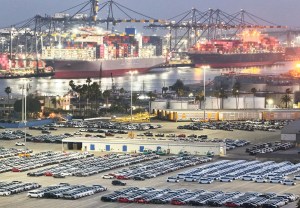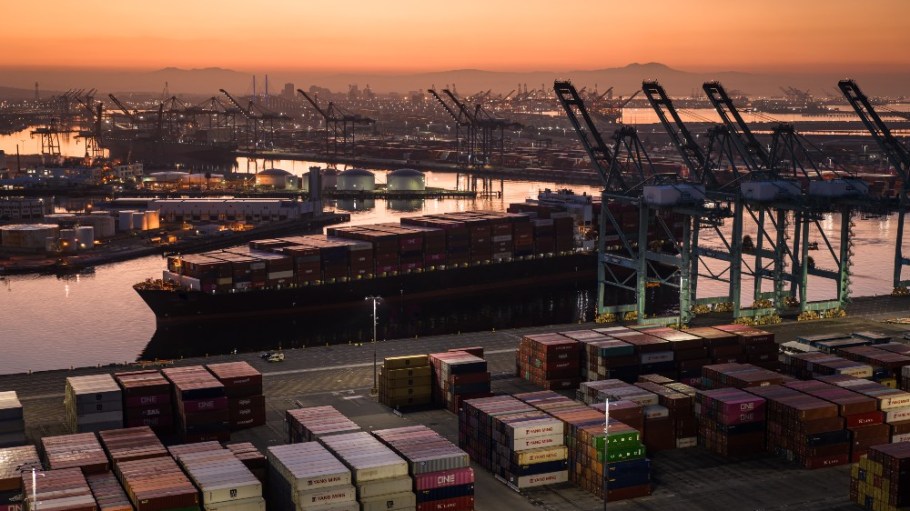
The Ports of Los Angeles and Long Beach have received a figurative boatload of federal funding for upkeep and repairs.
California Senator Alex Padilla—who chairs the Environment and Public Works Subcommittee on Fisheries, Water, and Wildlife—earlier this month announced that the West Coast gateways would be receiving $112 million for “critical construction upgrades and operations and maintenance activities.” The money was allocated under the fiscal year 2024 U.S. Army Corps of Engineers Work Plan.
Related Stories
“The Ports of Los Angeles and Long Beach move 40 percent of the nation’s container imports, transporting the goods that power our economy,” Padilla said. “I am glad to see the Army Corps heed my call to fund these crucial upgrades that will bolster global supply chains and make long overdue repairs to the ports.”
According to Padilla, the infrastructural upgrades and conservation efforts will strengthen not only the San Pedro Bay port complex, but the national supply chain.
The funds were generated by the Harbor Maintenance Tax, a 0.125-percent duty on a port’s cargo value which is collected by the federal government and added to a Harbor Maintenance Trust Fund (HMTF). Congress established the program in 1986 to bolster dredging projects at American ports, but most of the collected funds have been funneled to smaller ports deemed more in need of aid, or added to a nest egg now worth billions.
The Southern California gateways—among the largest and most heavily trafficked in the country—have been among a small handful of deep-water ports contributing to the fund over the years, but they’ve recouped a return of just 3 percent. Congresswoman Nanette Barragán, whose district includes the Port of L.A., said West Coast ports historically received 11 times less funding than their East Coast and Gulf Coast counterparts.
A shift took place in 2020 when the Water Resources Development Act was enacted, expanding the use cases for funds to encompass in-water maintenance and repairs and allowing for a more even distribution amongst large and small ports via the HMTF.
The Port of L.A. said the maritime industry had been in talks with federal lawmakers for more than a decade about addressing the imbalance in funding distribution and authorizing eligibility for expanded use projects at donor ports. Future spending from the trust fund should be proportional to the revenue collected from the ports each year, it said.
“We started this fight in 2011 with my amendment in the Transportation Committee to provide relief to donor ports, such as Los Angeles and Long Beach,” California Congresswoman Grace Napolitano said, thanking her colleagues in Congress and the Biden Administration for addressing the issue.
The Port of L.A. estimated that its total maintenance and repair needs hover around $6.7 billion, from dredging projects to seismic safety upgrades, wharf and fender repairs, pile replacements, sediment removal and remediation and improvements to slips and channels. The gateway will leverage its $58-million allocation from the HMTF to perform maintenance on its harbor channels and repair its wharves. The record-setting amount is more than nine times as much as it received the year prior.
Meanwhile, the Port of Long Beach said it plans to spend $2.3 billion over the next decade on capital improvements that will up capacity and create more sustainable processes at the port. Much of the current HMTF funding is designated for rail-related projects, but the port has pinpointed specific seismic upgrades that require attention, as well as the repair of existing rock dikes, concrete and steel bulkheads, wharves and other marine structures.
Long Beach Mayor Rex Richardson said the capital would “contribute to our ongoing infrastructure investments and strengthen our position as the premier gateway for trans-Pacific trade.”
“This announcement marks a significant milestone in the decades-long battle for equitable funding allocation for the benefit of our communities and national economy,” Congressman Robert Garcia added. “As the former Mayor of Long Beach, I know firsthand how critical it is to invest in port infrastructure to maintain competitiveness, and that’s why we’ve worked to ensure that donor ports receive their fair share of funding for essential repair and replacement projects.”
“This funding not only enhances the sustainability and efficiency of our local harbors, but also solidifies their role in international trade,” Garcia said.