The much-politicized megadeal that would put two ports on both sides of the Panama Canal in the hands of new operators could be flipped on its head as Panamanian officials challenge the legality of the hubs’ ownership.
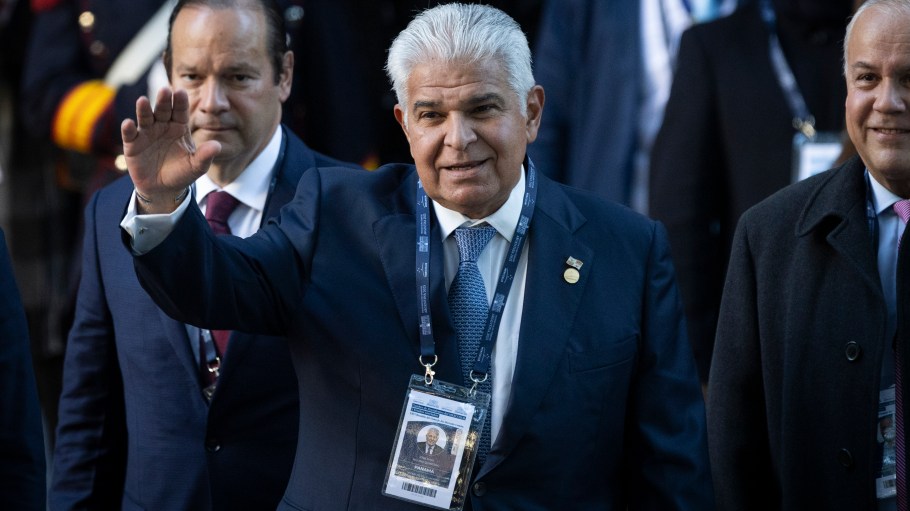
Panama’s President José Raul Mulino said public-private partnerships could take over the Balboa and Cristóbal ports if the Supreme Court invalidates the 25-year contract extension CK Hutchison signed in to keep operating the gateways.
This week, Panama’s comptroller general’s office filed suit with the high court in another effort to declare the agreement unconstitutional and nullify the contract (and ensuing sale) on the grounds that the renewal was “never legally authorized.”
Related Stories
“I do not, at the moment, see the continuation of the Panama Ports contract, amended or not,” Mulino told a press conference. “We will wait for the verdict,” Mulino added, referring to the lawsuits.
The suit, headed by comptroller general Anel Flores, followed previous accusations that CK Hutchison breached a deal to share 10 percent of its net income with the Panamanian government from their prior contract.
Those allegations were first made in April after a three-month audit into both ports and an opinion from Panama’s attorney general that the contract was unconstitutional. Flores argued that the office found some payment defaults and accounting miscalculations that cost the country $1.3 billion in lost revenue.
CK Hutchison denied the previous claims, saying the port operator was compliant with all legal requirements.
President Mulino acknowledged that insufficient, “paltry” revenue generated since the government signed the previous deal with Hutchison in 1997, saying he fully supports the “well justified” demands from Flores regarding the current extension signed in 2021.
“When that contract was renewed for another 25 years, the comptroller didn’t endorse it, and it started. That’s what’s being demanded in court,” Mulino said. “Its nullity, because it wasn’t endorsed, as all contracts made by the State with any third party must be endorsed.”
Mulino’s support comes as the $22.8 billion transaction remains a proxy in the tense relationship between the U.S. and China, both of whom have had their differing opinions of the sale.
When the move was first announced in February, with CK Hutchison selling 43 of its ports to a consortium including ocean carrier giant Mediterranean Shipping Company (MSC) and hedge fund BlackRock, President Donald Trump celebrated the preliminary agreement as an extension of his goal to “take back” the Panama Canal.
But over in China, President Xi Jinping had reportedly been upset with the acquisition since Hong Kong-based Hutchison would be selling the ports to an American company. Chinese state media trashed the deal as a betrayal to national interests, before the country’s antitrust regulator opened up a probe into the transaction.
The scrutiny has since led CK Hutchison to invite an unnamed Chinese investor into the deal. Media reports have tied Cosco Shipping to the deal, with the Financial Times indicating that the ocean carrier likely would only be part of the agreement that excludes the Panama ports.
On Tuesday, two days after the 145-day exclusivity period between the MSC-BlackRock consortium and the Hong Kong port operator concluded, CMA CGM suggested that it had interest in being part of the port sale. This marks three ocean carriers that now have some ties to the potential deal.
Panamanian government officials have not been thrilled with the international influence, with Flores telling reporters Wednesday, “It doesn’t seem correct that in other [parts of the world] there are people negotiating the future of assets that belong to us, the Panamanians.”
While nullifying the Panama ports contract would allow the country to potentially redesign the contract terms to be more beneficial to the country, the government can also find itself exposed to litigation from CK Hutchison.
During his press conference, Mulino called the entire sale process “paralyzed, as far as we know.”
“Remember, this is a broad process. There are 41 ports around the world that are being sold, and the two ports in Panama are in separate processes,” Mulino said. “So, one thing has nothing to do with the other.”
Mulino said during the briefing that Panama will adopt a new port policy that the country will announce “in due course.” The policy will be designed to enforce a more coherent maritime and logistics strategy for the country across all its services, “so that we can truly take advantage of the privilege of our strategic geographic position.”