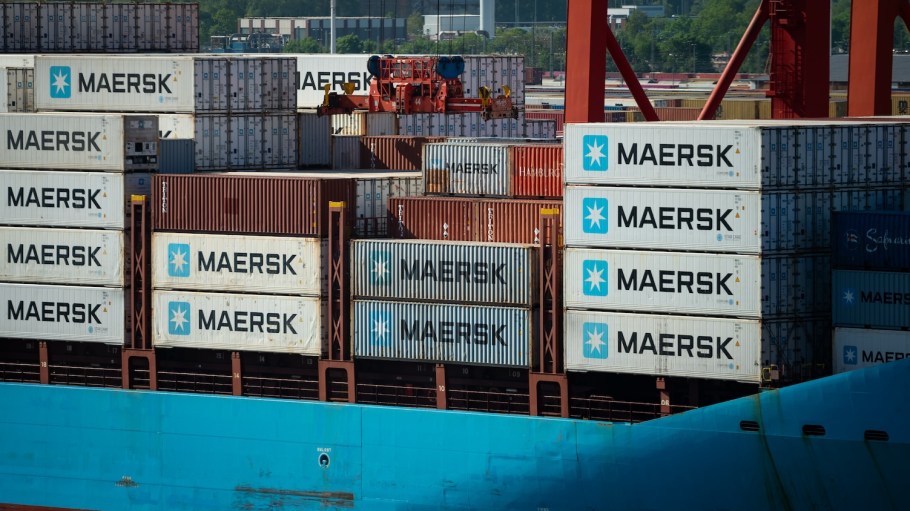
Maersk raised its 2024 outlook for the second time in a month Monday, adding $3 billion to its expected bottom line in a sign that the Red Sea crisis isn’t slowing down any time soon.
The Copenhagen-based container shipping giant cited the ongoing increase in container freight rates and escalating port congestion in Asia and the Middle East as reasons for the more upbeat guidance.
“This development is gradually building up and is expected to contribute to a stronger financial performance in the second half of 2024,” said Maersk. The shifts have already resulted in a first-quarter windfall for the container shipping industry at large, with 11 major ocean carriers (excluding MSC) collectively scoring $5.4 billion in profit in the period.
Related Stories
Maersk anticipates underlying earnings before interest and taxes, depreciation, and amortization (EBITDA) of $7 billion to $9 billion, a substantial increase from the previous guidance of $4 billion to $6 billion. Operating profit was $1 billion to $3 billion, a much more promising outlook than the range between a $2 billion loss and no earnings. Up until the start of May, Maersk had forecast an operating loss of as much as $5 billion.
Free cash flow expectations now total at least $1 billion, up from negative free cash flow of $2 billion.
“Carrier profits in container shipping, these days, are driven mainly by system-wide events which reduce shipping capacity, as they inflate both freight rates and carrier profits,” said Philip Damas, managing director, head of Drewry Supply Chain Advisors. “So I read Maersk’s announcement that it is upgrading its profit guidance as meaning ‘we expect current disruptions to continue for longer than previously expected.’”
Trading conditions remain subject to higher-than-normal volatility given the unpredictability of the Red Sea situation and the lack of clarity of future supply and demand, Maersk says.
Currently, most commercial vessels continue to skirt the Red Sea amid repeated missile and drone attacks from Yemen-based Houthi militants, instead opting to travel around southern Africa’s Cape of Good Hope. The longer transit times have resulted in less capacity out on the ocean—with Maersk expecting capacity losses of 15 percent to 20 percent on Asia-to-Europe routes in the second quarter.
“While demand for container transport remains strong, supply has been negatively impacted by missed sailings, longer routes, equipment shortages and delays leading to increased congestion across several key ports in Asia and the Middle East,” said Vincent Clerc, CEO of Maersk, in a statement. “This demand and supply imbalance has had an immediate and profound impact on freight rates.”
Damas told Sourcing Journal that Maersk’s second outlook “also reinforces the views of many exporters and importers that it is prudent to ship early, to reduce the risk of late deliveries and insufficient inventory.”
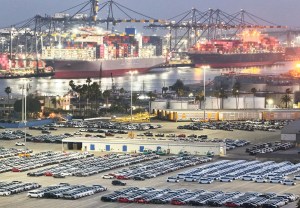
On Monday, Maersk said it is experiencing substantial delays in vessel schedules due to the severe congestion across Mediterranean and Asian ports like Singapore and Shanghai, which has extended waiting times and impacted the firm’s ability to maintain regular schedules. This has forced the company to blank sailings on two service lines starting in July.
“The ongoing threats to commercial vessels in the Red Sea and growing supply chain bottlenecks indicate that this situation won’t improve soon,” Clerc said. “More capacity than expected will be needed to resolve these issues and stabilize the global supply chain.”
Maersk has also been amending its service lines amid the delays and capacity constraints stemming from the Red Sea diversions. The company is winding down its TP20 westbound Newark, N.J.-to-Yantian, China line, which was initially introduced to complement the Asia-to/from-the-U.S. East Coast offering.
The last TP20 sailing from Asia will be out of Shanghai on June 13, while the final North American sailing will be July 17 out of Newark.
As the container shipping liner expects more capacity constraints, it still has an expected 33 ships carrying 408,836 20-foot equivalent container units (TEUs) in its orderbook, according to data from Alphaliner.
But until the industry gets more of its new orders online, it appears ocean freight rates will continue to stay elevated.
According to Drewry’s World Container Index (WCI), spot freight rates increased 4 percent to $4,226 per 40-foot container in the week to May 30. These spot rates have jumped to their highest averages since September 2022, and are up 215 percent from October 2023 when they were $1,342 per container.
Maersk is set to publish its second-quarter interim results on Aug. 7, 2024.