Temporary tariff exemptions on products including smartphones, semiconductors, computers and other electronics may have given some short-term relief in the U.S.’s trade war with China, but plenty of cargo still hasn’t left the country.
An estimated 30 to 40 percent of trans-Pacific container imports are still effectively halted by the tariffs that remain in place, according to data from Linerlytica.
In a Monday blog post, the container shipping consultancy firm noted that cargo bookings over the next three weeks are reported to be down by 30 to 60 percent in China, and 10 to 20 percent across the rest of Asia.
Related Stories
Linerlytica said the U.S. tariff concessions were “far from sufficient” to restore trans-Pacific volumes, which have fallen off heavily since March, ahead of the country-specific tariffs President Donald Trump levied on dozens of nations worldwide.
Tariffs on Chinese imports have hit 145 percent after various escalations by the Trump administration, forcing many U.S. businesses to take more of a “wait-and-see” approach as they attempt to avoid higher costs.
In March, exports out of China grew 12.4 percent as companies front-loaded outbound cargo into the U.S. ahead of the expected tariffs. This not only marks the biggest year-over-year jump since October, but it represents a meaningful outperformance of the 4.4 percent growth expected by Reuters.
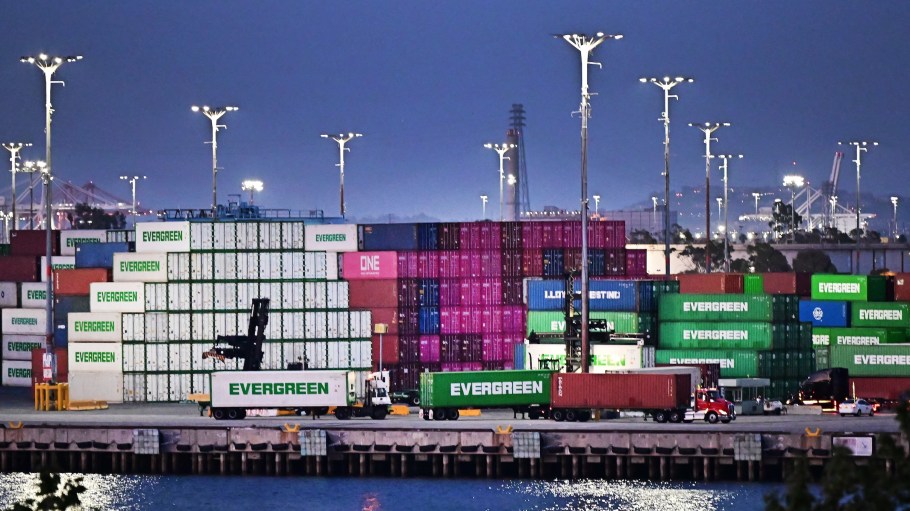
Cancellations continue to roil the trans-Pacific trade, with the Ports of Los Angeles and Long Beach already expecting 12 blanked or voided sailings for May, said the L.A. port’s executive director Gene Seroka in a Friday media briefing. Seroka said there were 12 blank sailings throughout the entire month of May in 2025.
“Some globally famous brands have hit the pause button on shipments out of China for the next couple of weeks and maybe beyond,” Seroka said. “Global trade will slow as companies try to figure out what all this means and how they’re going to mitigate these extraordinary cost increases… I’m particularly concerned for small-to-midsize companies that are not able to bring in cargo early and will face higher market prices.”
About 40 percent of imports that pass through the terminals at the Port of Los Angeles originate from China, he said.
“The market’s going to soften. Folks are not shipping out of China right now because they’re not going to pay 2.5 times for those goods that are coming in until we get some semblance of a plan going forward,” Seroka said. “Buckle up, this is going to get really bumpy for us.”
Seroka expects an annual drop of at least 10 percent in cargo volume at the Port of Los Angeles in the period from July to December, but noted that the drop-off could begin as early as May, given the planned blank sailings.
More than 90 sailings were canceled on the trans-Pacific route to West Coast ports across March and April, according to data from Drewry.
As cargo demand is likely to dip further in May, carriers could cancel additional sailings over the coming weeks to stop further freight rate erosion, according to Linerlytica.
Already enduring concerns over the effects of potential fees on Chinese ships docking at U.S. ports, container shipping companies also have to deal with the potential drawbacks of slowing traffic.
The carriers with the largest exposure to Chinese trans-Pacific exports to the U.S. include Hong Kong-based Hede Shipping (100 percent), U.S.-based Matson (90 percent), Singapore-headquartered SeaLead (82 percent), Thailand-based TS Lines (80 percent) and Cosco Shipping (71 percent) out of China.
Thus far, three trans-Pacific container shipping service lines have been scrapped, including one from Mediterranean Shipping Company (MSC). The carrier’s Mustang offering would have connected Asia to the Northwest U.S. and Canada before it ever set sail. Ocean Network Express (ONE) suspended its “PN4” service, which was scheduled to launch in May on the same route.
On Monday, TS Lines withdrew its South China-to-Los Angeles service that had been operating since last August. The six-week “AWC2” service used four small ships that carried 1,780 20-foot equivalent units (TEUs) of cargo, but had multiple blank sailings in each cycle, said Linerlytica.
“These tentative capacity cuts have done little to restore market balance with further turbulence ahead,” Linerlyrica said. “The gap between charter rates and freight rates remain too wide and has claimed its first casualty with Singapore-based Vasi Shipping initiating insolvency proceedings last week.”
Unlike spot freight rates, charter rates have continued to spike since November, presumably as more major retailers that charter their own ships sought to front-load goods into the U.S. ahead of President Trump’s inauguration.