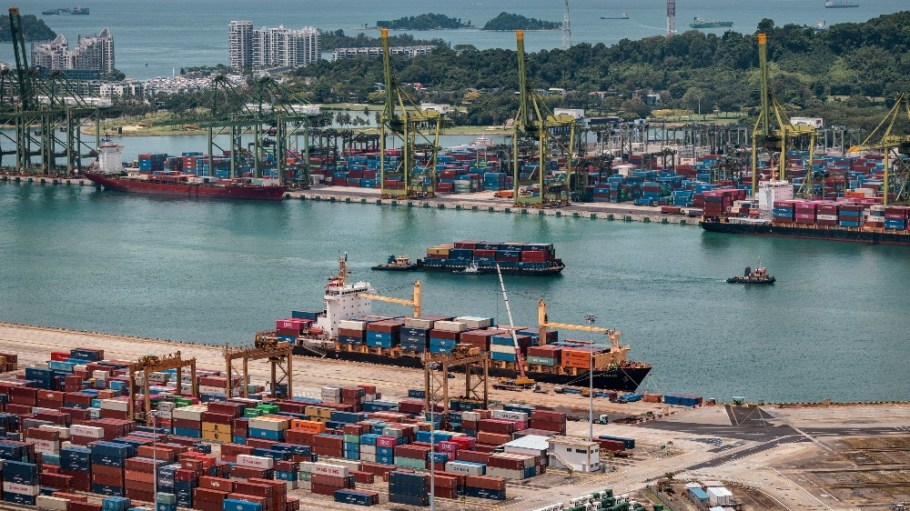
The Maritime and Port Authority of Singapore (MPA) is making moves to improve shipping sustainability.
The entity recently entered a partnership with United Nations Trade and Development (UNCTAD) and renewed an agreement with the ports of Los Angeles and Long Beach for a green and digital shipping corridor.
The UNCTAD partnership will allow MPA Singapore to make a significant contribution to accelerating the transition toward more sustainable, resilient and inclusive global maritime transport—no small feat since many ports are reliant on fossil fuels.
Related Stories
The second-busiest port in the world, Singapore has the potential to play a significant role in shaping practical, scalable solutions for improving the sustainability of global maritime trade. Under the agreement, MPA Singapore will join UNCTAD in promoting cleaner fuels and digital technologies across ports and shipping networks. The effort will focus on solutions that can be adapted elsewhere in the world, such as sustainable finance, digital innovation and workforce development.
The initiative will also support developing countries through outreach such as training, advisory services and institutional strengthening. Along with environmental sustainability, the effort aims to also fortify the ports in preparation for potential disruptions, allowing them to better anticipate and react to shipping challenges such as those experienced during the pandemic and more recently due to the Iran conflict’s impact on the Strait of Hormuz.
“This partnership brings together Singapore’s operational excellence and UNCTAD’s global development expertise,” said Pedro Manuel Moreno, acting secretary-general of UNCTAD.
“It will help accelerate a maritime transition that is not only greener and more efficient, but also resilient and inclusive—while contributing to global discussions at the UN Global Supply Chain Forum 2026.”
MPA Singapore also renewed its memorandum of understanding on the green and digital shipping corridor with the ports of Los Angeles and Long Beach. First signed in 2023 and renewed for another three years with this latest commitment, the agreement solidifies the ports’ commitment to decarbonization and digitization along the trans-Pacific route, one of the world’s busiest container lanes.
Since signing the initial agreement, the three ports have achieved several milestones, including completion of a baseline study in 2024, onboarding of industry partners to explore the potential for pilot trials, and the establishment of work streams to promote pilot initiatives in alternative fuels, digitization and energy efficiency.
“The Singapore-Los Angeles-Long Beach Green and Digital Shipping Corridor has made good progress, transitioning from intent to implementation,” said Ang Wee Keong, chief executive of MPA. “The renewal of our partnership paves the way towards more sustainable shipping along the trans-Pacific route. This gives industry greater confidence to plan investments and diversify energy options for greener shipping.”
The three ports also have accelerated their alternative fuels bunkering capabilities over the past three years. MPA completed methanol bunkering trials in 2023 and subsequently awarded three methanol bunkering supply licenses, while the Los Angeles and Long Beach ports have commissioned a clean fuels study and are preparing for a methanol pilot in 2026. These advancements will prepare the three ports for green fuel trials in the next phase of their partnership. The ports also have conducted port-to-port data exchange testing and started pilot collaborations with Mitsui O.S.K. Lines.
By renewing the memorandum, the ports also agree to continue working to deploy low- and zero-emission fuels and digital solutions for shipping on the trans-Pacific corridor. That includes supporting fuel supply and infrastructure, developing pilot and demonstration projects, strengthening port-to-port data connectivity, and promoting interoperability, cybersecurity and common standards.
“Decarbonizing goods movement between the largest ports in the United States and Asia requires international cooperation and that’s exactly what we’re doing through our work on the green and digital shipping corridor,” said Gene Seroka, executive director of the Port of Los Angeles. “We are committed to working toward the deployment of zero lifecycle carbon container ships on the corridor by 2030. This important corridor is the foundation upon which we’ll build the future of maritime shipping.”
The memorandum was signed ahead of Singapore Maritime Week 2026, facilitated by C40 Cities, a global network of mayors working to advance city climate action around the world.
“Seaports sit at the intersection of trade, geopolitics, climate and technology,” said Noel Hacegaba, CEO of the Port of Long Beach. “This convergence is what makes partnerships like the green and digital shipping corridor so impactful as a tool to decarbonize maritime shipping. We call it the ‘green print’ for decarbonizing the trans-Pacific route, the busiest trade route on Earth. It will be particularly important in the years ahead as we tackle our largest source of emissions, from cargo vessels, by accelerating the use of clean fuels such as methanol.”