Sluggish economic growth. Geopolitical fragmentation. Accelerating digital and green transitions. Tighter national regulations.
These forces are reshaping how countries are engaging in commerce, with profound implications for developing economies, according to the United Nations Conference on Trade and Development’s latest global trade update.
UNCTAD estimates that global growth will remain muted at 2.6 percent in 2025 and 2026, despite possible gains from AI and other technologies. Even major economies will lose momentum, it said. The U.S. economy is projected to expand by 1.5 percent in 2026, down from 1.8 percent in 2025. China, a vital trade and investment partner for many developing countries, is predicted to grow by 4.6 percent this year, down from 5 percent in 2025. In Europe, fiscal stimulus in nations like Germany could offer some support, but overall demand will “remain modest.”
Related Stories
“Slower growth affects trade through weaker export demand, tighter financial conditions and greater exposure to shocks,” the intergovernmental organization wrote. “Commodity-dependent economies may face heightened price volatility, while access to external finance could become more constrained. Globally, policy volatility may further dampen long-term investment, complicating infrastructure and industrial financing for developing countries.”
This means that when the World Trade Organization’s 14th Ministerial Conference takes place in Yaoundé, Cameroon, in March, it will be against the background of geopolitical pressures and trade uncertainties fueled by unilateral tariffs, bilateral deals and economic security concerns, UNCTAD said.
For developing countries, reforming the dispute settlement mechanism and restoring a functioning appellate body, the highest court for trade disputes, will be a priority to protect market access and effectively uphold their rights. Other central concerns, the update predicted, will involve preserving policy space and reinforcing special and differential treatment, which is to say the provisions that give developing nations special rights that allow them to take full advantage of the benefits of global trade.
As the intersection between climate policy and trade becomes increasingly relevant, the UNCTAD said, discussions over subsidies for sustainable industrialization and eco-labeling measures, which could impact the developing world’s trade competitiveness, are likely to come into play in the longer-term reform agenda.
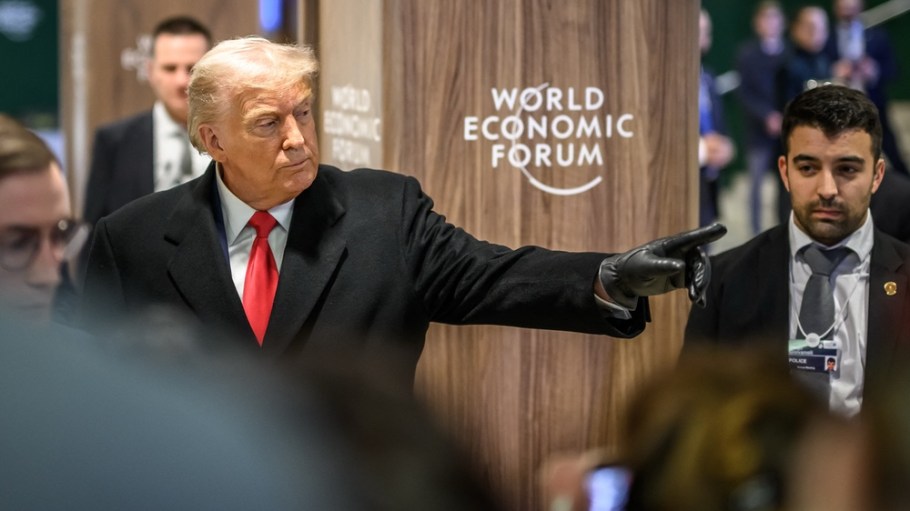
And speaking of the “t” word, tariffs are only going to proliferate as protectionist and strategic tools. This could also drive greater policy uncertainty, as the United States’ tariff increases in 2025 demonstrated. Uncertainty, the UNCTAD said, is “likely to persist” in 2026 as governments use tariffs, industry support and other trade instruments to pursue a slew of domestic policy objectives. At the same time, frequent policy changes that deepen unease can discourage investment and snarl planning. Trade volumes could fall not only after a tariff hike but also as a pre-emptive measure by companies in anticipation of policy changes.
“Tariffs shape trade flows by increasing import costs, and even small increases can ripple across markets by weakening demand, shifting sourcing and rerouting trade,” it said. “Smaller, less diversified economies are particularly exposed to rising tariffs and policy volatility. Limited capacity to redirect exports or absorb higher costs can lead to revenue losses, fiscal strain and slower development. Tariff hikes on commodities may also threaten livelihoods and food security.”
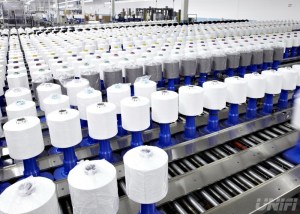
While agriculture has borne much of the brunt of tariff increases, apparel and textiles were the hardest hit among the top 10 manufacturing subsectors, with the average applied tariff rising from just over 5 percent in 2024 to 9 percent in 2025.
If there’s one takeaway from the report, it’s that global value chains are shifting. This “reconfiguration” of production locations, UNCTAD said, is poised to continue in the year ahead as firms continue to diversify suppliers, nearshore production closer to marketplaces, vertically integrate operations to secure important inputs and invest in automation and AI to reduce labor costs. Such structural shifts are also transforming trade patterns.
“Nearly two-thirds of global trade occurs within global value chains, and changes in their configuration are creating new hubs and routes,” the update said. “Some hub countries and routes through which goods and services move are expanding faster than average, while others decline. Although supplier diversification can strengthen resilience and thus stabilize trade, it may also introduce inefficiencies and weigh on trade growth.”
In short, countries bolstered by strong infrastructure, skilled labor and stable long-term policies are better positioned to attract investment as businesses seek more hospitable climes, the UNCTAD said. In contrast, “peripheral” economies, particularly those that depend on low-cost labor exports, risk being sidelined if production consolidates in select locations. Proactive measures, including improved logistics, workforce upskilling and a stronger investment climate, are “essential to remain integrated into global value chain,” it added.
One silver lining is a surge in so-called “South-South trade,” which refers to trade among developing countries. Between 1995 and 2025, South-South exports jumped from roughly $0.5 trillion to $6.8 trillion, surpassing both South-North trade and overall world trade growth. Today, some 57 percent of developing nations’ exports are earmarked for other developing markets, up from 38 percent a decade ago.
“More than half of Africa’s exports now go to other developing countries, reflecting deeper regional integration and the growing role of large emerging economies as import markets,” UNCTAD said. “Geopolitical fragmentation could further accelerate this trend, as developing countries increasingly rely on each other to offset weaker demand in advanced economies.”
There’s scope to grow, too: Interregional trade outside Asia, especially between Africa and Latin America, remains “significantly underdeveloped” despite “strong complementarities,” the report said. Strengthening these connections could therefore boost resilience within global trade networks.
At the same time, “trade-distorting” measures are on the ascent as governments wield trade cudgels to meet domestic goals in areas such as security, industry, public health and the environment. Since 2020, roughly 18,000 new discriminatory trade measures have been recorded globally, marking a “sharp protectionist turn,” UNCTAD said. As major powers tout their own standards overseas, they could potentially create rival regulatory blocks that “force smaller countries to choose sides.”
“In addition, trade policy is being applied to climate and social objectives—for example, carbon border taxes and import barriers linked to deforestation or labor practices,” the update said. “These initiatives address important goals but add new compliance burdens for exporters.”
Global trade in 2026, in other words, is at a “critical juncture,” with policymakers facing what UNCTAD describes as an “urgent challenge” to navigate the choppy geoeconomic rapids while ensuring inclusive and sustainable growth. Tariffs may also be the least of the trade world’s worries.
“In 2026, the use of non-tariff measures will expand, driven by environmental, social and security priorities alongside persistent protectionist pressures,” the report said. “While affecting global trade, their impact will fall unevenly, as smaller exporters and lower-income economies face rising procedural and compliance costs. More flexible global rules and targeted technical assistance will be essential to ensure inclusive implementation.”