China is again putting the status of a massive $22.8 billion ports sale in doubt.
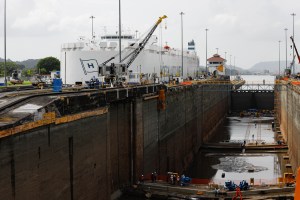
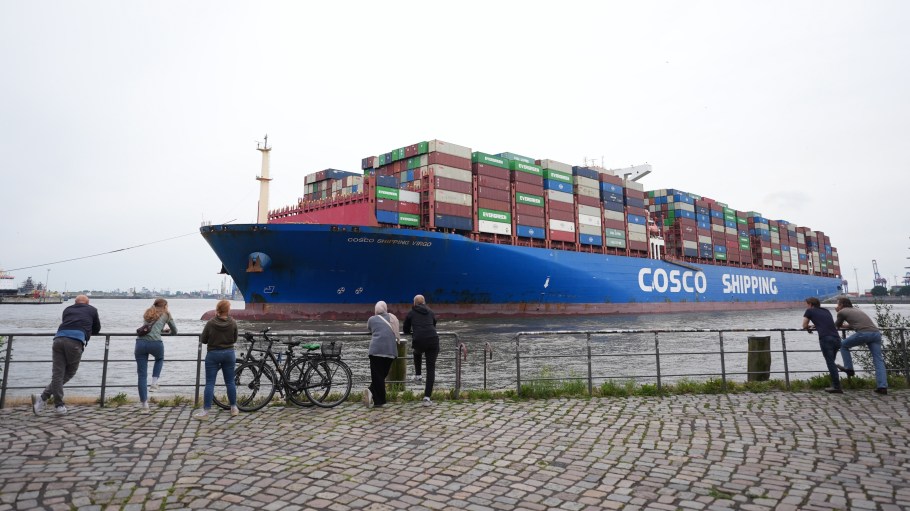
The Chinese government is demanding that Cosco Shipping get a controlling stake in the deal that would sell two Panama Canal-adjacent ports to a U.S.-involved consortium, according to a report from the Wall Street Journal.
Without Cosco’s involvement, China says it would block the transaction.
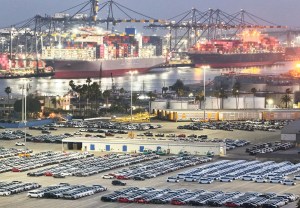
Under the proposed deal, Hong Kong-based CK Hutchison was set to sell 43 ports to a group including Mediterranean Shipping Company (MSC) and American hedge fund BlackRock.
Related Stories
Chinese foreign ministry spokesperson Guo Jiakun said he was “not familiar” with the reports of China’s increased demands during a Wednesday morning press conference, but acknowledged “the Chinese side has made responses to [the sale] more than once.”
The proposed takeover has been largely on ice due to China’s antitrust probe into the deal, alongside multiple Panamanian lawsuits that have questioned the legality of CK Hutchison’s current contract to operate the Panama ports.
China has been strongly against the deal due to its trade rivalry with the U.S., which has sought to eliminate any potential Chinese influence on the Panama Canal. President Donald Trump stated a goal late last year to “take back” the canal, having previously falsely asserted that the waterway was under Chinese control.
For China, its latest plea ups the ante from a prior call for Cosco Shipping to be included in the transaction. Days after China reportedly threatened to nix the deal without the state-owned ocean carrier’s involvement, Hutchison said it was in discussions to secure a Chinese investor.
BlackRock and MSC were both open to offering Cosco an equal stake in the deal, but would not accept demands for majority control and veto rights, the report said.
Cosco’s inclusion in any deal would be a major geopolitical victory for Being and a significant blow to Washington, which has deemed potential Chinese influence on Western interests a national security threat.
A White House official told the WSJ the U.S. wouldn’t accept those conditions.
Conversely, a Chinese official told the publication that the country wants to make control of the Panama ports a negotiating point in the U.S.-China trade war.
More than 76 percent of the cargo traveling through the canal either originates or is destined for the U.S, according to the Panama Canal Authority (ACP). The trade artery also accounts for 46 percent of the total market share of containers moving from Northeast Asia to the U.S. East Coast.
CK Hutchison had previously said that the deal would not be completed until 2026, citing its size and complexity. Frank Sixt, the co-managing director of the port operator, said he believed a sale has a “reasonable chance” of occurring.
A second deal between Hutchison and MSC that is separate from the Panama ports transaction is also under international antitrust scrutiny. The European Commission opened an investigation into a smaller-scale arrangement where the world’s largest container shipping company would acquire joint control a terminal at the Port of Barcelona.
The commission is concerned that the transaction could lead to higher priced or reduced service quality at the port, which could lead to disadvantages for MSC’s rivals.
Amid all the drama, the ACP is seeking to bolster carrier competition throughout the area with the development of two new port terminals on opposite sides of the waterway. The ACP put two plots of land up for sale to court bids on who would operate the terminals, which would cost $2.6 billion and begin operations in 2019.
According to the WSJ report, Maersk’s APM Terminals and CMA CGM will both make offers for the terminals. On top of acquiring the rights to build the port facilities, the winning bidders would get to operate them for 20 years.
The Panama Canal’s administrator, Ricaurte Vásquez Morales, said the holdup over the Panama ports deal led the ACP to explore the terminal proposals. Combined, the Corozal and Telfers terminals are projected to expand the country’s overall container-handling capacity from 9.5 million 20-foot equivalent units (TEUs) to 15 million TEUs per year.
Cosco is not eligible to bid for the new ports because it is a state-owned company, according to Vásquez.
The terminal buildout is part of a wider $8.5 billion modernization plan for the canal, which also will include the creation of a new reservoir and gas pipeline.