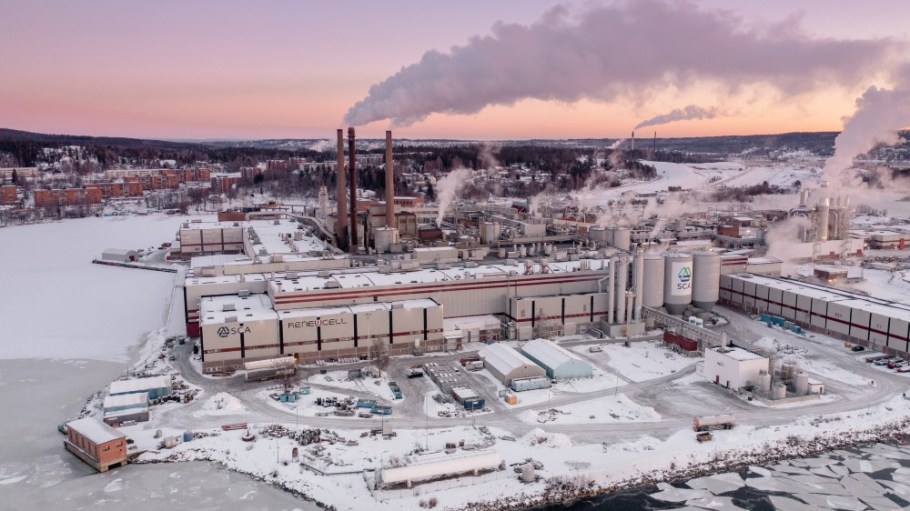
Renewcell closed out a rocky 2023 with signs that business could be on the upswing.
The Swedish textile-to-textile recycler’s Renewcell 1 facility produced 818 metric tons of cellulose-based dissolving pulp, Circulose, in December, and delivered nearly 1,000 metric tons of pre-sale stock to customers, the company reported Tuesday.
This comes after Renewcell responded to low third-quarter sales by cutting production to protect cash flow.
Related Stories
While the Ortviken facility produced 2,043 metric tons of Circulose in October—more than double its December output—it shipped just 129 metric tons that month. November’s pulp production totaled 1,339 metric tons, none of which was delivered to customers.
In December, the Spinnova partner accelerated deliveries, but there’s no telling if the trend will continue this year. Accolades could help Renewcell enhance its industry standing. It bested European rival Infinited Fiber Company to win the 2023 Nordic Council Environment Prize in November, weeks after ousting CEO Patrik Lundström.
Though the Renewcell 1 facility will produce 60,000 tons of Circulose annually when it reaches full capacity, the company has run into costly operational inefficiencies.
Even with major partners like Inditex on board, Renewcell doesn’t have enough commercial commitments to justify running the production facility at full capacity. Late last year the Zara owner agreed to purchase 2,000 metric tons of material made with Circulose through its Hong Kong fiber producer. H&M, which owns a 10.3-percent stake in Renewcell, has also inked an offtake agreement for thousands of metric tons of Circulose.
To address Renewcell’s estimated $86 million in net debt, acting CEO Magnus Håkansson said the company needs big brands to step up and help it reach a target of selling 42,000 metric tons of Circulose each year just to break even.
After initiating a strategic review in November, on Dec. 20 Renewcell announced that it would enter into two short-term loans with shareholders H&M and Girincubator AB, along with lenders, BNP Paribas, European Investment Bank (EIB), Nordea Bank Abp, Filial i Sverige and AB Svensk Exportkredit to resolve its short-term liquidity issues. This gives the company access to 100 million Swedish kronor ($9.8 million) while it pursues additional long-term financing solutions.