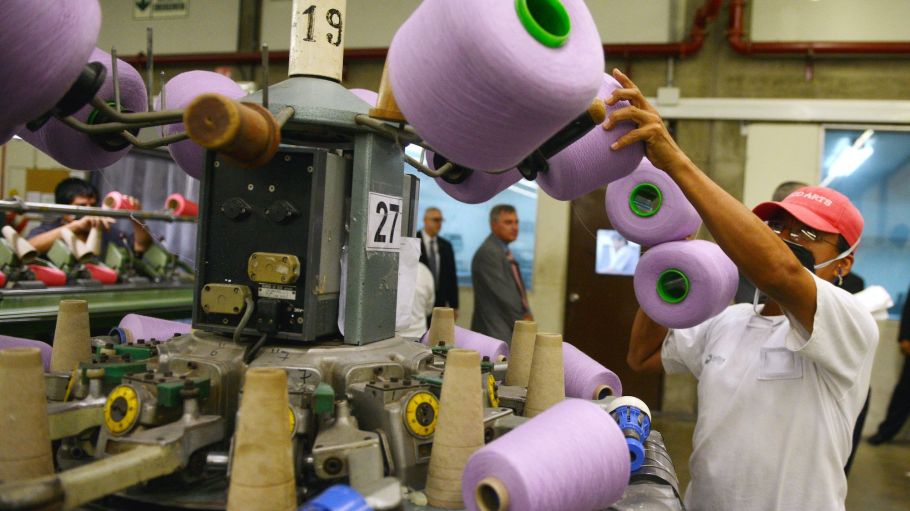
Latin America is no longer just a supplemental sourcing region to Asia.
That’s the message delivered in Cotton USA’s new white paper called “Unlocking the Potential of Latin America for Global Sourcing Strategies.”
With its proximity to the U.S., vertically integrated supply chains and robust trade agreements such as the United States-Mexico-Canada Agreement (USMCA) and the Central America-Dominican Republic Free Trade Agreement (CAFTA-DR), the paper positions the region as a strategic partner for brands with U.S. distribution seeking speed, flexibility and resilience in their supply chains.
Related Stories
In the paper, Cotton USA, which is the promotion arm of U.S cotton fiber, highlights how the region’s production capabilities continue to expand, noting that the CAFTA-DR region has seen more than $1.8 billion invested in supply chain infrastructure in recent years.
Central America has emerged as a hub for activewear and athleisure, while Peru draws luxury brands with its high-quality cotton and history of textile craftsmanship.
The proof is in the data. José Ignacio Llosa, the director of the Textile Committee of the National Society of Industries in Peru, notes that Peru ranks among the top three countries in the world by average apparel export price, below only Italy and Switzerland.
The region is also attractive for denim companies, especially U.S. brands seeking partners closer to home.
“Mexico is a global leader in denim production, offering premium wash capabilities and exceptional quality. The country’s expertise in denim manufacturing has made it a preferred destination for brands seeking high-quality woven bottoms,” the paper states.
Cotton USA emphasizes the region’s investments in traceable and sustainable production processes, highlighting how its use of U.S. cotton further enhances its appeal. Additionally, social responsibility is “embedded into its operations and investments.
“Social compliance is not a trend in our region; it’s a core value. It’s built into the investments and supply chain, making it one of our biggest strengths,” Carlos Arias, president of Vestex, stated in the paper.
The region’s vertical structure is a key factor in promoting transparency and traceability. Through cross-border collaboration, companies can manage their entire supply chain from raw materials to finished garments, often without ever exiting the region.
A yarn can be produced in the U.S., knit in Honduras, sewn in El Salvador, embellished and distributed in Guatemala, and then shipped back into the U.S. all within the framework of a single CAFTA-DR compliant supply chain.
“The region is acting as one. Investments in one country serve the others, creating a fully integrated supply chain that is efficient and resilient,” Arias stated.
However, sourcing in Latin America is not a one-size-fits-all solution for all companies.
Large-scale turnkey operations are less common in Latin America compared to other sourcing hubs. The white paper explains that the brands that benefit the most from sourcing in the region invest in building strong, medium to long-term partnerships with suppliers.
The culture also requires factory visits and collaborative product development that goes beyond a typical transactional business relationship.
Additionally, some components may need to be imported though trims and packaging have improved significantly in recent years in Peru, Colombia and Brazil. By investing in strategic partnerships and leveraging the region’s strengths, the paper suggests that brands can create a balanced and resilient sourcing strategy that meets the demands of dynamic markets.