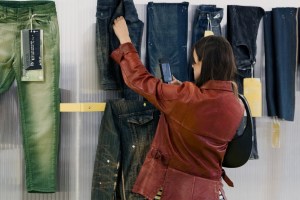
Uncertainty loomed over Kingpins New York last week, as a noticeably quieter show floor mirrored the mood of a denim industry.
Typically buzzing with brands, retailers and denim heads from across the globe, this season’s edition felt noticeably quieter than in previous years. While industry leaders still showed up, many openly admitted that Kingpins New York is “not what it used to be.”
One of the key factors behind the dampened energy is the ongoing trade war, ignited by U.S. President Donald Trump earlier this year.
Related Stories
With tariffs shifting unpredictably and trade relationships in flux, mills are being forced to rethink sourcing and production strategies from the ground up, often without a clear sense of when, where or how steeply new duties will hit. Adding fuel to the fire, this climate of uncertainty has left suppliers scrambling to contain rising costs, manage logistical disruptions and maintain confidence in long-term planning.
Amid these mounting pressures, Martin Balaam, CEO and co-founder of Pimberly—a software company helping retail navigate the digital landscape with product information management (PIM) solutions—noted that both Pakistan and Mexico are starting to “emerge as strong contenders” as mills seek agility and competitive costs.
“Pakistan would be seen as a credible low cost supplier, especially as it already has proven itself for many larger denim brands as a great alternative with good vertical integration and innovation, and is emerging as a country that takes sustainability seriously. For many, this would be just about re-allocating production volumes rather than setting up new suppliers and logistics, so an easy win,” Balaam told Sourcing Journal. “Meanwhile, Mexico will be seen as a good agile supplier as its near shore and easy logistics would make it friendly for speed-to-market.”
Talks at Kingpins painted a picture that closely mirrored Balaam’s outlook.
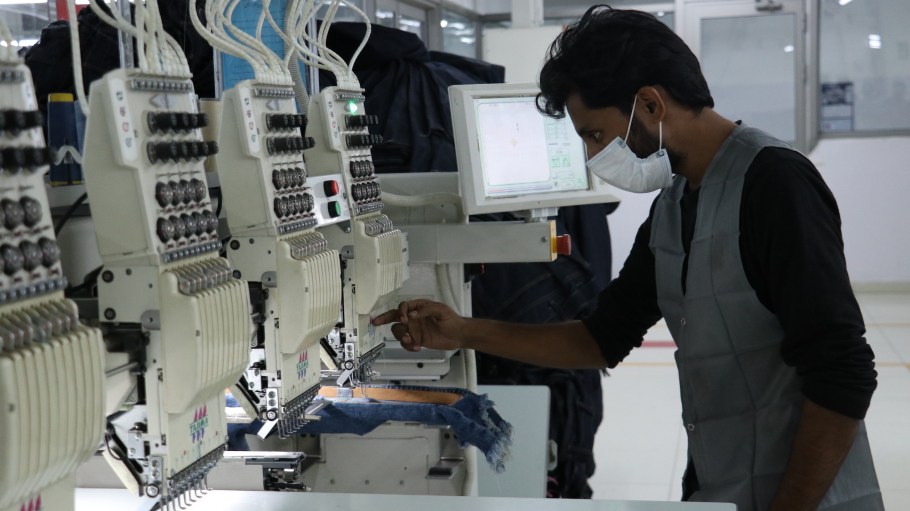
Karachi, Pakistan-based vertical denim manufacturer Soorty revealed plans to ramp up production, a move made possible by its diversified supply chain, even amid the ongoing global trade war.
“These are undoubtedly challenging times…brands are unsure what’s coming next, and to support them, they need supply chains that can handle pressure and pivot quickly,” said Muhammad Ali, vice president of marketing and sales at Soorty. “That said, we’re the only company with cross-manufacturing in Bangladesh, in addition to our own government-approved factories there. So, If there’s an issue in Bangladesh, Pakistan can step in and [vice versa].”
Beyond cross-manufacturing, Ali noted that its global presence gives Soorty “an edge” over competitors.
“We have a design studio in New York, designers in Barcelona, communications in Amsterdam, a new design office in the United Kingdom, developers in Turkey and our sales office in Pakistan,” he added. “Having such a wide footprint gives suppliers confidence that we can deliver—even when the ship is on fire. That’s why we’re beyond optimistic about the future of our business.”
Meanwhile, roughly 8,000 miles away in Mexico, business is also on an upswing. That’s according to Stephanie Poon, Twin Dragon’s director of marketing and merchandising, who noted that Mexico has become a “preferred region” for some of the company’s customers.
“We’re very optimistic about business,” Poon said. “One of our key advantages is having mills in Mexico, China and Vietnam and operations in L.A., which gives our customers multiple sourcing options. Right now, Mexico is emerging as a preferred region for many, and that flexibility sets us apart from mills limited to just one location.”
Turkish denim mill Isko is less optimistic about business.
According to Onur Çınar, marketing executive at the Turkish denim mill, navigating constantly shifting tariffs has been challenging, but the company remains “cautiously optimistic,” relying on expanded sustainability initiatives to try and stay ahead of the market.
“The textile market isn’t doing so well globally, which is a big concern,” Çınar said. “But we’re maintaining an optimistic outlook by focusing on more sustainable products. This means using higher percentages of recycled yarns and fabrics. It’s better for the environment and helps us stay competitive in the industry. That’s [not to say that] sustainability hasn’t always been our top priority, we just believe our customers value that commitment, even in challenging times [like this], so we’re [really leaning into it].”
While Mexico and Pakistan may be gaining momentum, Balaam echoed Ali’s sentiment, adding that that maintaining a diverse supply chain is ultimately key to staying competitive.
“Pakistan and Mexico may indeed become the next denim powerhouses…but success will hinge not just on where jeans are made, but how,” Balaam said. “In reality, major brands will want a diverse supply chain, and we expect there will be a mix of nearshoring, low-cost sourcing and sustainable production hubs. And it’s not all about tariffs. Over the past couple of years, logistical disruptions to shipping have also weighed heavily on buyers’ minds, so that’s something denim mills will also need to consider if they want to stay ahead.”