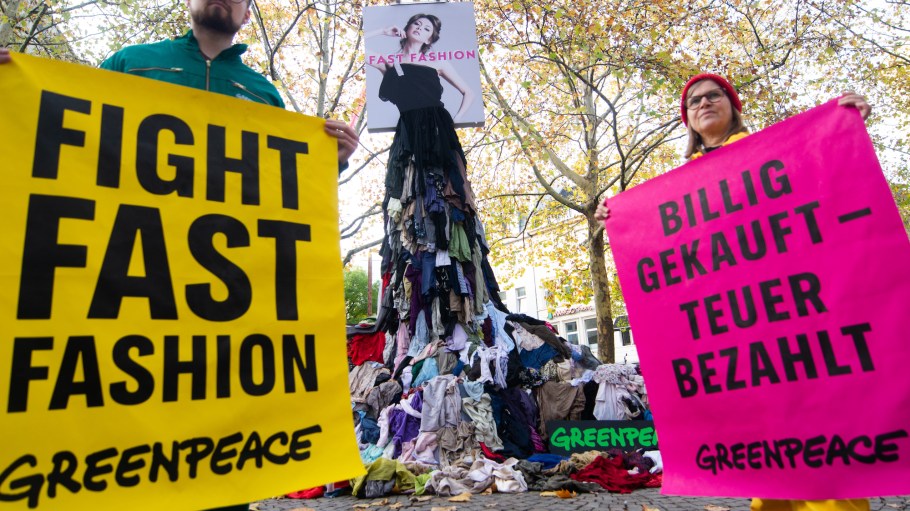
What happens when sustainability becomes just another brand buzzword? The answer may be playing out in real time as Earth Day marketing faces growing skepticism from consumers.
For decades, brands have leaned on retail-driven holidays—think Presidents Day and Labor Day—to drive sales. But as consumers become more discerning, that playbook is starting to shift.
In fact, holiday campaigns, according to BigCommerce, are no longer just about promotions but instead must deliver real value and create an emotional connection. Even amid tighter budgets, 70 percent of consumers still prioritize value, with campaigns that tap into sentiment, tradition and early engagement performing best.
Related Stories
That formula, however, doesn’t translate as easily to purpose-driven moments like Earth Day.
While the occasion still succeeds in raising awareness, educating consumers and engaging younger audiences, its ability to drive lasting behavioral change—or meaningfully hold companies accountable for one-off initiatives that lack measurable impact—remains less certain.
To combat growing consumer distrust, Adam Freedgood, founder of sustainability consultancy Third Partners, said brands and retailers need to anchor their efforts in a clear, year-round strategy rooted in “measurable sustainability goals.”
“Earth Day isn’t losing relevance, but the way brands are using it is. Consumers are now far more critical of sustainability claims, especially if they feel poorly targeted or disconnected from a company’s actual impact,” Freedgood told SJ Denim. “The strongest campaigns are grounded in real emissions reductions or a defined sustainability plan. It’s not just storytelling; it has substance. Companies need to ensure their messaging aligns with measurable action. If there isn’t an underlying strategy or real progress, the campaign won’t build trust.”
Freedgood added that brands should treat Earth Day less like a launch moment and more like a progress report, showing what’s actually working, what isn’t and where there’s still room to improve.
“Brands should focus on operational strategy instead of marketing moments,” Freedgood said. “Embed sustainability into how the business runs and let Earth Day be a moment of accountability instead of a promotion.”
One brand already putting that approach into practice is Mavi.
For more than 30 years, the Istanbul-born denim label has worked to build a more responsible supply chain by maintaining control over its entire manufacturing process—from design to washing and production—allowing it to deliver on both quality and transparency year-round.
At the center of that effort is its All Blue strategy, which focuses on scaling the use of lower-impact materials like organic cotton, hemp and recycled fibers, with a goal of reaching 100 percent sustainable denim by 2030. The company is also targeting carbon neutrality by 2040 and climate-positive status by 2050.
For Earth Day, Mavi leans into continuity rather than one-off campaigns. Instead of introducing something new, the brand uses the moment to reinforce the work it’s already doing, spotlighting progress tied to its All Blue platform and long-running Indigo Turtles Project.
The initiative, developed in partnership with the Ecological Research Society (EKAD), focuses on protecting endangered sea turtles in Belek, Turkey (one of the Mediterranean’s largest nesting areas). Most recent data from Mavi show that approximately 2 million eggs laid on the Belek beaches have been protected, and 1.3 million hatchlings have been helped to reach the sea.
“The collaboration with EKAD perfectly aligns with our mission to create a positive impact on the environment, as we strive to contribute to a more sustainable future for our planet together with our community,” Cüneyt Yavuz, Mavi CEO, previously stated.
Resale retailer Buffalo Exchange is another company putting that philosophy into practice, tying its Earth Day efforts directly to its long-standing sustainability commitments.
On April 18, the Tucson, Ariz.-based company will host its annual $1 Earth Day Sale, offering a curated selection of clothing, shoes and accessories for $1, with 100 percent of proceeds benefiting the Plastic Pollution Coalition—a global network working to address plastic pollution and its impact on people and the planet.
“As a business committed to sustainability and reducing waste, this year’s beneficiary closely aligns with our values,” Rebecca Block, Buffalo Exchange’s CEO, said. “Plastics impact every living thing at every stage—from production to disposal—so we’re excited to support Plastic Pollution Coalition’s work to reduce reliance on plastic.”
The initiative builds on decades of sustainability-focused efforts, the retailer noted.
Since 1994—roughly two decades after its founding—Buffalo Exchange has “said no” to single-use plastic through its Tokens for Bags program, which has since raised more than $1 million for local nonprofits and prevented nearly 20.5 million plastic bags from entering the waste stream.
Adding to those efforts, since 1997, its Earth Day $1 Sale alone has generated more than $882,000 for environmental organizations, reinforcing its long-standing commitment to sustainability beyond a single-day initiative.
Regulatory shifts
Aside from expecting year-long initiatives, Elinda Jacobs, CEO of Tech Packs Co., said shoppers across all age groups have hit a breaking point with vague sustainability language, putting pressure on brands to back up their messaging with “real proof.”
“Shoppers are completely exhausted by vague ‘eco-friendly’ marketing. The only way to beat greenwashing allegations today is raw, organized data,” Jacobs said. “If a brand wants to use Earth Day effectively, they need to prove it with their backend operations. You have to have the actual factory certifications and material sourcing data locked down in your tech packs. Having clean production data isn’t just an operational advantage anymore, it’s the only way to prove to regulators and buyers that you aren’t bluffing.”
Adding to the pressure, the line between performative and credible campaigns may soon be defined less by public perception and more by policy, according to Arif Gasilov, sustainability and ESG strategy partner at consultancy Gasilov Group.
The European Union’s Empowering Consumers for the Green Transition Directive—set to take effect on Sept. 27, 2026— for example, will crack down on vague environmental messaging, banning broad claims like “eco-friendly” or “sustainable” unless they’re backed by recognized certification. It will also prohibit carbon-neutral claims based solely on offsetting and eliminate self-created labels that lack independent verification.
“The regulatory environment is about to make this distinction for brands whether they’re ready or not,” Gasilov said, pointing to early enforcement as a preview of what’s to come. “Italy’s AGCM already fined Shein €1 million [approximately $1,146,070.00] in August 2025 for vague environmental claims, and that’s before the directive even takes effect. This will standardize that level of scrutiny across all 27 member states.”
For Earth Day campaigns, Gasilov said, the implications are immediate.
“An apparel brand running an Earth Day campaign this April with vague language about being ‘committed to sustainability’ is using messaging that will be illegal to direct at EU consumers five months later,” Gasilov added. “The brands that use Earth Day effectively going forward will be the ones whose operations already generate the verified data that makes those claims defensible, not the ones commissioning a campaign in March and hoping nobody checks.”