
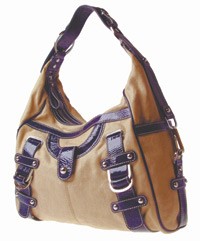
NEW YORK — Accessories are still fashion’s driving force, but the “It” bag just isn’t it anymore.
While no one is predicting sales in the category are about to slow, the concept of the “It” item, crucial over the last few seasons, is rapidly waning. Companies are introducing myriad styles hoping to capitalize on the continuing boom in demand for accessories, while consumers are taking a more personal approach to pulling together an ensemble and relying less on one key look, executives said.
“If somebody comes out with an incredible bag for spring that nobody has seen before, this could change, but the notion of the ‘It’ bag is waning,” said Ed Bucciarelli, president and chief executive officer of Henri Bendel. “Women are becoming more interested in having an individual look. It doesn’t mean the handbags we are seeing now are shrinking violets. They still make a statement.”
Steve Dumain, designer and co-founder of Be&D, which is putting the final touches on its spring assortment, said, “Our collection is becoming more and more about an overall range of beautiful bags than an ‘It’ bag idea, which we never loved anyway. It really takes away from a girl’s independent style when she’s mimicking exactly rather than being inspired by a look.”
Retailers and vendors remain optimistic about growth in the sector, believing the new layered look in ready-to-wear promises to further drive sales heading into spring as consumers similarly pile on the accompanying bags, belts and baubles. Over the last six weeks, companies from LVMH Moët Hennessy Louis Vuitton to PPR to Tod’s have forecast continued momentum in the second half of the year on top of strong growth in the first six months.
But if there is no one key item, there are strong categories, including belts, footless tights and hair embellishments. These all saw the heaviest demand at the recent holiday and resort market here.
Bucciarelli said fashion and accessories designers are doing their homework to keep customers interested in “lots of different things.”
“So much of what is going on in accessories right now is complementing the shift that is happening in apparel,” he said. “It’s all about layering and playing with volume. Any accessories that make the notion of layering a little easier for the consumer will be important going forward.”
Related Articles
You May Also Like
Some retailers and vendors, however, predicted the shift away from a key item might already be creating a shake-up in the handbag and jewelry categories as “It” looks like the oversize hobo and long necklace begin to fade in importance.
Cynthia O’Connor, president of Cynthia O’Connor & Co. showroom, based here, which exhibited at Accessorie Circuit from Aug. 6 to Aug. 8 at the Jacob K. Javits Convention Center and carries resources such as Kooba, Gustto, Rebecca Minkoff and Botkier, said she has dropped her jewelry vendors to concentrate more of her accessories business on shoes and handbags.
She expects handbags to bring in $40 million in sales this season, partly driven by her success with clutches. But she cautioned there’s no guarantee that retailer interest in smaller handbags will lead to a home run with consumers.
“There is a trend toward smaller bags,” said O’Connor. “We have to see if the customer is going to go for it because the market can change quickly. That’s what is great about the handbag designers I work with. If they try to design and guess what’s going to be the next ‘It’ bag, that’s when it goes wrong. The ‘It’ bag is more of an organic thing than anything else, and it’s driven not only by brand names and celebrities wearing it, but also by whether or not the customer falls in love with it.”
Stuart Weitzman is taking a similar approach. The designer is expanding the brand’s offerings to include handbags and said, “Our customers feel a tremendous loyalty to our brand. We didn’t want to do one ‘It’ bag because then you either hit it or you don’t.”
Rick Weinstein, director of sales and marketing for Searle, with seven boutiques located throughout Manhattan, said the retailer is being cautious with its handbag buy, even though accessories now make up 40 percent of the business and is steadily growing. This is partly due to success with belts, which quadrupled in sales over the past year.
“Everyone needs a belt these days because there is a dramatic shift from the waist to the upper body,” Weinstein said. “It requires everybody to replace what they have, so we have grown our vendors in the belt category. The handbag business, however, seems to be neither here nor there. There is no ‘It’ bag right now and there is no direction other than the clutch and looks in patent leather.”
He also said jewelry was performing softer than it had in the past, which could be attributed to a lack of direction in the category.
“Jewelry is not as hot as it was,” said Weinstein. “The customer is looking for something new. Our best line in the store right now is Vale. It’s all about subtlety and it’s gold and it’s on the small side. It’s very personal and great for layering.”
At Nine West, the firm is concentrating on jewelry that is delicate and personal, mostly featuring charms with mixed metal treatments.
“As much talk as there was about gold tones in the market, many people had a soft gold season,” said Lisa Otterman-Geardino, group president of Nine West Accessories and Victoria + Co. “That’s why we went for silver or mixed metals. The whole jewelry market is looking for whatever that next hot thing is going to be. We are waiting until September to see if there’s anything we need to jump on.”
Jeweler Alexis Bittar said although the buyers he met with at Accessorie Circuit were writing large orders, the pieces they were booking were safer bets.
“They pretty much went back into what they were buying for fall and not taking a risk in terms of what I would consider to be more creative pieces,” said Bittar. “They were more cautious and I’m not sure if it was about a concern for the economy or just that they haven’t figured out what that next new thing is.”
Lee Drotman, co-owner of Drozak Studio, a showroom here that exhibited at AccessoriesTheShow, also held at the Javits Center Aug. 6 to Aug. 8, said jewelry sales made this one of the best markets the firm has had. He anticipated sales increases of 15 percent compared with last year at this time, partly due to buyers scooping up cocktail rings, bold cuffs and long chains in untraditional gold colors from resources including Sheila Fajl, Janna Connor, Jill Jacobson and W.A. Studio.
Janet Goldman, ceo and founder of Fragments, a New York jewelry and accessories showroom that exhibited at Accessorie Circuit, said she similarly had a strong market, anticipating 10 percent increases from last year at this time. Goldman said she gets the feeling that economic worries and the world situation are weighing on everybody’s minds right now, but she added that hasn’t slowed sales.
“People seem to be living life more in the moment, which isn’t bad for business,” said Goldman. “If it’s something they want, they have to have it now.”
Reflecting the opinions of many vendors exhibiting at the trade shows, she said having the events in one location, following a scheduling conflict that forced Accessorie Circuit out of its usual location at the Show Piers, was also good for business.
“Having the shows under the same roof showed me that competition is a good thing,” said Goldman. “Buyers were able to focus on what price point appealed to them and as they didn’t have to travel around between vendors, they had more time to shop, which means better business for everybody.”
Elyse Kroll, president of ENK International, which produces Accessorie Circuit, said she noted there was an increase in visitor traffic that might be attributed to the shows appearing in the same venue. She was not confident, however, that it translated into increased sales for all vendors.
“I was fortunate to have found this space and overall it ended up being a success, but we are scheduled to be back at the Show Piers for the next show,” said Kroll.
AccessoriesTheShow recorded a 10 percent increase from last year in visitor traffic, welcoming 14,159 buyers, according to Britton Jones, president and ceo of Business Journals Inc., which owns the exhibition. Exhibitor space increased 40 percent, to 85,120 net square feet from 60,590 net square feet last year.
“Buyers loved having the markets together,” said Jones. “A lot of people hadn’t been to see our show for a while, so they were able to come and discover new resources and see what we have transformed into. Business is good right now, even though the market does seem a little nervous. The trends that are clear did well, but there was more discussion than ever as to what are the next must-haves.”