Mexico is under mounting pressure to address China’s influence on cross-border trade with its North American neighbors—and the fate of the U.S.-Mexico-Canada Agreement (USMCA) may depend on it.
Both president-elect Donald Trump and Canadian Prime Minister Justin Trudeau have been banging the drum about the potential acceleration of transshipments from China making their way into the U.S. and Canada.
Lawmakers and trade enforcement officials in Washington have also been looking into the matter in recent months. With new tariffs on China-made goods likely on the way, the country may be developing other avenues into the U.S. market that will allow its products to evade heavy duties—including setting up manufacturing operations to finish goods made with Chinese inputs, they believe.
Related Stories
Trump said throughout his campaign that he plans to invoke a six-year review of USMCA in July 2026, with the goal of renegotiating a deal that better protects American interests and industry.
Notably, Mexico replaced China as the biggest trading partner to the U.S. in 2023—but the country has also dramatically upped its trade with China. Freight analytics platform Xeneta’s data showed China-to-Mexico container trade grew by more than 26 percent between January and July of this year, after growing by a total of 33 percent in 2023.
“Trade between China and Mexico has been in the spotlight during 2024 due to suspicions it is being used as a backdoor into the U.S. to avoid import tariffs,” Xeneta chief analyst Peter Sand wrote in a blog post on Friday. “If this is true, then the arrival of Donald Trump for a second term in the White House could have significant implications given his stance on increasing tariffs on imports from both China and Mexico.”
Trump has been unwavering on his proposal to up tariffs on China when he takes office, and his protectionist attitude toward the Asian superpower comes as no surprise given the actions he took during his first term. But recently, he’s also floated the idea of hitting Mexican goods with tariffs of up to 100 percent if the country doesn’t get a handle on the border crisis.
With concern solidifying around Mexico’s role as a pipeline for Chinese products, the president-elect may have another reason to adopt a trigger-happy stance on duties—and a review of USMCA.
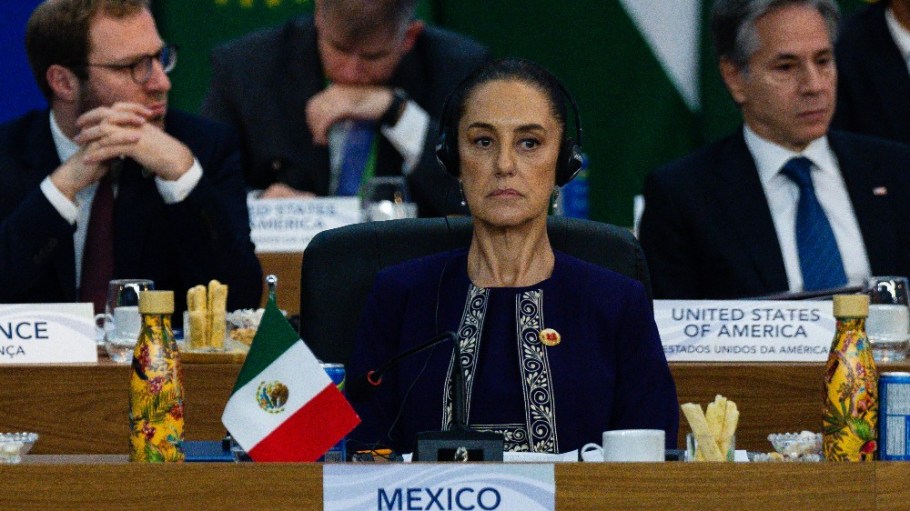
Mexican President Claudia Sheinbaum hit back at the assertion during a Friday morning press conference. “In the meetings we have with Canada and Trump, we’ll show that the idea that [Chinese] products are entering through Mexico is false,” she said. One day earlier, she also responded to president-elect Trump’s plans for mass deportations of migrants, saying, “In case there are deportations, we are going to receive Mexicans and we have a plan for that.”
Sheinbaum is simultaneously trying to assuage Canada’s anxieties about the future of the three-way trade pact.
She met with Trudeau on the sidelines of the G20 leaders’ summit in Brazil last week, and the Prime Minister said he brought “real and genuine concerns about Chinese investment into Mexico” directly to Sheinbaum, according to Canadian outlet GlobalNews. While he would prefer that Mexico remain a part of USMCA, Trudeau said Canada “may have to look at other options” if the country can’t adequately address concerns about China’s influence and the risks posed by transshipment.
“Ideally,” though, Trudeau hopes the continental bloc can remain a “united North American market.”
Other Canadian lawmakers are pushing to cut Mexico out of the trade deal altogether, expressing a desire to form a new bilateral trade agreement with the U.S. instead.
Ontario Premier Doug Ford has been among the most vocal leaders behind a potential USMCA takedown. Ford held a call with 13 other Canadian territorial and provincial premiers last week, uniting them in a mission to push for a U.S.-Canada agreement “now,” not in 2026, according to Canadian news network CBC.
“They’ve had an opportunity to fix these concerns for years and they just don’t want to,” Ford said of Mexico. “So they’ve shown their cards, and we’ll do a bilateral trade deal with them, and a separate one with the U.S.”
While his time in the Oval Office is winding down, President Joe Biden is also on Sheinbaum’s list of hopeful allies.
Biden’s presidency has been plagued by concerns about mass migration, but he views the trade relationship with Mexico as a point of pride—especially with regard to the countries’ renewed commitment to co-production and Western Hemisphere sourcing.
The Mexican president met with Biden at the G20, where he congratulated her on her recent election victory.
“The two leaders underscored the importance of maintaining cooperation on migration, security and tackling the scourge of transnational criminal violence, and economic issues, building on the strong bilateral partnership between the United States and Mexico,” the White House wrote.