A congressional committee aims to “fundamentally reset” the economic relationship between the U.S. and China. The House of Representatives’ bipartisan select committee on China laid out nearly 150 policy recommendations in a report this week. These include raising tariffs on China-made goods and limiting the country’s duty-free access to the American market under de minimis law.
Led by Chairman Mike Gallagher (R-Wisc.) and Ranking Member Raja Krishnamoorthi (D-Ill.), the report “embraces the clear reality that our current economic relationship with the People’s Republic of China needs to be reset in order to serve the economic and national security interests of the United States,” Krishnamoorthi said Tuesday.
Related Stories
He urged the government to recalibrate ties to China by stemming the flow of U.S. capital and technology, which he believes are funding its military advances and human rights abuses. The U.S. must also “build collective economic resilience in concert with our allies and partners while ensuring American leadership for decades to come,” he said.
China has long failed to live up to its World Trade Organization (WTO) commitments, instead empowering state-owned entities, subsidizing domestic industry, and shutting out competitors, the report said. “U.S. companies doing business in the PRC must also navigate an increasingly complex network of laws, regulations, and protectionist policies. In sum, continued, unfettered economic ties with the PRC poses a direct threat to U.S. national and economic security, financial stability, and values,” the report said.
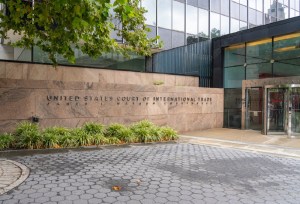
As such, the committee recommended that Congress move China into a new tariff column that “restores U.S. economic leverage” and forces China to honor its trade commitments. It would also renew the China Safeguard mechanism (Section 421 of the Trade Act of 1974) which expired in 2013. The China-specific law allowed the U.S. to impose tariffs or other restrictions on China if the U.S. International Trade Commission determined that products entering the country were likely to disrupt markets.
The committee emphasized the need for strong rules-of-origin to be included in trade agreements with allied nations, like the U.S.-Mexico-Canada Agreement (USMCA), so that China doesn’t use these countries for “backdoor” access to the U.S.. In the wake of Shein’s reported IPO filing, lawmakers also recommended passing legislation to reduce the de minimis threshold that empowers many Chinese e-tailers. Legislators believe the current $800 cap is hampering Customs and Border Protection’s (CBP) Uyghur Forced Labor Prevention Act (UFLPA) enforcement.
Industry voices have varied stances on the issue. “CBP has confirmed that de minimis shipments are processed the same way as higher value parcels and are subject to enforcement of U.S. laws,” National Foreign Trade Council (NFTC) senior director of international supply chain policy John Pickel said. “This recommendation would not address challenges in the important work of stifling the flow of illicit drugs and products made using forced labor from entering our borders.
“De minimis is not a loophole, it is a staple of U.S. customs law that Congress designed to provide access to international markets for small businesses and lower costs for consumers,” he added. Lowering it “would make everyday purchases more expensive for American consumers and small businesses without improving enforcement at our borders.”
Meanwhile, National Council of Textile Organizations (NCTO) president and CEO Kim Glas praised the committee’s de minimis suggestion, saying the provision “facilitates the importation of slave-labor made goods, counterfeits, counterfeits and illicit narcotics, and is undermining our industries.”
“The U.S. textile and apparel manufacturing sector has been on the receiving end of some of the worst predatory trade practices by China,” she said. “The Committee’s critical blueprint released today provides key bipartisan policy guidance to immediately help manufacturing sectors like ours that are experiencing economic headwinds. Specifically, stepping up UFLPA and customs enforcement is a critical concern to ensure transparency of our supply chains.”
The Coalition for a Prosperous America (CPA), which represents U.S. manufacturers and producers, law enforcement, national nonprofits and community organizations, issued a joint letter urging Congress to rethink de minimis. Beyond undermining U.S. producers, they said the trade provision threatens consumers’ health. CBP has found “high-risk shipments that may contain narcotics, merchandise that pose a risk to public safety, counterfeits, or other contraband,” they said.
CBP “continues to see bad actors seeking to exploit the increasing volumes of de minimis shipments to transit illicit goods, including fentanyl and the precursors and paraphernalia used to manufacture it.”
“Along with the rise of e-commerce and mass distribution shippers, this provision has exploded in popularity creating a supercharged black-market for counterfeit products, goods produced with slave labor, hazardous materials, and illicit drugs,” the CPA coalition wrote. “Closing the de minimis provision by decoupling all e-commerce transactions for qualifying for de minimis treatment is the only way to comprehensively address these issues.”
CPA CEO Michael Stumo’s recent House Homeland Security Subcommittee on Oversight, Investigations, and Accountability testimony addressed the de minimis loophole’s role in the fentanyl crisis.
The issue will be debated Wednesday at a public Washington, D.C. roundtable hosted by House Ways and Means Trade Subcommittee Ranking Member Earl Blumenauer (D-Ore.). In June, Blumenauer introduced Import Security and Fairness Act, a bipartisan and bicameral bill aimed at stopping non-market economies from exploiting the de minimis threshold, and requiring CBP to collect more information on the small shipments. He will be joined by Stumo, along with Andy Warlick, chairman and CEO of yarn manufacturer Parkdale Mills, Roy Houseman, legislative director at the United Steelworkers, National Association of Police Organizations director of governmental affairs Andy Edmiston and U.S. Commission on International Religious Freedom commissioner Nury Turkel.