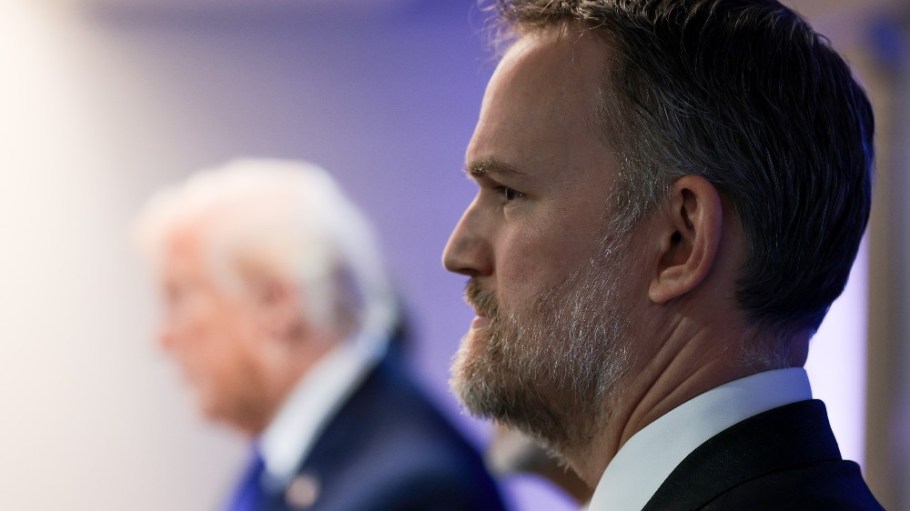
United States Trade Representative Ambassador Jamieson Greer has his work cut out for him this week.
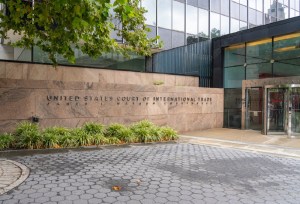
Over the past five days since President Donald Trump’s expansive International Emergency Economic Powers Act (IEEPA) tariffs were quashed by the Supreme Court, the Commander in Chief has issued a 10 percent universal duty under Section 122 and a subsequent Truth Social missive upping that rate to 15 percent. But on Tuesday, when the tariffs took effect at 12:01 am, it became clear that the president’s Truths don’t function as executive orders.
Related Stories
When the previously touted 10 percent rate went into force, trading partners—especially those engaged in finalizing trade deals with the U.S.—were exasperated by the mixed messaging and the unknowable implications of the new policy.
Following the president’s State of the Union address, which offered much in the way of soaring rhetoric and little in the way of details about the tariff replacement strategy, Greer was deployed to make sense of the matter.
In an interview with Bloomberg News, Greer explained that the “temporary, 150-day authority” afforded by Section 122 fulfills the goal of providing “continuity” in the administration’s tariff policy now that IEEPA is no more.
“The idea is to establish a through line from the policy that that the president has implemented successfully over the past year and continue it over the 150 days, and as we build up appropriate tariff rates using other investigations and means,” he said.
The president is keen, however, to up the 10 percent rate to 15 percent in the coming days, the USTR Ambassador clarified. “We want the countries, we want the companies, we want people to understand that what we were doing before, we’re going to reconstruct with alternative tools because we want to keep going, maintain the policy,” he said. “We’ll just have a change in the legal implementing authority.”
However, there are apparently caveats when it comes to Section 122 and the 15 percent tariff rate.
A supplemental proclamation is in order that will raise the across-the-board duty rate to 15 percent “where appropriate,” Greer said, indicating that there could be some wiggle room for certain trading partners. “Remember, before the Supreme Court struck down the tariffs, a lot of these countries had agreed to have U.S. tariffs on them of 18 percent, 19 percent, 20 percent. So going up to 15 percent, at least temporarily, it’s better than the deal they had,” he said.
But for countries like the United Kingdom and trade blocs like the European Union—both of which settled on lower baseline tariff rates with the U.S. during broader trade agreement negotiations—the deal is looking a bit raw. Asked whether the new 15 percent Section 122 tariffs will stack on top of Most Favored Nation duty rates, bringing overall rates higher than those approved in trade discussions with these partners, Greer didn’t provide a clear answer.
Saying he’s been in “constant contact” with counterparts in Brussels and the U.K., Greer said most of the substance of those deals will remain intact, like tariff rates and quotas on automobiles and beef exports to the U.S., for example. “A lot of these parts stay the same. But just like Brussels hasn’t fully implemented its deal or the U.K. hasn’t fully implemented its deal, we also need a couple of months now to have some domestic procedures because the Supreme Court struck down all of this,” he said.
Not exactly a clear edict from the nation’s head of trade policy, but Greer said it’s “pretty normal” for deals to take time to hash out. He indicated that it could take several months for the USTR to “rejigger the tariffs so they comply with our end of the deal—and we expect the EU and the U.K. to hold up their end of the bargain, too.”
Greer also spoke to the administration’s intention to use Section 301—a country-specific trade enforcement tool that allows the president to investigate unfair trading practices. Those investigations, which are launched by the USTR, could target “China certainly, but also other countries, Vietnam, Southeast Asia, the Europeans potentially.”
But on Fox Business on Wednesday, Greer seemed to walk back the comments about potentially upping duties on China through a Section 301 investigation. U.S. tariffs on China-originating imports range between 35 percent and 50 percent. “We expect that level to remain in place,” Greer said. “We don’t intend to escalate beyond that. We intend to really stick to the deal that we had before.”
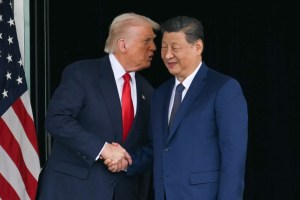
Trump is due to travel to Beijing for a scheduled meeting with Chinese President Xi Jinping in late March. China’s Ministry of Commerce warned that it is assessing countermeasures to the U.S.’ new tariffs to be taken “in due course.”
Though his tone seemed design to reassure U.S. trading partners engaged in discussions with the U.S., trade czar Greer conceded that some countries could indeed end up with tariffs higher than the 15 percent currently promised by the administration under Section 122 using authorities like Section 301 and Section 232, the statute currently being used to impose global tariffs on steel and aluminum.
“It’ll go up to 15 for some and then it may go higher for others, and I think it will be in line with the types of tariffs we’ve been seeing,” Greer said.