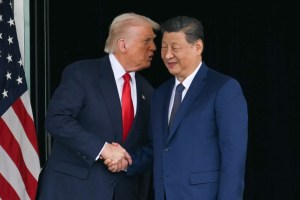
The U.S. has completed a trade deal with Japan, President Donald Trump announced on Truth Social Tuesday evening.
Calling it “perhaps the largest Deal ever made,” the president said Japan will open up trade with the United States, taking in cars, trucks, rice and other agricultural products, while paying 15-percent tariffs on exports into the American market. This rate will replace 25-percent duties announced earlier this month.
Japan also plans to invest $550 billion into the U.S., which will generate hundreds of thousands of jobs, Trump wrote—though he did not elaborate on the nature of the investment except to say that the U.S. would reap 90 percent of the profits. “This is a very exciting time for the United States of America, and especially for the fact that we will continue to always have a great relationship with the Country of Japan,” he added.
Related Stories
The trade agreement comes after weeks of negotiation and some characteristic lashing out from Trump, who has repeatedly characterized the country’s government as difficult to work with. Earlier this month, Japan, along with South Korea, received a letter from the administration establishing a duty rate of 25 percent, setting off a flurry of such announcements in the ensuing days and causing trade officials from nations across the globe to rush to the proverbial negotiating table in advance of the Aug. 1 deadline.
The ASEAN region has been an area of particular focus for trade officials given its central role in supply chains for many consumer products and industrial goods, as well as its geographic closeness and business ties to China.
In addition to cutting a deal with Philippine President Ferdinand Marcos Jr. at the White House on Tuesday (the country will open up its market to American-made products while paying 19-percent duties on exports to the U.S.), the administration released a fact sheet about the deal it struck with Indonesia last week.
The country will also pay a tariff rate of 19 percent on America-bound exports, while driving down its own duties on U.S. products related to health, agriculture, technology, automotive and chemicals and dismantling certain non-tariff barriers and regulations that impact U.S. companies doing business in the country.
Notably, the agreement also includes a pact to renegotiate rules of origin laws to benefit the U.S. and Indonesia, “not third-countries.” The White House statement indicated that Indonesia has committed to adopting and implementing a forced labor ban, as well as removing provisions within its laws that restrict worker rights to freedom of association and collective bargaining.