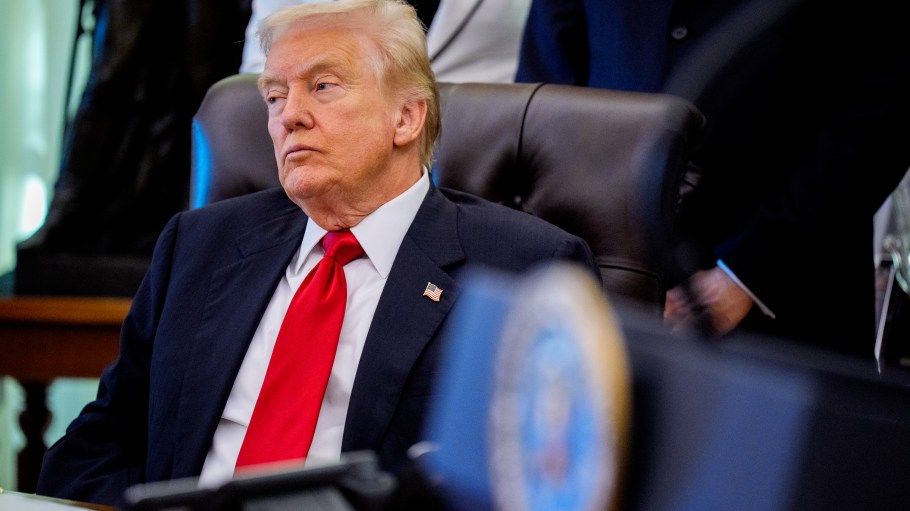
President Donald Trump is continuing his tariff quests.
The Trump administration announced Friday that the U.S. Trade Representative (USTR) has struck a new trade deal with Switzerland, which will see the country at parity with the European Union’s standard duty rate.
Goods inbound from Switzerland previously faced a 39-percent duty. That has now dropped to 15 percent. The deal also includes Liechtenstein. Like other nations Trump’s administration has inked trade deals with, the Swiss government has agreed to a number of provisions that the White House said will “drive billions of dollars in investment on U.S. soil, creating thousands of jobs across America.”
Related Stories
USTR Jamieson Greer told CNBC last week that the deal with the Swiss government will see the country moving “a lot of manufacturing here to the United States,” specifically citing railway equipment among the list of impacted industries.
“We’re really excited about that deal and what that means for American manufacturing,” he reportedly said.
According to the agreement, Swiss companies have agreed to invest $200 billion or more in the U.S., and at least $67 billion of that investment will come in 2026.
Switzerland has also agreed to make it easier for certain U.S. products, like dairy, poultry, medical devices and more to enter the nation. The Trump administration said, with these conditions, the deal is set to eliminate the U.S.’s trade deficit with Switzerland by 2028.
Switzerland has seemingly been eyeing such a trade deal for some time; earlier this month, high-profile Swiss business executives, including Johann Rupert, chairman of Richemont, visited the U.S., bringing along luxury gifts for Trump. Those included a Rolex desk clock and an engraved, customized bar of gold. Trump joined Rolex CEO Jean-Frédéric Dufour in a suite at the U.S. Open in New York City earlier this year.
The administration said the gifts and experiences Trump has reaped from his back-and-forth with Swiss business leaders did not influence the decision to push a trade deal with Switzerland through.
“The administration’s trade deal with Switzerland is more proof that President Trump’s dealmaking and tariffs continue to deliver for the American people,” White House spokesman Kush Desai said, according to the Wall Street Journal. “The only special interest guiding President Trump’s decision-making is the best interest of the American people, and his historic trade deal with Switzerland secures billions in investments to make and hire in America while helping address America’s longstanding trade deficit.”
The deal with Switzerland, while not yet finalized, is far from the only tariff-related endeavor Trump and his allies have in the works.
Trump has repeatedly called for tariff rebates to be issued to U.S. consumers. He has said that the money for those rebates will come from the revenue the government brings in from tariffs. In a Truth Social post last week, Trump re-upped the proposition.
“People that are against Tariffs are FOOLS! We are now the Richest, Most Respected Country In the World, With Almost No Inflation, and A Record Stock Market Price,” he wrote. “Record Investment in the USA, plants and factories going up all over the place. A dividend of at least $2000 a person (not including high income people!) will be paid to everyone.”
Treasury Secretary Scott Bessent told Fox News that such checks would require the approval of Congress, but noted that he still believes that refunds could be on their way to American consumers.
Like Trump, Bessent was sure to note that the rebates would exclude high-income Americans and said that the initiative would look to boost “working families” across the country.
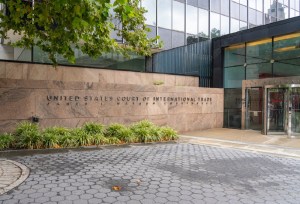
But the state of the revenue the government is hauling in from duties remains in limbo. The Supreme Court has yet to issue its ruling on Trump’s use of the International Emergency Economic Powers Act (IEEPA) to justify his tariff-setting streak. If the court rules the president’s use of power unconstitutional, the government may have to refund some of the collected duties.
Bessent said the administration isn’t worried.
“I don’t think this ruling is going to go against us, but if it does, what’s [the Supreme Court’s] plan for refunds? Because how is this going to get to consumers? Are they just going to hand some of these importers big windfalls?” Bessent said on Fox News Sunday. “I don’t think the Supreme Court wants to wade into a mess like that.”
If the administration can find a way to make Trump’s rebate pledge a reality, it could help consumers struggling against increasing costs on staple items, like food. Trump also announced Friday that some food products, like coffee, tea, juices, bananas, oranges, tomatoes and beef, will no longer be subject to his so-called “reciprocal tariffs.”
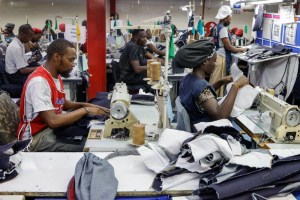
Part of the basis for that comes from tariff agreements the administration announced last week with El Salvador, Guatemala, Argentina and Ecuador. The El Salvador and Guatemala agreements also saw the removal of reciprocal tariffs from apparel and textile products under the Dominican Republic-Central America-United States Free Trade Agreement (CAFTA-DR), a move industry trade groups have been rallying and lobbying for.