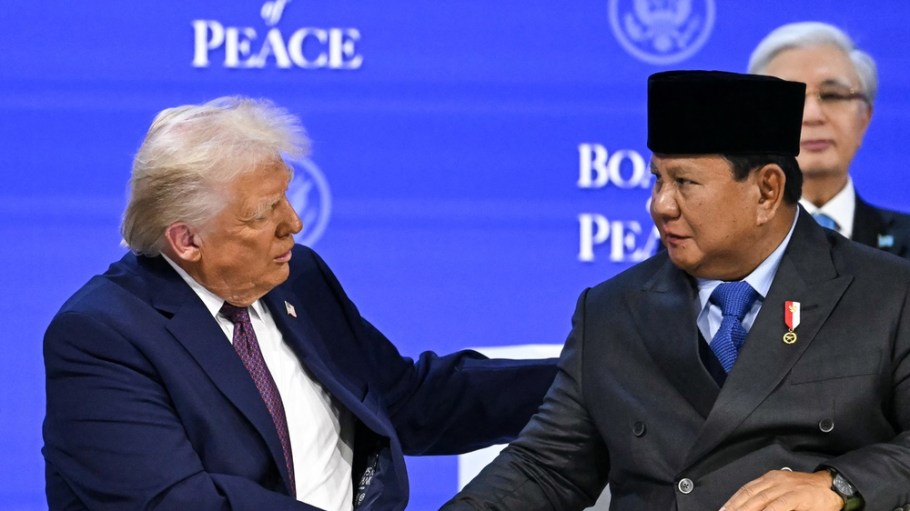
Indonesia is pumping the brakes on ratifying its trade deal with the United States after Washington initiated investigations into excess manufacturing capacity and forced labor involving it and other countries that could lead to a fresh round of tariffs, a spokesperson for Jakarta told reporters Tuesday.
“We need to resolve [the trade probe] first, as the [U.S. tariffs] are being called off, right?” said Edi Prio Pambudi, deputy for coordination of international economic cooperation at the Office of the Coordinating Economy Minister, as reported by the Jakarta Post. “The [United States] is not currently moving, so we are not moving either.”
Related Stories
Amid the standoff, the Indonesian government is forming a dedicated panel to prepare legal arguments countering U.S. allegations of unfair trade practices under Section 301 of the 1974 Trade Act, specifically structural excess capacity and forced labor imports that the Trump administration claims threaten domestic reindustrialization and American competitiveness.
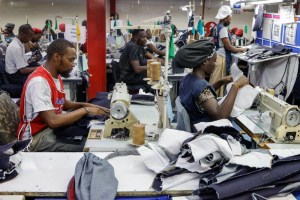
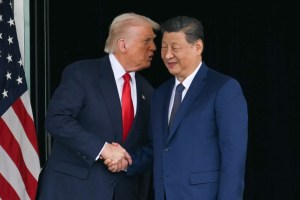
Much of the bilateral maneuvering boils down to timing. Washington and Jakarta announced on Feb. 20 the finalization of an Agreement on Reciprocal Trade, including zero tariffs on nearly all U.S. exports to Indonesia and a 19 percent levy on Indonesian goods. Despite committing to $15 billion worth of American oil and gas, plus $13.5 billion in U.S. airplanes and aviation equipment, officials largely chalked it up as a win: President Donald Trump had originally imposed a 32 percent tariff on the country last year, weighing heavily on commodities such as palm oil, textiles, apparel and footwear.
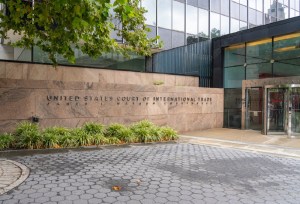
But the U.S. Supreme Court ruled just days later that post-“Liberation Day” tariffs levied under the International Emergency Economic Powers Act, or IEEPA, exceeded presidential authority, sparking a scramble for replacements. The Section 122 tariffs, imposed in the immediate aftermath at a global rate of 10 percent, are also poised to expire before the end of July, leaving a hole in Washington’s strategy of using import duties as leverage to extract trade concessions from its partners.
“These deals have not been popular with domestic audiences and, coupled with new allegations of unfair trade practices from the U.S. last week, make it difficult or impossible to clear the way toward approval of the bilateral arrangements,” Deborah Elms, head of trade policy at the Hinrich Foundation, a Singapore think tank, wrote on LinkedIn Wednesday.
Treasury Secretary Scott Bessent told the Economic Club of Dallas last month that Section 201 tariffs, combined with “potentially enhanced” Section 232 and Section 301 tariffs, will fill the gap left behind by the IEEPA ruling, leaving tariff revenue “virtually unchanged” in 2026.
And Indonesia isn’t the only country getting cold feet. Last week, neighboring Malaysia declared its ART with the United States—which locked in a reciprocal 19 percent tariff rate for significant U.S. market access and $70 billion in U.S. investment over the next 10 years—“null and void.” It had originally faced a levy as high as 47 percent for exports such as palm oil, electronic equipment, clothing, surgical gloves and other vulcanized rubber accessories.
“It is not on hold. It is no longer there; it’s null and void,” Minister of Investment, Trade and Industry Johari Abdul Ghani was quoted by the New Straits Times as saying. “If they claim it is due to a trade surplus, they must specify the industry involved. They cannot impose tariffs on a blanket basis.”
By Sunday, however, Ghani’s ministry walked back the assertion, saying the official had “misspoken” but without explaining how.
On Monday, eight ministers from Parti Keadilan Rakyat, a leading member of Malaysia’s ruling Pakatan Harapan coalition, wrote a joint statement seeking clarity about whether Kuala Lumpur has informed Washington about the agreement’s cancellation.
“We propose that the Malaysian government formally write to confirm the nullification of the ART and seek the official agreement of the U.S. government that the ART agreement has indeed been terminated,” they said. “We do not want this matter to remain unresolved, leaving Malaysia exposed to various interpretations of the agreement by the U.S. government, especially if there is a change of administration in the future.”
The uncertainty extends across the rest of Southeast Asia, where several garment-producing hubs remain stuck in the framework phase or have yet to ratify preliminary agreements. These include Cambodia, which signed a deal setting a 19 percent tariff rate but is still awaiting formalization; Thailand and Vietnam, whose groundwork deals targeted reciprocal rates of 19 percent and 20 percent, respectively; and the Philippines, which has yet to complete the consultation phase for its negotiated 19 percent reciprocal rate.