President Donald Trump confirmed his intention to begin collecting tariffs on nations across the globe on Aug. 1 in a Tuesday Truth Social post, saying “No extensions will be granted” in the interim.
After sending out a dozen letters to countries like Japan, South Korea, Myanmar, Thailand, Bangladesh and Indonesia on Monday, Trump indicated that more letters would be sent throughout the week and “the next short period of time” informing trading partners of their new tariff rates.
Related Stories
“We will be releasing a minimum of 7 Countries having to do with trade, tomorrow morning, with an additional number of Countries being released in the afternoon,” he Truthed on Tuesday afternoon.
Officials from Japan, who have been negotiating with the U.S. for some months without reaching an agreement, took issue with the president’s strategy of slapping trade partners with tariffs instead of pushing for a joint resolution.
Japanese Prime Minister Shigeru Ishiba said it was “deeply regrettable” that the U.S. had decided to increase tariffs on goods from the country to 25 percent. Meanwhile, ruling Liberal Democratic Party policy chief Itsunori Onodera said Trump’s manner of informing Japan of the change was “unacceptable.”
“It’s extremely rude to send only a letter to an allied nation. I strongly resent it,” Onodera said, according to Japan Today.
The outlet reported that Japan’s top trade negotiator, Ryosei Akazawa, discussed the matter on a 40-minute phone call with Commerce Secretary Howard Lutnick, expressing disappointment at the outcome. After the call, Akazawa told journalists, “I will devote myself to compiling a full package that can be sent to both countries’ leaders by utilizing the roughly three extra weeks that I’ve got to the fullest.” He reiterated that both countries have been negotiating “sincerely and faithfully” and “have built mutual confidence” in the trade relationship.
South Korea, by contrast, may face greater challenges when it comes to reaching an agreement with the U.S. by the Aug. 1 deadline, given that its new presidential administration, elected in May, is just finding its footing. According to a report from the Washington Post, the country’s recently appointed national security advisor, Wi Sung-lac, met with Secretary of State Marco Rubio in Washington on Monday to discuss the possibility of a summit between American and Korean leadership.
Wi told the press that negotiations were “moving toward a very important phase” and said that both countries were trying to form their own judgments on the matter of bilateral trade.
Meanwhile, the president on Tuesday doubled down on rhetoric surrounding the Aug. 1 deadline, saying that the new date was not a “change” but a “clarification.”
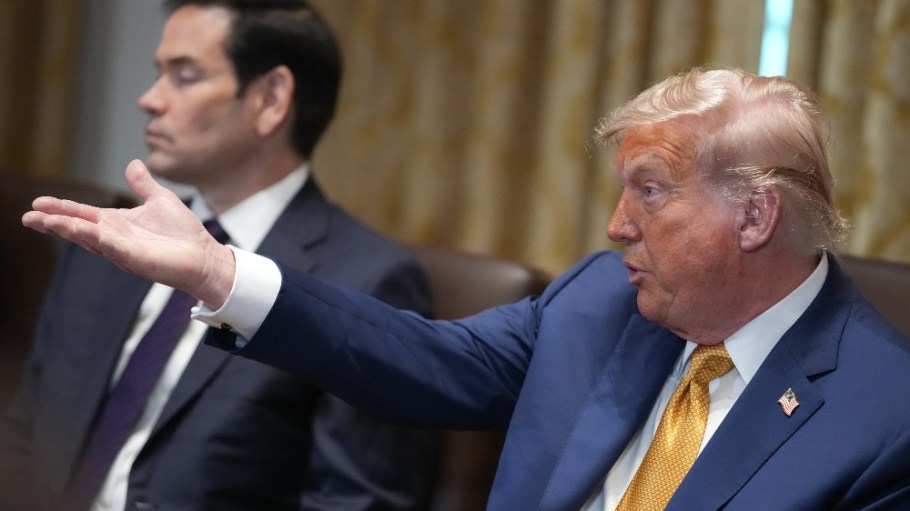
“August 1 they pay, and everybody has to pay, and the incentive is that they have the right to deal in the United States,” the president said during a cabinet meeting with White House officials.
As for the deals themselves, Trump said, “We have a lot of them going out—but the deals are mostly my deal to them…. We’re picking a number that’s lower than, in most cases, lower than what they charged us.” Trump emphasized the success of tariffs as a bargaining chip, saying that many nations are “willing to drop everything” to do business with the U.S., including “giving us total access to their countries.”
“We have made some deals. We can make a lot more deals. It’s just too time consuming,” he added, referring to the ongoing negotiations and explaining his reasoning for disseminating letters rather than pressing for further discussions.
Breaking with his more recent comments about the non-negotiability of the Aug. 1 deadline, Trump also said, “We can do things over the years, too,” referring to trade deals. “We’re not hard line,” he added, suggesting that there may be more wiggle room for countries seeking better trade terms than those being laid out this week.