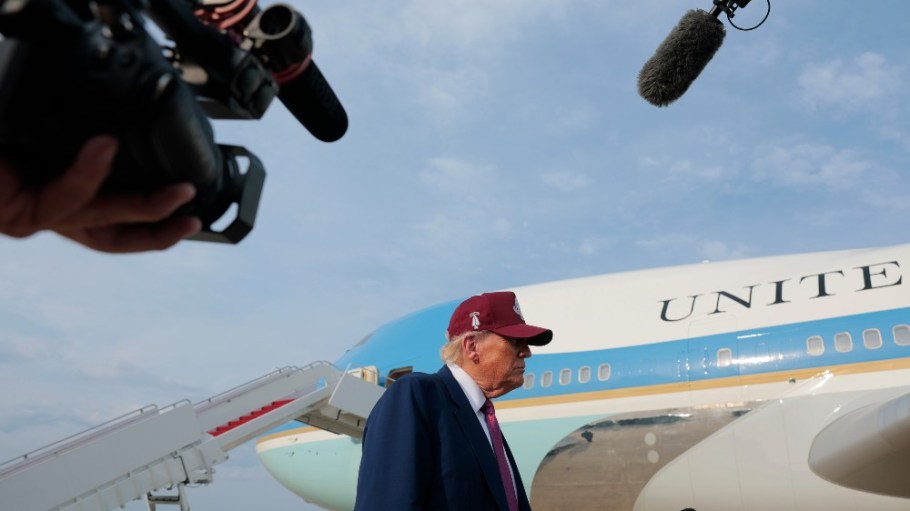
Hours after his cabinet announced that the United States would resume its previously agreed upon trade truce with China, President Donald Trump stoked confusion by revealing a new tariff rate of 55 percent for the sourcing superpower.
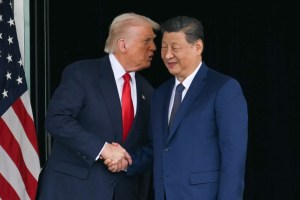
Commerce Secretary Howard Lutnick and Treasury Secretary Scott Bessent, along with U.S. Trade Representative Ambassador Jamieson Greer, traveled to London this week to sit down with Chinese trade officials following weeks of trade tensions and the crumbling of a provisional agreement solidified in Switzerland in mid-May.
Related Stories
At the end of negotiations on Tuesday, Lutnick indicated that both sides had agreed to “implement the Geneva consensus” upon approval from Trump and Chinese President Xi Jinping. That deal centered on the deferral of reciprocal duties—lowered on the U.S. side to 30 percent and China’s side to 10 percent—for three months.
But by Wednesday morning, Trump had Truthed new information about the deal, saying that China will now pay a 55-percent duty rate, while the U.S. will still be subject to 10-percent tariffs on any goods imported into China. An all-caps missive said the deal with China was done, though subject to final approval by Xi and himself. “RELATIONSHIP IS EXCELLENT!” he wrote.
The president did not elucidate the reasoning for the 55-percent rate, which appears on its face to be a a 25-percent increase from the May agreement. But a White House spokesperson, who spoke to The Guardian anonymously, said the rate includes Trump’s 10-percent universal baseline tariffs, a previous 20-percent punitive duty for fentanyl trafficking and an existing 25-percent tariff on China-made goods.
“A reported 55 percent tariff on our largest supplier of American apparel and footwear, stacked on top of already high MFN and Section 301 rates is not a win for America,” Steve Lamar, president and CEO of the American Apparel and Footwear Association, said in a statement.
“We’re closely watching for more details, but the reality is this: nearly all clothes and shoes sold in the U.S. are now subject to elevated tariff rates,” he added. “These costs will hit American families hard especially as they get ready for back-to-school shopping and the holiday seasons. New trade deals that bring lower tariffs can’t come soon enough.”
At a budget meeting with the House Ways and Means Committee on Wednesday, Secretary Bessent seemed to hint that the China deal may be shakier than the president indicated in his post on Truth Social.
“China has a singular opportunity to stabilize its economy by shifting away from excess production towards greater consumption. But the country needs to be a reliable partner in trade negotiations,” he told the Committee. “If China will course-correct by upholding its end of the initial trade agreement we outlined in Geneva last month, then a big, beautiful rebalancing of the world’s two largest economies is possible.”
Footwear Distributors and Retailers of America senior vice president Andy Polk told Sourcing Journal that he believes this week’s trade talks represent “more political marketing than anything else.”
“It is positive that high level talks continue in hopes of getting us closer to a tariff end-game,” he said. “However, there doesn’t seem to be anything rally new coming out of these talks, just a climb down from threats.”
Calling the president’s tariff calculations “very confusing,” Polk said he believes the 55-percent rate includes the Section 301 duties from his first term, the 20-percent fentanyl-related tariffs and the 10-percent baseline duties for all trade partners, among others. “It is not a new tariff rate he is adding, it just seems to be fuzzy tariff math on his part.”
“Perhaps these steps forward will continue to unlock other issues to reduce this trade impasse, but I am not sure they are tackling the big items in a speed we need,” Polk said. “We need a real deal that reduces tariffs back to reasonable levels quickly, and one that stabilizes them so shoe companies aren’t jolted around constantly.”