After calling upon the European Union earlier this week to consider imposing steep duties of up to 100 percent on perceived Russia allies, Washington is making another appeal to the Group of Seven.
On Friday, the United States Treasury Department reportedly pushed G7 members—including Canada, France, Germany, Italy, Japan and the United Kingdom—to levy “meaningful tariffs” on China and India as recourse for their purchases of Russian oil. The discussion took place at a planned meeting about stepping up the pressure on Russia to end its assault on Ukraine.
Related Stories
In the administration’s estimation, the sourcing of oil by the world’s two most populated nations has funded Russian aggression, providing a financial lifeline amid continued efforts by the Western world to isolate Russian President Vladimir Putin and the country’s economy.
“Chinese and Indian purchases of Russian oil are funding Putin’s war machine and prolonging the senseless killing of the Ukrainian people,” a U.S. Treasury spokesperson told Reuters in an emailed statement.
The agency confirmed that the administration had “made it clear” to the EU earlier this week that “they need to step up” and join the U.S. in imposing impactful duties in order to end the war. The Treasury spokesperson confirmed that the tariffs would be “rescinded the day the war ends.”
The promise provides an incentive for China and India—both of which face steep tariffs already. As of the end of August, India faces 50 percent tariffs (among the highest of any U.S. trade partner), while China’s 30 percent duties were deferred until Nov. 10 while Beijing and Washington work toward a deal.
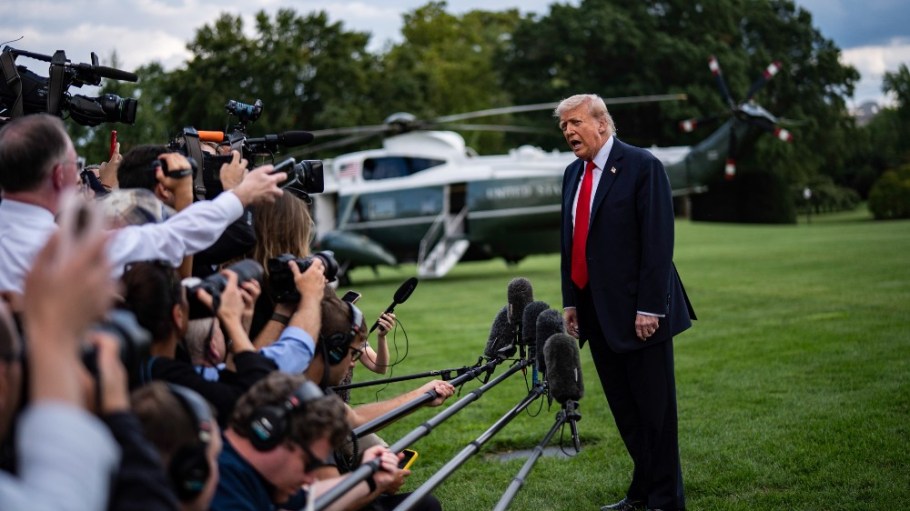
Speaking on Fox & Friends Friday, Trump said, “Look, India was [Russia’s] biggest customer. I put a 50 percent tariff on India because they’re buying oil from Russia. That’s not an easy thing to do. That’s a big deal and it causes a rift with India.”
Meanwhile, India’s government is rushing to the table for negotiations with the EU as Trump applies his pressure campaign.
Indian Commerce Minister Piyush Goyal on Friday said the two countries are working “with sincerity and commitment” to finalize a free trade agreement before the end of the year.
The new FTA will “open new avenues for Indian manufacturers to partner with their European counterparts and with companies from other parts of the world, thereby encouraging joint ventures, technology partnerships, and collaborative innovation,” he said at a meeting of the Automotive Component Manufacturers Association in New Delhi.
EU Commissioner for Trade and Economic Security H.E. Maroš Šefčovič, who attended the meeting, expressed confidence that a deal could be brokered before the end of December, in line with commitments made by Indian Prime Minister Narendra Modi and European Commission President Ursula von der Leyen. He told attendees that negotiations were proceeding with “unprecedented momentum.”
Also on Friday, Treasury Secretary Scott Bessent took off on a weeklong sojourn across the pond where he aims to meet with trade partners, including the very target of the G7 meeting.
His plans include a trip to Madrid wherein he will meet with senior Chinese trade representatives including Vice Premier He Lifeng “to discuss key national security, economic, and trade issues of mutual interest, including TikTok and cooperating on money laundering networks that threaten both the United States and China.”
He will also speak with Spanish officials about the bilateral U.S.-Spain trade relationship, and before returning to Washington, Bessent plans to travel to London to meet with British government counterparts and the private sector.