Treasury Secretary Scott Bessent said he isn’t worried about recent legal challenges to the Trump administration’s tariff regime.
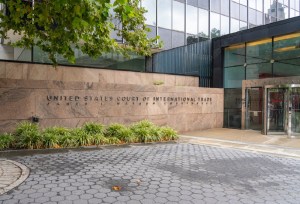
Following a Friday decision from a United States Court of Appeals for the Federal Circuit deeming President Donald Trump’s “reciprocal” tariffs illegal, the cabinet official told Reuters Monday that he was preparing a legal brief for the U.S. solicitor general who will handle the administration’s Supreme Court appeal.
Bessent said he was “confident” the high court would ultimately decide to uphold the president’s authority to leverage the International Emergency Economic Powers Act (IEEPA)—a 1977 law that gives the Commander in Chief the authority to regulate international commerce in the face of a national emergency.
Related Stories
The Treasury secretary noted that there are “other authorities” that can be used to impose tariffs, though they are “not as efficient, not as powerful.”
The president’s unorthodox and unprecedented invocation of IEEPA to impose sweeping duties has been the point of contention at the center of multiple lawsuits brought in recent months. More than a dozen state attorneys general in Arizona, Colorado, Connecticut, Delaware, Illinois, Maine, Minnesota, Nevada, New Mexico, New York, Oregon, Vermont and California have filed complaints against the administration over the impacts that tariffs are having on domestic businesses and consumers, who they say have endured hardships due to higher prices at retail.
Trump has vehemently denied that his tariff agenda is a contributor to those challenges.
“Prices are ‘WAY DOWN’ in the USA, with virtually no inflation,” he Truthed over the weekend as news of the Appeals Court’s decision dominated the Labor Day news cycle.
“More than 15 Trillion Dollars will be invested in the USA, a RECORD. Much of this investment is because of Tariffs. If a Radical Left Court is allowed to terminate these Tariffs, almost all of this investment, and much more, will be immediately cancelled!” he wrote in another missive. Trump was referring to trade deals recently forged with several partners including the European Union and Japan which included massive commitments to invest in U.S. industry.
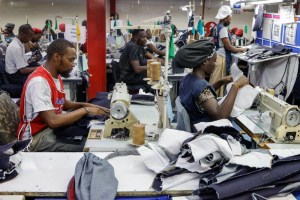
While the administration has been quick to label the results of those negotiations victories, the advancement of Trump’s agenda has prompted major shakeups to the global trade landscape. Over the past two weeks, in the wake of new tariff rates and a global moratorium on the de minimis exception, more than 30 countries have halted shipments to the U.S. market.
What’s more, heated debates with the country’s largest trade partners, India and China, most recently over their perceived support of Russia through the purchase of the country’s oil, are increasingly pushing the global superpowers and to band together. Last month, China’s Ambassador to India, Xu Feihong, spoke in New Delhi about the unfairness of the tariff assault on India, calling the U.S. a “bully” on trade.
Tuesday morning saw Trump persist in his criticism of India via social media. “What few people understand is that we do very little business with India, but they do a tremendous amount of business with us. In other words, they sell us massive amounts of goods, their biggest ‘client,’ but we sell them very little – Until now a totally one sided relationship, and it has been for many decades,” he wrote on Truth Social.
The president asserted that India has levied untenable import taxes on U.S.-made goods to the detriment of American businesses, and continues to purchase oil and military equipment from Russia. “They have now offered to cut their Tariffs to nothing, but it’s getting late. They should have done so years ago,” he added.
Amid the continued Truth tirades and in the face of sky-high U.S. tariffs on Indian goods, Indian Prime Minister Narendra Modi is doubling down on courting fellow BRICS Alliance members Russia and China as economic allies.
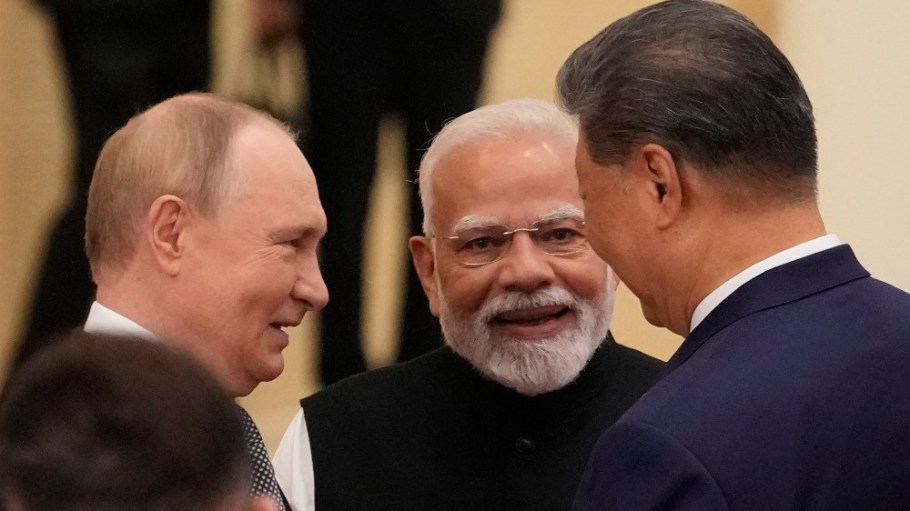
This week, he traveled to China to meet with President Xi Jinping about border security and trade issues at the Shanghai Cooperation Organisation (SCO), which focuses on regional political, economic and international security.
“It is the right choice for both sides to be friends who have good neighborly and amicable ties, partners who enable each other’s success, and to have the dragon and the elephant dance together,” Xi told Modi on Sunday, referring to the symbols that represent the two nations.
Russian President Vladimir Putin also attended the SCO. “Always a delight to meet President Putin!” Modi captioned photos of the two leaders sharing a handshake and a warm embrace. Another video captured Xi, Modi and Putin engaging in a lighthearted tete-a-tete on the Summit’s sidelines. Putin reportedly blamed the Western world for inflaming tensions between Russia and Ukraine, while praising New Delhi and Beijing for their efforts to “facilitate the resolution of the Ukrainian crisis.”